
Teaching
Pardon
God's forgiveness of sin: he lets the guilty go free, not because they deserve it but because he is merciful. The Bible says he pardons freely, readily and abundantly.
- Hebrew
- Salach, to let go, to forgive; used only of God's forgiving
- Key verse
- "He will abundantly pardon" (Isaiah 55:7)
The problem
To pardon is to let an offender go free of the punishment he deserves. In the Bible the word is used almost only of God. Everyone has sinned against him, and no one can pay the debt. Yet from the beginning God has shown himself ready to forgive. When Moses asked to see his glory, God declared himself "merciful and gracious", "forgiving iniquity and transgression and sin" (Exodus 34:6–7).
In the Old Testament
Moses pleaded for Israel after the golden calf, and again when the people refused to enter the land, saying "Pardon, I beseech thee, the iniquity of this people" (Numbers 14:19). God answered, "I have pardoned according to thy word" (Numbers 14:20). The prophets held out the same hope to a nation deep in sin: let the wicked turn to the LORD, "for he will abundantly pardon" (Isaiah 55:7). Micah marvelled that there is no God like him, who pardons sin and "delighteth in mercy" (Micah 7:18). Nehemiah's prayer calls him "a God ready to pardon" (Nehemiah 9:17).
Pardon in the Old Testament came through sacrifice. The blood on the altar showed that sin deserves death, and that God accepts a substitute in the sinner's place (Leviticus 17:11).
In Jesus
The New Testament more often says "forgive", but the thought is the same. Jesus told the paralysed man "thy sins be forgiven thee", and proved he had the right to say it by healing him (Mark 2:5–12). On the cross he prayed for his executioners, "Father, forgive them" (Luke 23:34). His death is the ground of all pardon: "without shedding of blood is no remission" (Hebrews 9:22).
Pardon is not the same as being declared righteous. A king may pardon a criminal and still leave him a criminal. God does more: he pardons the sinner and counts him righteous for Christ's sake, a gift the Bible calls justification (Romans 3:24–26).
For us
Pardon is free, but it is not cheap, and it is not automatic. It is for those who confess and turn (1 John 1:9; Acts 3:19). And those who have been pardoned so much are expected to pardon others (Matthew 18:21–35; Ephesians 4:32).
Key verses
- Exodus 34:6–7
And the Lord passed by before him, and proclaimed, The Lord, The Lord God, merciful and gracious, longsuffering, and abundant in goodness and truth, Keeping mercy for thousands, forgiving iniquity and transgression and sin, and that will by no means clear the guilty; visiting the iniquity of the fathers upon the children, and upon the children’s children, unto the third and to the fourth generation.
- Numbers 14:19–20
Pardon, I beseech thee, the iniquity of this people according unto the greatness of thy mercy, and as thou hast forgiven this people, from Egypt even until now. And the Lord said, I have pardoned according to thy word:
- Isaiah 55:7
Let the wicked forsake his way, and the unrighteous man his thoughts: and let him return unto the Lord, and he will have mercy upon him; and to our God, for he will abundantly pardon.
- Micah 7:18
Who is a God like unto thee, that pardoneth iniquity, and passeth by the transgression of the remnant of his heritage? he retaineth not his anger for ever, because he delighteth in mercy.
- Nehemiah 9:17
And refused to obey, neither were mindful of thy wonders that thou didst among them; but hardened their necks, and in their rebellion appointed a captain to return to their bondage: but thou art a God ready to pardon, gracious and merciful, slow to anger, and of great kindness, and forsookest them not.
- Ephesians 4:32
And be ye kind one to another, tenderhearted, forgiving one another, even as God for Christ’s sake hath forgiven you.
Read next
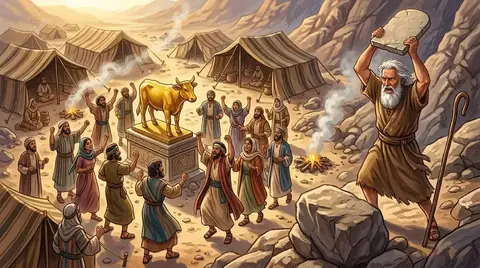 IdolThe golden calfThe image of a young bull that Aaron made at Sinai while Moses was on the mountain, and that Israel worshipped as the…PersonMicahA prophet of Judah in the days of Isaiah, from the country town of Moresheth, who denounced injustice and foretold that…
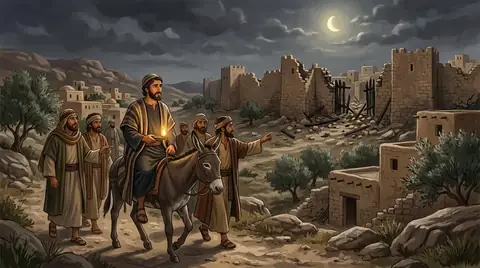 PersonNehemiahThe king of Persia's cupbearer who got leave to go to Jerusalem and rebuilt its broken walls in fifty-two days, despite…
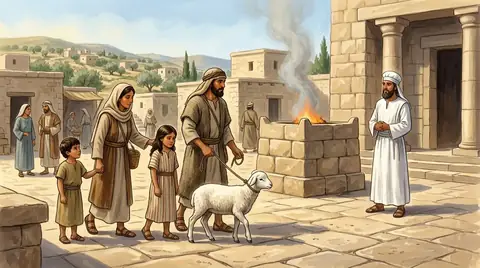 Custom · WorshipSacrificeSomething given up to God: usually an animal, killed and burnt on the altar, or grain, wine and oil. The blood of…TeachingJustificationGod's act of declaring a sinner righteous, forgiven and accepted, for the sake of Christ, through faith alone. It is a…
Written for this app in its own words, from the Bible, with the facts checked against Bible dictionaries and encyclopedias: Easton's, Smith's, Fausset's, ISBE, Holman, the New Bible Dictionary, Vine's and the Thompson Chain topics.
