
Thing
Ointment
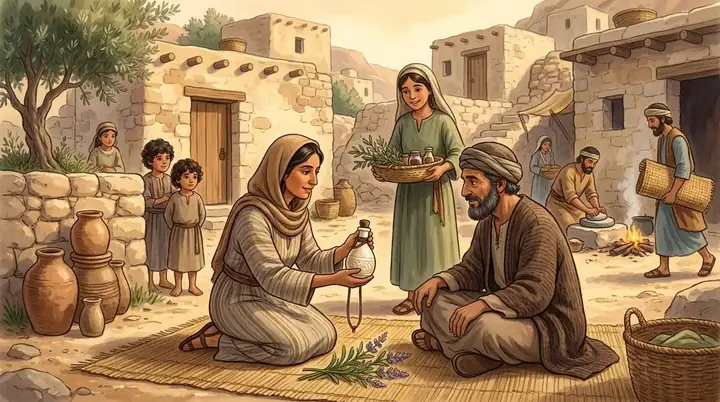
Perfumed oil, costly and sweet-smelling, used to anoint the body, to honour a guest and to prepare the dead. A special holy ointment was made for the tabernacle and its priests.
- Made of
- Olive oil blended with spices such as myrrh, cinnamon and spikenard
- Kept in
- Sealed jars; Mary's was an alabaster box (Matthew 26:7)
- Holy ointment
- Myrrh, cinnamon, calamus and cassia in oil (Exodus 30:23–25)
What it was
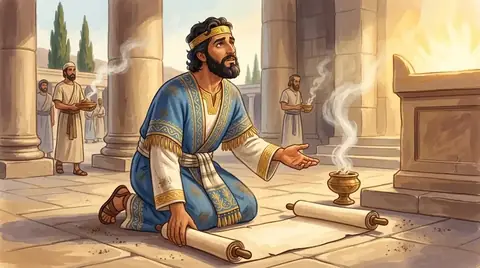
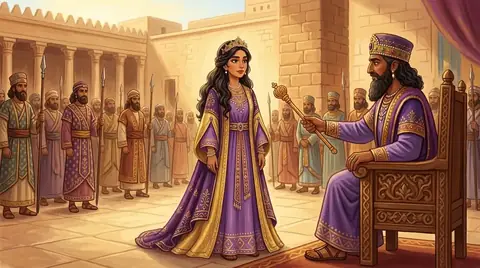
In a hot, dusty land, scented oil on the skin and hair was a luxury and a comfort. Perfumers blended olive oil with resins and spices, and a good ointment was worth a great deal. Hezekiah showed his "precious ointment" to the envoys from Babylon along with his gold (2 Kings 20:13). Esther was prepared for the king with months of oils and perfumes (Esther 2:12). A woman's perfume was praised in the Song of Songs (Song of Songs 1:3; Song of Songs 4:10), and the rich of Samaria who rubbed themselves with "the chief ointments" while the nation fell were condemned by Amos (Amos 6:6).
The holy anointing oil was an ointment too, made by the craftsman Bezaleel to a formula God gave. It set apart the tabernacle, the ark of the covenant, the altar and the priests, and anyone who made it for himself was to be cut off (Exodus 30:23–33; Exodus 37:29). The psalm pictures it running down Aaron's beard as an image of brothers living in unity (Psalms 133:2).
In the Gospels
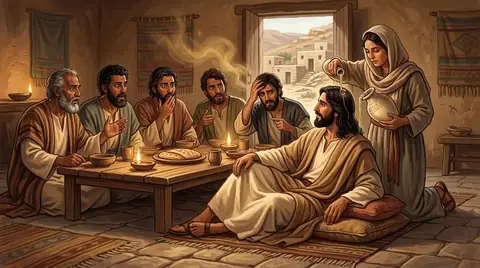
The best-known ointment in the Bible is the pound of pure spikenard that Mary of Bethany poured on Jesus' feet, wiping them with her hair, so that the whole house smelt of it. Judas Iscariot complained that it could have been sold for three hundred pence, nearly a year's wages, and given to the poor, but Jesus said she had kept it for his burial (John 12:3–8; Mark 14:3–9). Women brought spices and ointments to anoint his body after his death, and found the tomb empty (Luke 23:56; Luke 24:1).
What it means
The preacher says "a good name is better than precious ointment", and that dead flies can spoil a whole jar of it, just as a little folly spoils a wise reputation (Ecclesiastes 7:1; Ecclesiastes 10:1). The love poured out on Jesus by Mary was, he said, a "good work", and her story is told wherever the gospel goes.
Key verses
- Exodus 30:25
And thou shalt make it an oil of holy ointment, an ointment compound after the art of the apothecary: it shall be an holy anointing oil.
- Psalms 133:2
It is like the precious ointment upon the head, that ran down upon the beard, even Aaron’s beard: that went down to the skirts of his garments;
- Ecclesiastes 7:1
A good name is better than precious ointment; and the day of death than the day of one’s birth.
- John 12:3
Then took Mary a pound of ointment of spikenard, very costly, and anointed the feet of Jesus, and wiped his feet with her hair: and the house was filled with the odour of the ointment.
- Mark 14:3–9
And being in Bethany in the house of Simon the leper, as he sat at meat, there came a woman having an alabaster box of ointment of spikenard very precious; and she brake the box, and poured it on his head. And there were some that had indignation within themselves, and said, Why was this waste of the ointment made? For it might have been sold for more than three hundred pence, and have been given to the poor. And they murmured against her. …
Read next
 MaterialAlabasterA soft, pale stone that could be carved into fine jars for costly perfume. A woman broke an alabaster jar of ointment…
 Person · KingHezekiahOne of Judah's best kings. He cleansed the temple, smashed the idols, trusted God when Assyria besieged Jerusalem, and…
 PersonEstherA Jewish orphan who became queen of Persia and risked her life to stop Haman's plan to kill every Jew in the empire.…
 Place · City and regionSamariaThe hill city Omri built as capital of the northern kingdom of Israel. It saw Ahab and Jezebel, Elijah and Elisha…
 PersonBezalelThe craftsman from Judah whom God filled with his Spirit to make the tabernacle and everything in it, from the ark of…
 Thing · WorshipThe ark of the covenantThe gold-covered chest that held the Ten Commandments and stood in the Most Holy Place. God promised to meet with…
 PersonAaronMoses' older brother and Israel's first high priest. He spoke for Moses before Pharaoh and served God at the tabernacle…
 PersonMaryThe young woman of Nazareth chosen to be the mother of Jesus. She believed the angel's word, bore God's Son, and stood…
Written for this app in its own words, from the Bible, with the facts checked against Bible dictionaries and encyclopedias: Easton's, Smith's, Fausset's, ISBE, Holman, the New Bible Dictionary, Vine's and the Thompson Chain topics.
