
Plant
Oak and terebinth
Two large trees that marked places and gave shade
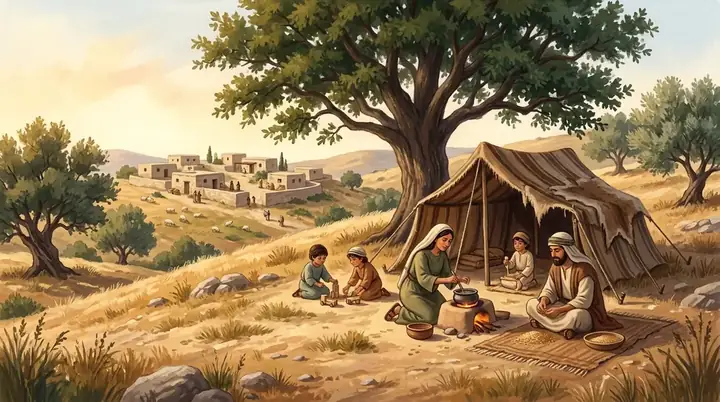
Big, long-lived trees that stood alone in the open country and served as landmarks and meeting places. Abraham, Jacob, Gideon and Absalom all have a story under one.
- Hebrew
- allon (oak) and elah (terebinth); the two are easily mixed up
- Known for
- The great trees of Mamre, the oak at Shechem, Absalom's hair
- Today
- Both still grow in Israel; the terebinth is a tree of the dry hills
What they were
The oak is a hardwood tree with a broad crown. The terebinth, or turpentine tree, looks much like it from a distance and grows in drier, rockier ground. Because the two Hebrew names are so close, Bible translations sometimes say oak where terebinth may be meant, and the other way round. Either way, these were the biggest trees most people in the land ever saw. A lone tree on a hill could be seen for miles, so places were named after them, and people met, camped and buried their dead beneath them.
In the Bible
Abraham stopped at the great tree of Moreh near Shechem when he first entered the land, and later made his home by the trees of Mamre at Hebron, where the three visitors came to his tent (Genesis 12:6; Genesis 13:18; Genesis 18:1). Jacob buried his family's idols under the oak at Shechem, and Rebekah's nurse Deborah was laid to rest under an oak that was named "the oak of weeping" (Genesis 35:4–8). Joshua set up a stone of witness under the oak at Shechem (Joshua 24:26). The angel of the LORD sat under the oak at Ophrah to call Gideon (Judges 6:11). And Absalom, fleeing from battle on his mule, was caught by his head in the thick branches of a great oak and left hanging there until Joab found him (2 Samuel 18:9–14).
As a warning
Shady trees were also favourite spots for idol worship, with their altars and incense (Hosea 4:13; Isaiah 1:29–30). So the prophets turn the picture round: an unfaithful people will be like an oak whose leaves wither. Yet Isaiah adds a promise. When a terebinth or oak is felled, a stump remains, and from it new growth comes. The faithful remnant of Israel, he says, is that "holy seed" (Isaiah 6:13).
Key verses
- Genesis 18:1
And the Lord appeared unto him in the plains of Mamre: and he sat in the tent door in the heat of the day;
- Genesis 35:4
And they gave unto Jacob all the strange gods which were in their hand, and all their earrings which were in their ears; and Jacob hid them under the oak which was by Shechem.
- Judges 6:11
And there came an angel of the Lord, and sat under an oak which was in Ophrah, that pertained unto Joash the Abi–ezrite: and his son Gideon threshed wheat by the winepress, to hide it from the Midianites.
- 2 Samuel 18:9
And Absalom met the servants of David. And Absalom rode upon a mule, and the mule went under the thick boughs of a great oak, and his head caught hold of the oak, and he was taken up between the heaven and the earth; and the mule that was under him went away.
- Isaiah 6:13
But yet in it shall be a tenth, and it shall return, and shall be eaten: as a teil tree, and as an oak, whose substance is in them, when they cast their leaves: so the holy seed shall be the substance thereof.
Read next
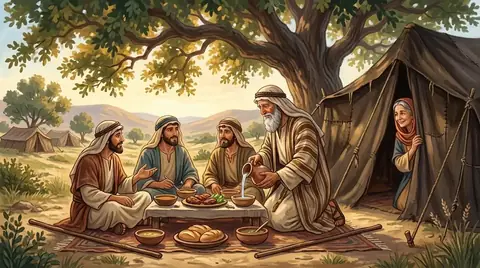 PlaceMamreThe oak grove near Hebron where Abraham pitched his tent, built an altar, and welcomed three visitors who told him…
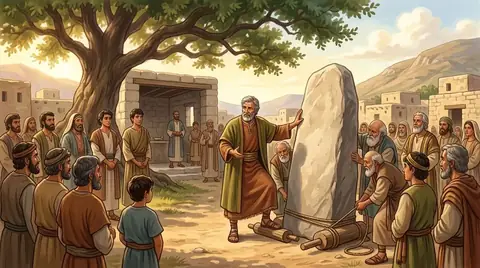 PlaceShechemAn ancient city in the heart of Canaan, between Mount Ebal and Mount Gerizim. Abraham built his first altar there…
 PersonAbrahamThe man God called out of Ur to a land he had never seen, promising him a people and a blessing for the whole world. He…
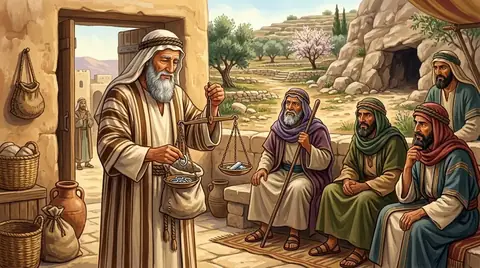 Place · CityHebronAn ancient city in the hills of Judah where Abraham lived and the patriarchs were buried in the cave of Machpelah.…
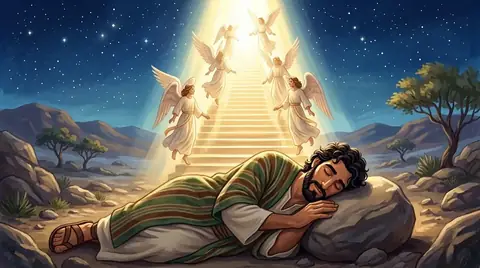 PersonJacobIsaac's younger twin son, who won his brother's birthright and blessing by cunning, was changed by God, and was renamed…
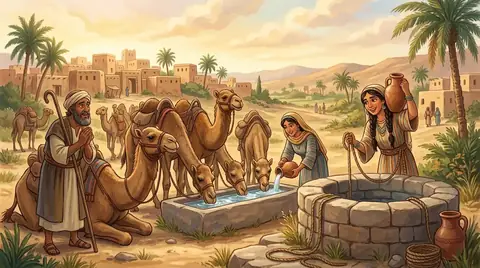 PersonRebekahIsaac's wife, found for him at a well far away in Abraham's homeland. She was told before her twins were born that the…
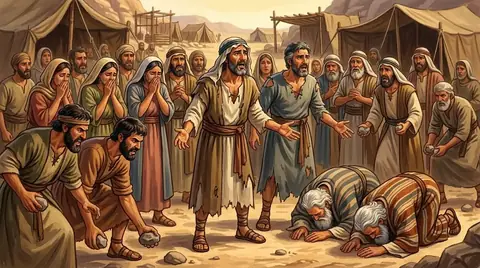 PersonJoshuaMoses' helper who took over from him and led Israel across the Jordan into the Promised Land. He fought the wars of…
 Person · JudgeGideonThe farmer God called to free Israel from the Midianites. Timid and full of questions, he obeyed, and with three…
Written for this app in its own words, from the Bible, with the facts checked against Bible dictionaries and encyclopedias: Easton's, Smith's, Fausset's, ISBE, Holman, the New Bible Dictionary, Vine's and the Thompson Chain topics.
