
Plant
Myrtle
An evergreen shrub with glossy, scented leaves and white flowers, cut for the shelters at the Feast of Tabernacles. Isaiah uses it as a picture of God turning a wasteland into a garden.
- Hebrew
- hadas; Esther's Hebrew name, Hadassah, means myrtle
- Used for
- Branches for booths at the Feast of Tabernacles
- Where
- Nehemiah 8:15; Isaiah 41:19; Isaiah 55:13; Zechariah 1:8–11
What it was
The myrtle is a bushy evergreen of the hills of Israel, growing up to 10 feet (3 m) tall in sheltered valleys. Its dark, shiny leaves give off a sweet scent when crushed, and in early summer it is covered with small white flowers, followed by blue-black berries. It still grows wild around Jerusalem, Bethlehem and Hebron and on the slopes of Carmel.
In the Bible
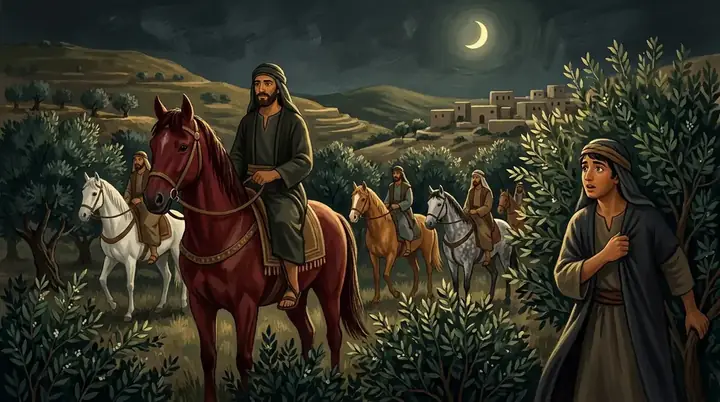
When Ezra read the law to the returned exiles, they went out to the hills and cut olive, pine, myrtle and palm branches to build shelters for the Feast of Tabernacles (Nehemiah 8:15). Isaiah promises that God will plant the myrtle in the desert (Isaiah 41:19), and that "instead of the brier shall come up the myrtle tree" (Isaiah 55:13), a sign that God makes all things new. In Zechariah's first vision a rider on a red horse stands among the myrtle trees in a hollow, with the LORD's patrols behind him, and from there comes God's promise to comfort Jerusalem (Zechariah 1:8–17). Esther's Hebrew name, Hadassah, means myrtle (Esther 2:7).
Key verses
- Nehemiah 8:15
And that they should publish and proclaim in all their cities, and in Jerusalem, saying, Go forth unto the mount, and fetch olive branches, and pine branches, and myrtle branches, and palm branches, and branches of thick trees, to make booths, as it is written.
- Isaiah 41:19
I will plant in the wilderness the cedar, the shittah tree, and the myrtle, and the oil tree; I will set in the desert the fir tree, and the pine, and the box tree together:
- Isaiah 55:13
Instead of the thorn shall come up the fir tree, and instead of the brier shall come up the myrtle tree: and it shall be to the Lord for a name, for an everlasting sign that shall not be cut off.
- Zechariah 1:8–11
I saw by night, and behold a man riding upon a red horse, and he stood among the myrtle trees that were in the bottom; and behind him were there red horses, speckled, and white. Then said I, O my lord, what are these? And the angel that talked with me said unto me, I will shew thee what these be. And the man that stood among the myrtle trees answered and said, These are they whom the Lord hath sent to walk to and fro through the earth. …
Read next
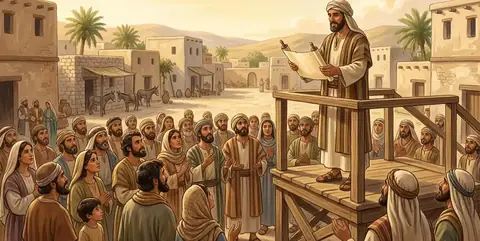 PersonEzraA priest and scribe who led a second group of exiles back from Babylon, taught the people God's law and read it to them…
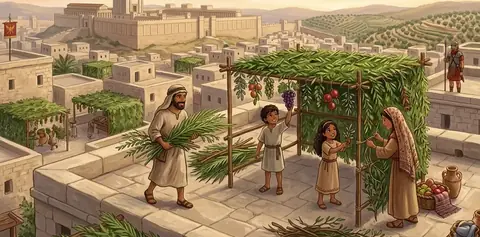 FeastThe Feast of Tabernacles (Booths)Israel's joyful autumn harvest feast, seven days of living in leafy shelters to remember the years in the wilderness…
 Person · ProphetIsaiahThe prophet of Jerusalem who served four kings, saw the LORD on his throne, and foretold the virgin's son, the…
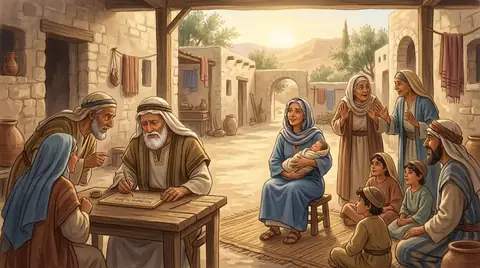 PersonZechariahThe prophet who, with Haggai, urged the returned exiles to rebuild the temple, and whose book foretells the humble King…
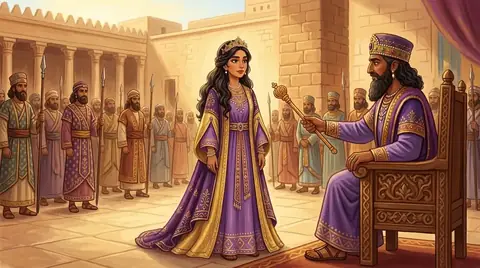 PersonEstherA Jewish orphan who became queen of Persia and risked her life to stop Haman's plan to kill every Jew in the empire.…
Written for this app in its own words, from the Bible, with the facts checked against Bible dictionaries and encyclopedias: Easton's, Smith's, Fausset's, ISBE, Holman, the New Bible Dictionary, Vine's and the Thompson Chain topics.
