
Custom · Time
Month
Twelve moons, from Abib in spring to Adar
The Hebrew month began with the new moon and lasted 29 or 30 days. Twelve made a year, with a thirteenth added now and then to keep the feasts in their seasons.
- Length
- From one new moon to the next, 29 or 30 days
- Year
- Began in spring with Abib (Nisan), the month of the Exodus and Passover (Exodus 12:2)
- Named months
- Abib, Zif, Sivan, Elul, Ethanim, Bul, Chisleu, Tebeth, Sebat, Adar, Nisan; the rest are numbered
- Extra month
- A second Adar every two or three years, to keep the harvest feasts in season
How months were counted
The Hebrew word for month is the word for moon. A month began on the evening the thin new moon was first seen, announced with trumpets and special offerings (Numbers 10:10; Numbers 28:11–15), and ran until the next. Twelve such months fall about eleven days short of the sun's year, so every few years a thirteenth month was added before spring. That kept Passover in the barley harvest and Tabernacles in the fruit harvest as the Law required.
The names
God made the month of the Exodus the first of the year (Exodus 12:2). In the earlier books only four months are named: Abib, "green ears" (Exodus 13:4); Zif, when Solomon began the temple (1 Kings 6:1); Ethanim, when he dedicated it (1 Kings 8:2); and Bul, when it was finished (1 Kings 6:38). Otherwise the Bible counts: "the seventh month." After the exile the Jews took over the Babylonian names, and books like Esther, Nehemiah and Zechariah use them: Nisan (Nehemiah 2:1), Sivan (Esther 8:9), Elul (Nehemiah 6:15), Chisleu (Zechariah 7:1), Tebeth (Esther 2:16), Sebat (Zechariah 1:7) and Adar (Esther 3:7).
A year of feasts
The calendar was shaped by worship. In the first month came Passover and Unleavened Bread; fifty days later, Pentecost; in the seventh month, the Feast of Trumpets, the Day of Atonement and Tabernacles (Leviticus 23). Nehemiah finished the wall in Elul (Nehemiah 6:15), the second temple was completed in Adar (Ezra 6:15), and Purim was fixed in Adar as well (Esther 9:21). Many Bible dates read simply "in the first month, on the fourteenth day."
Key verses
- Exodus 12:2
This month shall be unto you the beginning of months: it shall be the first month of the year to you.
- Numbers 28:11
And in the beginnings of your months ye shall offer a burnt offering unto the Lord; two young bullocks, and one ram, seven lambs of the first year without spot;
- 1 Kings 6:1
And it came to pass in the four hundred and eightieth year after the children of Israel were come out of the land of Egypt, in the fourth year of Solomon’s reign over Israel, in the month Zif, which is the second month, that he began to build the house of the Lord.
- 1 Kings 8:2
And all the men of Israel assembled themselves unto king Solomon at the feast in the month Ethanim, which is the seventh month.
- Esther 3:7
In the first month, that is, the month Nisan, in the twelfth year of king Ahasuerus, they cast Pur, that is, the lot, before Haman from day to day, and from month to month, to the twelfth month, that is, the month Adar.
- Zechariah 1:7
Upon the four and twentieth day of the eleventh month, which is the month Sebat, in the second year of Darius, came the word of the Lord unto Zechariah, the son of Berechiah, the son of Iddo the prophet, saying,
Read next
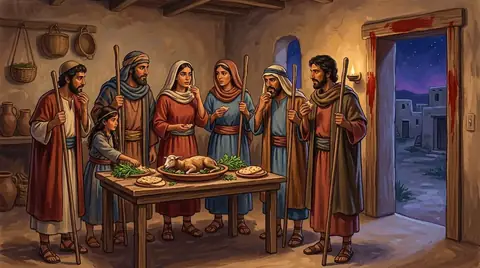 FeastPassoverThe yearly feast remembering the night God rescued Israel from Egypt, when death passed over every house marked with a…
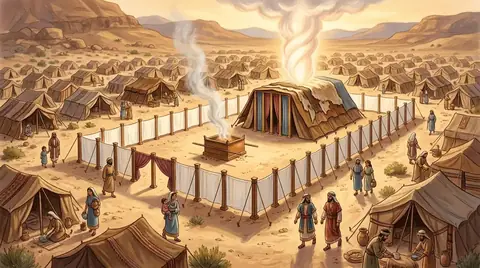 Thing · WorshipThe tabernacleThe holy tent Israel built in the wilderness, by God's own pattern, so that he could dwell in the middle of his people.…EventExodusIsrael's departure from Egypt, when God brought his people out of slavery with great signs and led them through the Red…
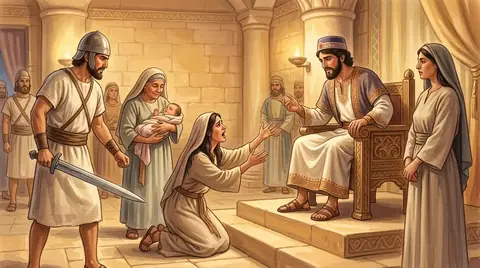 Person · KingSolomonDavid's son and Israel's third king, who asked God for wisdom and received riches and fame as well. He built the temple…
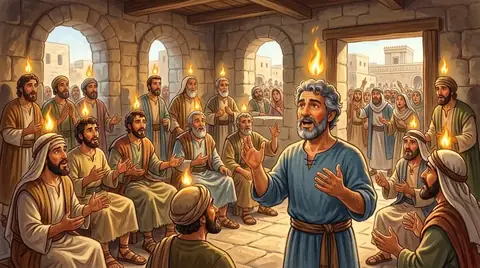 FeastPentecost (the Feast of Weeks)The harvest feast kept fifty days after Passover, when two loaves baked from the new wheat were offered to God. On the…
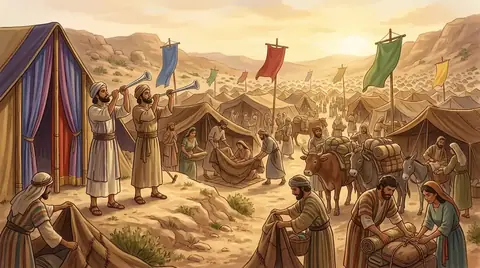 Thing · SymbolThe trumpetIsrael's trumpets, a ram's horn and silver tubes, called the people together, warned of danger, sounded for battle and…
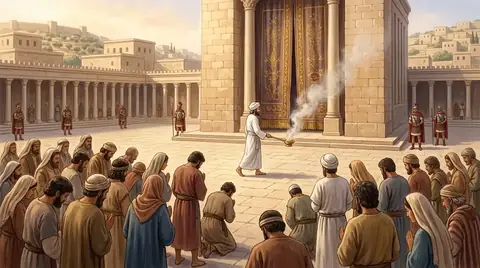 Feast · FastThe Day of AtonementThe one day in the year when the high priest went behind the veil with blood to atone for all Israel's sins, while a…
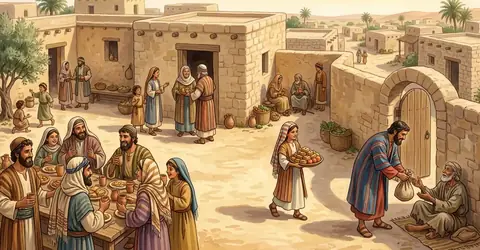 FeastPurimThe feast that remembers how the Jews of Persia escaped Haman's plot, the story the book of Esther tells. Named after…
Written for this app in its own words, from the Bible, with the facts checked against Bible dictionaries and encyclopedias: Easton's, Smith's, Fausset's, ISBE, Holman, the New Bible Dictionary, Vine's and the Thompson Chain topics.
