
Book
Micah (book)
Old Testament · Prophets, a minor prophet · written by Micah, about 735–700 BC
The prophecies of Micah, a countryman from Moresheth, who rebuked the injustice of Judah's leaders, foretold the fall of Samaria and Jerusalem, and named Bethlehem as the birthplace of Israel's ruler.
- Author
- Micah of Moresheth
- Written
- About 735–700 BC, under Jotham, Ahaz and Hezekiah
- Chapters
- 7
- Key verse
- "What doth the LORD require of thee, but to do justly, and to love mercy, and to walk humbly with thy God?" (Micah 6:8)
What it's about
Micah lived at the same time as Isaiah, but in a small town in the Judean hills. He spoke against both capitals, Samaria and Jerusalem: the rich seized fields and houses, judges took bribes, and prophets preached for money. Samaria would become a heap of ruins, and even "Zion shall be plowed like a field" (Micah 3:12). A century later the elders of Judah remembered that warning, and that King Hezekiah had repented at it (Jeremiah 26:18–19).
Judgment and hope take turns through the book. In the last days the nations will stream to God's house, and "they shall beat their swords into plowshares" (Micah 4:3). The book ends with wonder at God's forgiveness: "Who is a God like unto thee?" He will cast all our sins "into the depths of the sea" (Micah 7:18–19).
Its message
Religion without justice and kindness is empty. God does not want thousands of rams but a life that is fair, merciful and humble before him.
Points to Christ
Micah foretold that a ruler "whose goings forth have been from of old, from everlasting" would come out of little Bethlehem (Micah 5:2). When the wise men asked where the Christ would be born, the chief priests quoted this verse (Matthew 2:4–6).
Key verses
- Micah 4:2–3
And many nations shall come, and say, Come, and let us go up to the mountain of the Lord, and to the house of the God of Jacob; and he will teach us of his ways, and we will walk in his paths: for the law shall go forth of Zion, and the word of the Lord from Jerusalem. And he shall judge among many people, and rebuke strong nations afar off; and they shall beat their swords into plowshares, and their spears into pruninghooks: nation shall not lift up a sword against nation, neither shall they learn war any more.
- Micah 5:2
But thou, Beth–lehem Ephratah, though thou be little among the thousands of Judah, yet out of thee shall he come forth unto me that is to be ruler in Israel; whose goings forth have been from of old, from everlasting.
- Micah 6:8
He hath shewed thee, O man, what is good; and what doth the Lord require of thee, but to do justly, and to love mercy, and to walk humbly with thy God?
- Micah 7:18–19
Who is a God like unto thee, that pardoneth iniquity, and passeth by the transgression of the remnant of his heritage? he retaineth not his anger for ever, because he delighteth in mercy. He will turn again, he will have compassion upon us; he will subdue our iniquities; and thou wilt cast all their sins into the depths of the sea.
- Matthew 2:6
And thou Bethlehem, in the land of Juda, art not the least among the princes of Juda: for out of thee shall come a Governor, that shall rule my people Israel.
On the map
Read next
 Person · KingHezekiahOne of Judah's best kings. He cleansed the temple, smashed the idols, trusted God when Assyria besieged Jerusalem, and…
 Person · ProphetIsaiahThe prophet of Jerusalem who served four kings, saw the LORD on his throne, and foretold the virgin's son, the…
 Place · City and regionSamariaThe hill city Omri built as capital of the northern kingdom of Israel. It saw Ahab and Jezebel, Elijah and Elisha…
 PlaceJerusalemThe city David made his capital and where Solomon built the temple. Jesus died and rose there and the church began…
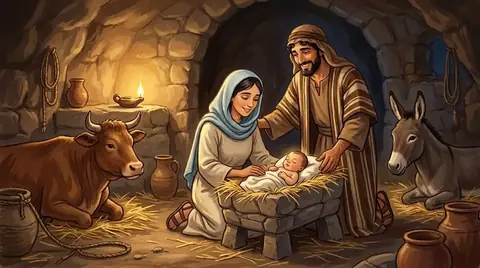 PlaceBethlehemA small town in the hills of Judah, five miles south of Jerusalem. It was the home of Ruth and Boaz, the birthplace of…
Written for this app in its own words, from the Bible, with the facts checked against Bible dictionaries and encyclopedias: Easton's, Smith's, Fausset's, ISBE, Holman, the New Bible Dictionary, Vine's and the Thompson Chain topics.
