
Teaching
Mercy
Kindness to someone in need or in the wrong, when you could rightly do nothing or punish them. God is "rich in mercy" to sinners, and those he has shown mercy to are to show it to others.
- God's mercy
- "The LORD, the LORD God, merciful and gracious" (Exodus 34:6)
- Jesus said
- "Blessed are the merciful: for they shall obtain mercy" (Matthew 5:7)
- Hebrew
- Raḥamim, a mother's tender feeling; also ḥesed, faithful love
What it is
Mercy is love turned toward the miserable and the guilty. Grace gives what is not deserved; mercy holds back what is deserved and reaches down to help. The Old Testament word comes from the word for a mother's womb: the feeling a mother has for a helpless child. God chose it to describe himself when he showed Moses his glory (Exodus 34:6–7).
In the Old Testament
God's mercy is the reason Israel survived at all. He spared Lot (Genesis 19:19), forgave the people after the golden calf, and kept bringing them back after they turned away. David, after his great sin, could only throw himself on it: "Have mercy upon me, O God, according to thy lovingkindness" (Psalms 51:1). Micah summed up what God asks: to do justly, to love mercy, and to walk humbly with him (Micah 6:8). "Mercy and truth are met together" (Psalms 85:10): God is merciful without ceasing to be true.
In Jesus
Jesus was mercy in person. Blind men, lepers and a Canaanite mother cried "have mercy on me", and he healed them (Matthew 9:27; Luke 17:13; Matthew 15:22). He told the Pharisees to go and learn what "I will have mercy, and not sacrifice" meant (Matthew 9:13), and he rebuked them for tithing herbs while neglecting judgment, mercy and faith (Matthew 23:23). The Good Samaritan was the one who "shewed mercy" (Luke 10:37). On the cross the thief asked for mercy and received paradise (Luke 23:42–43).
The cross is where God's mercy and justice meet. Because Christ bore the penalty, God can forgive sinners and still be just (Romans 3:25–26). "God, who is rich in mercy... hath quickened us together with Christ" (Ephesians 2:4–5); we are saved "according to his mercy" (Titus 3:5).
For us
The servant who was forgiven a huge debt and then choked a fellow servant over a small one lost his pardon (Matthew 18:23–35). Those who have received mercy must give it. "Be ye therefore merciful, as your Father also is merciful" (Luke 6:36), and "judgment without mercy" awaits the one who shows none (James 2:13).
Key verses
- Exodus 34:6
And the Lord passed by before him, and proclaimed, The Lord, The Lord God, merciful and gracious, longsuffering, and abundant in goodness and truth,
- Psalms 51:1
To the chief Musician, A Psalm of David, when Nathan the prophet came unto him, after he had gone in to Bath–sheba. Have mercy upon me, O God, according to thy lovingkindness: according unto the multitude of thy tender mercies blot out my transgressions.
- Micah 6:8
He hath shewed thee, O man, what is good; and what doth the Lord require of thee, but to do justly, and to love mercy, and to walk humbly with thy God?
- Matthew 5:7
Blessed are the merciful: for they shall obtain mercy.
- Luke 6:36
Be ye therefore merciful, as your Father also is merciful.
- Ephesians 2:4
But God, who is rich in mercy, for his great love wherewith he loved us,
Read next
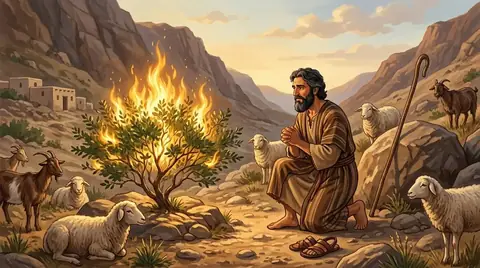 PersonMosesThe man God used to bring Israel out of Egypt, give them his Law at Sinai, and lead them for forty years in the…
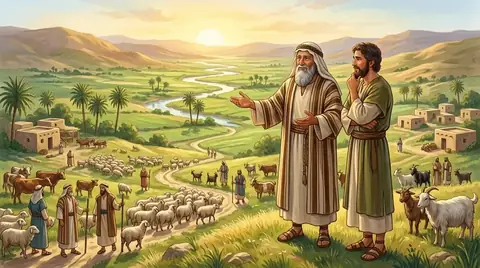 PersonLotAbraham's nephew, who chose the rich plain of Jordan and settled in Sodom. Angels dragged him out before the city…
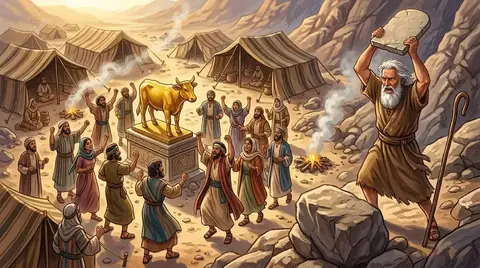 IdolThe golden calfThe image of a young bull that Aaron made at Sinai while Moses was on the mountain, and that Israel worshipped as the…
 Person · KingDavidThe shepherd boy who killed Goliath and became Israel's greatest king, "a man after God's own heart". He wrote many…PersonMicahA prophet of Judah in the days of Isaiah, from the country town of Moresheth, who denounced injustice and foretold that…
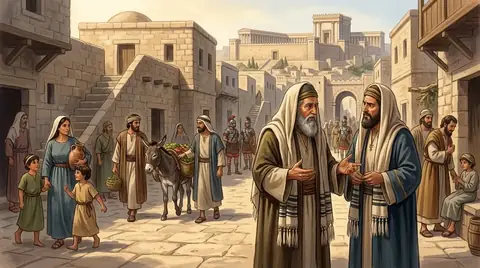 GroupPhariseesThe most exacting of the Jewish religious parties in Jesus' day, devoted to keeping the Law and the traditions added to…
 Group · PeopleSamaritansThe mixed people of central Israel, descended from Israelites left behind by the Assyrians and settlers brought in from…
Written for this app in its own words, from the Bible, with the facts checked against Bible dictionaries and encyclopedias: Easton's, Smith's, Fausset's, ISBE, Holman, the New Bible Dictionary, Vine's and the Thompson Chain topics.
