
Saying · Hebrew idiom
Laid his hand on
To lay or stretch out a hand against someone is to seize or strike them. David twice had Saul in his power and would not lay a hand on the LORD's anointed.
- Where
- Genesis 22:12; Genesis 37:22; 1 Samuel 24:6; 1 Samuel 26:9; Esther 9:2; Matthew 26:50; John 7:30
- Not to confuse with
- The laying on of hands in blessing, healing and ordination
What it means
The hand is the Bible's picture of action and power. To "lay hands on" a person, in this sense, is to grab them, hurt them or kill them; to "stretch forth the hand against" is the same. The angel told Abraham, "Lay not thine hand upon the lad" (Genesis 22:12). Reuben begged his brothers to "lay no hand upon" Joseph (Genesis 37:22). The soldiers in Gethsemane "laid hands on Jesus, and took him" (Matthew 26:50), and again and again in John's Gospel the authorities wanted to seize Jesus but "no man laid hands on him, because his hour was not yet come" (John 7:30).
The great example is David. In the cave at En-gedi he cut off the corner of Saul's robe and then felt guilty even for that: "I will not put forth mine hand against my lord; for he is the LORD's anointed" (1 Samuel 24:10). Later, standing over the sleeping king with Abishai urging him to strike, he refused again, leaving Saul's fate to God (1 Samuel 26:9–11). The idiom is one Hebrew form; laying hands on someone to bless or ordain is quite different.
Key verses
- Genesis 22:12
And he said, Lay not thine hand upon the lad, neither do thou any thing unto him: for now I know that thou fearest God, seeing thou hast not withheld thy son, thine only son from me.
- 1 Samuel 24:6
And he said unto his men, The Lord forbid that I should do this thing unto my master, the Lord’s anointed, to stretch forth mine hand against him, seeing he is the anointed of the Lord.
- 1 Samuel 26:9–11
And David said to Abishai, Destroy him not: for who can stretch forth his hand against the Lord’s anointed, and be guiltless? David said furthermore, As the Lord liveth, the Lord shall smite him; or his day shall come to die; or he shall descend into battle, and perish. The Lord forbid that I should stretch forth mine hand against the Lord’s anointed: but, I pray thee, take thou now the spear that is at his bolster, and the cruse of water, and let us go.
- John 7:30
Then they sought to take him: but no man laid hands on him, because his hour was not yet come.
Read next
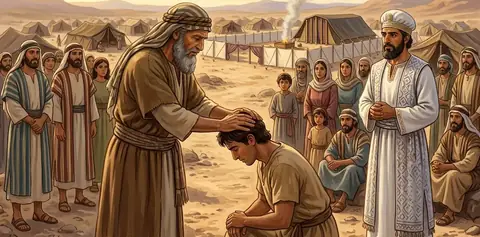 Custom · WorshipLaying on of handsPlacing the hands on someone's head to bless them, heal them, or set them apart for God's work; on a sacrifice, to show…
 Person · KingDavidThe shepherd boy who killed Goliath and became Israel's greatest king, "a man after God's own heart". He wrote many…
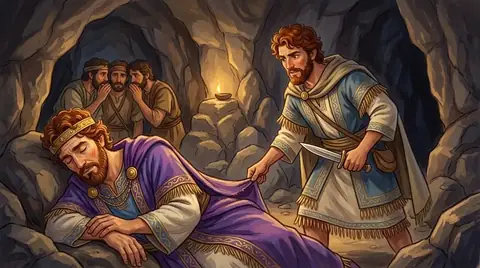 Place · OasisEngediA spring-fed oasis on the Dead Sea's western shore, among cliffs and caves, where David hid from Saul and spared his…
 Person · KingSaulIsrael's first king, a tall Benjamite chosen when the people demanded a king like the nations. He began humbly and won…
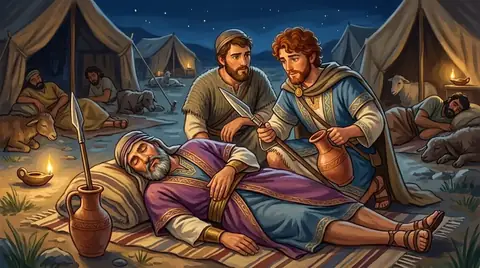 PersonAbishaiDavid's nephew and one of his bravest soldiers, brother of Joab. He went with David into Saul's camp by night, led…
Written for this app in its own words, from the Bible, with the facts checked against Bible dictionaries and encyclopedias: Easton's, Smith's, Fausset's, ISBE, Holman, the New Bible Dictionary, Vine's and the Thompson Chain topics.
