
Custom · Worship
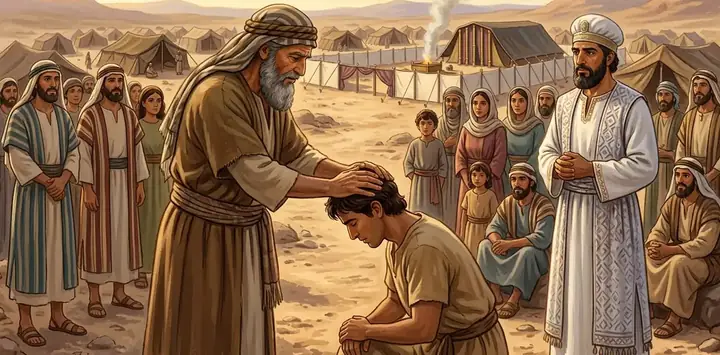
Laying on of hands
Placing the hands on someone's head to bless them, heal them, or set them apart for God's work; on a sacrifice, to show that the animal stood in the offerer's place.
- To bless
- Jacob and Joseph's sons (Genesis 48:14); Jesus and the children (Mark 10:16)
- On a sacrifice
- The offerer's hand on the animal's head (Leviticus 1:4; Leviticus 16:21)
- To appoint
- Moses and Joshua (Numbers 27:18–23); the apostles and the seven (Acts 6:6); the church and Paul and Barnabas (Acts 13:3)
- To heal
- Jesus (Luke 4:40); the apostles (Acts 28:8)
What it was
To put your hands on someone's head was to pass something to them in God's name. The old and blind Jacob crossed his hands to lay the right one on the younger grandson, Ephraim, and gave him the greater blessing (Genesis 48:14–19). Moses laid his hands on Joshua, and the people saw that his authority had passed to him (Numbers 27:18–23; Deuteronomy 34:9). Israel laid hands on the Levites to present them to God for his service (Numbers 8:10).
In sacrifice the gesture went the other way. The worshipper pressed his hand on the head of the animal before it was killed, as if to say, "This one stands for me" (Leviticus 1:4). On the Day of Atonement the high priest laid both hands on the scapegoat and confessed over it all the sins of Israel, and the goat carried them off into the desert (Leviticus 16:21).
In the New Testament
Jesus took children in his arms and laid his hands on them and blessed them (Mark 10:16), and he healed the sick by touching them (Luke 4:40). The apostles laid hands on the seven chosen to care for the widows (Acts 6:6), and the church at Antioch laid hands on Paul and Barnabas before sending them out (Acts 13:3). Through the apostles' hands the Holy Spirit came on the Samaritans (Acts 8:17). Timothy received a gift when the elders laid hands on him (1 Timothy 4:14), and Paul warned him not to lay hands on anyone in a hurry (1 Timothy 5:22). Hebrews lists it among the first things a Christian learns (Hebrews 6:2).
What it meant
Hands say, "I am with you, and God is giving you this." The custom is still used in many churches when people are prayed for, ordained or sent out. The power is never in the hands; it is in the God the hands point to.
Key verses
- Genesis 48:14
And Israel stretched out his right hand, and laid it upon Ephraim’s head, who was the younger, and his left hand upon Manasseh’s head, guiding his hands wittingly; for Manasseh was the firstborn.
- Leviticus 1:4
And he shall put his hand upon the head of the burnt offering; and it shall be accepted for him to make atonement for him.
- Numbers 27:18–23
And the Lord said unto Moses, Take thee Joshua the son of Nun, a man in whom is the spirit, and lay thine hand upon him; And set him before Eleazar the priest, and before all the congregation; and give him a charge in their sight. And thou shalt put some of thine honour upon him, that all the congregation of the children of Israel may be obedient. …
- Mark 10:16
And he took them up in his arms, put his hands upon them, and blessed them.
- Acts 6:6
Whom they set before the apostles: and when they had prayed, they laid their hands on them.
- Acts 13:3
And when they had fasted and prayed, and laid their hands on them, they sent them away.
Read next
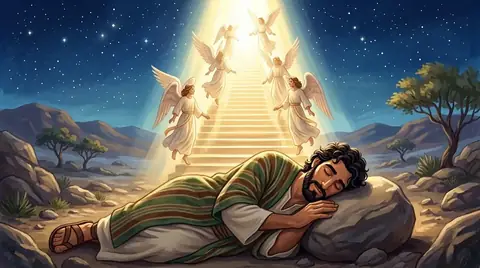 PersonJacobIsaac's younger twin son, who won his brother's birthright and blessing by cunning, was changed by God, and was renamed…
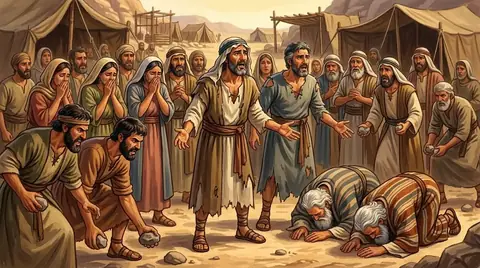 PersonJoshuaMoses' helper who took over from him and led Israel across the Jordan into the Promised Land. He fought the wars of…
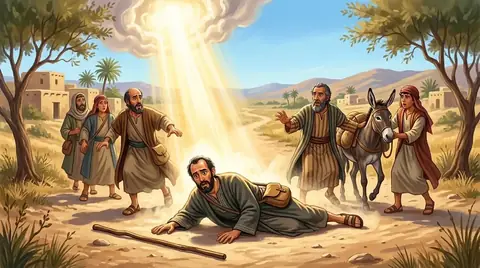 PersonPaulA Pharisee who hated the church until the risen Jesus met him on the road to Damascus. He became the apostle to the…
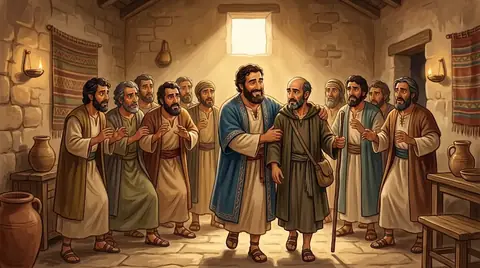 PersonBarnabasA generous Levite from Cyprus who befriended the new convert Paul when others feared him, and travelled with him on the…
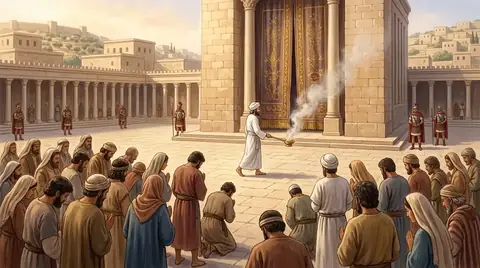 Feast · FastThe Day of AtonementThe one day in the year when the high priest went behind the veil with blood to atone for all Israel's sins, while a…
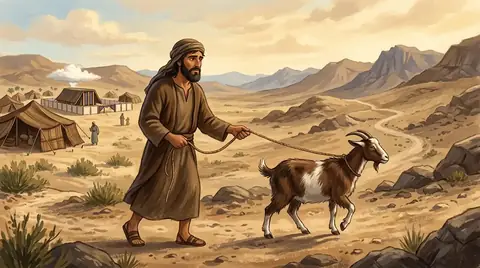 Custom · WorshipThe scapegoatOnce a year, at the Day of Atonement, the high priest confessed the nation's sins over a live goat and sent it off into…
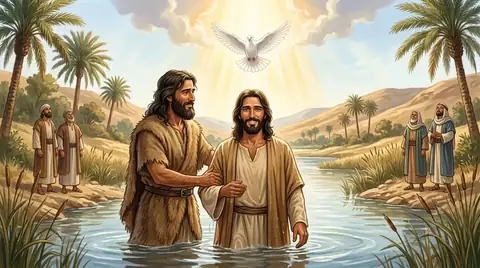 Person · The Son of GodJesus ChristThe Son of God, born of the virgin Mary, who lived a sinless life, died on a cross for the sins of the world and rose…
 PersonTimothyPaul's young helper and closest co-worker. He came from Lystra, travelled with Paul on his journeys, carried his…
Written for this app in its own words, from the Bible, with the facts checked against Bible dictionaries and encyclopedias: Easton's, Smith's, Fausset's, ISBE, Holman, the New Bible Dictionary, Vine's and the Thompson Chain topics.
