
Place · City
Nineveh
NIN-e-vuhToday ruins across the river from Mosul, Iraq
The last and greatest capital of Assyria, on the Tigris. Jonah preached there and the whole city repented; a century later Nahum foretold its fall, and in 612 BC it was destroyed.
- Where
- On the east bank of the Tigris in northern Iraq, about 220 miles (350 km) north of Baghdad
- Founded by
- Nimrod (Genesis 10:11)
- Known for
- Jonah's preaching; Sennacherib's palace; its sudden fall
- Fell
- 612 BC, to the Babylonians and Medes
Where
Nineveh lay on the Tigris where the river Khosr joins it, at a crossing of the roads between the Mediterranean and Persia. Under Sennacherib, about 700 BC, it became the capital of the Assyrian empire, with a wall 8 miles (12 km) round, fifteen gates, canals, gardens and a palace of seventy rooms lined with carved stone. With its outlying towns it was "an exceeding great city of three days' journey" (Jonah 3:3), and it held more than 120,000 people (Jonah 4:11).
In the Old Testament
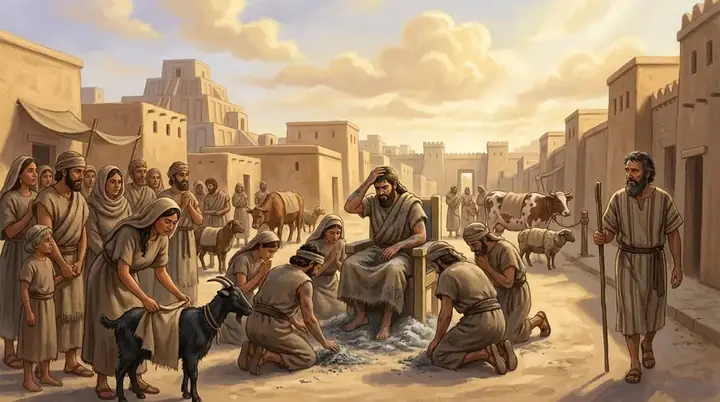
Nimrod built Nineveh in the earliest days (Genesis 10:11). It next appears when God sent Jonah to cry out against its wickedness. Jonah ran the other way, but in the end he walked into the city and announced that in forty days it would be overthrown. From the king on his throne to the cattle in the fields, Nineveh fasted in sackcloth and turned from violence, and God spared it (Jonah 3). Sennacherib went home to Nineveh after his army was struck down outside Jerusalem, and was murdered by his sons in the temple of his god (2 Kings 19:36–37).
The repentance did not last. Nahum's whole book is a sentence on the "bloody city": its river gates would open, its palace melt, and the nations would clap their hands at its ruin (Nahum 2:6; Nahum 3:1–19). Zephaniah said God would make it "a desolation, and dry like a wilderness" (Zephaniah 2:13). In 612 BC the Medes and Babylonians took it, and it was never rebuilt. Within three centuries travellers passed the mounds without knowing what they were.
In the New Testament
Jesus said the men of Nineveh would stand up at the judgment and condemn his generation, because they repented at Jonah's preaching, "and, behold, a greater than Jonas is here" (Matthew 12:41).
Today
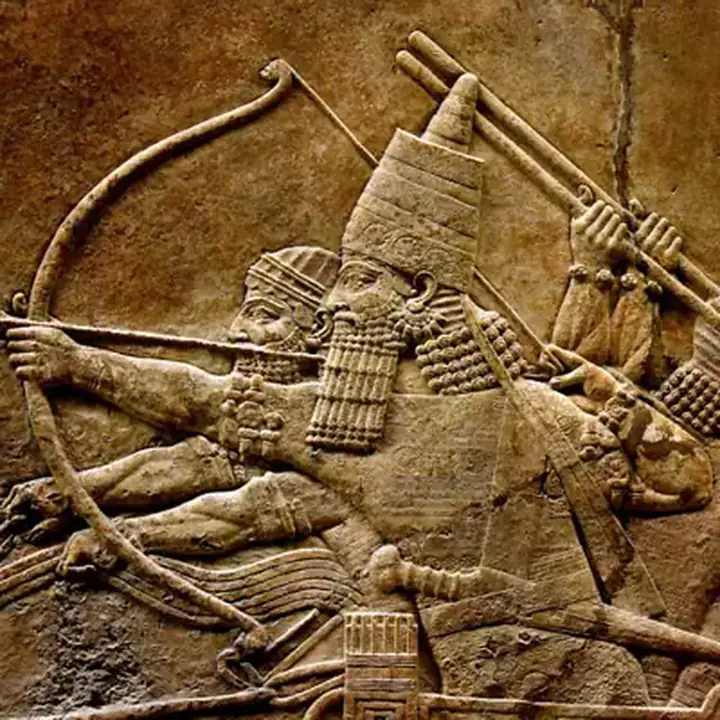
The mounds of Kuyunjik and Nebi Yunus, "the prophet Jonah", stand across the Tigris from Mosul. Diggers in the 1840s found Sennacherib's palace and the library of his grandson Ashurbanipal, tens of thousands of clay tablets that first let the modern world read Assyria's own records.
Key verses
- Genesis 10:11
Out of that land went forth Asshur, and builded Nineveh, and the city Rehoboth, and Calah,
- Jonah 3:3–5
So Jonah arose, and went unto Nineveh, according to the word of the Lord. Now Nineveh was an exceeding great city of three days’ journey. And Jonah began to enter into the city a day’s journey, and he cried, and said, Yet forty days, and Nineveh shall be overthrown. So the people of Nineveh believed God, and proclaimed a fast, and put on sackcloth, from the greatest of them even to the least of them.
- Nahum 3:7
And it shall come to pass, that all they that look upon thee shall flee from thee, and say, Nineveh is laid waste: who will bemoan her? whence shall I seek comforters for thee?
- Zephaniah 2:13
And he will stretch out his hand against the north, and destroy Assyria; and will make Nineveh a desolation, and dry like a wilderness.
- Matthew 12:41
The men of Nineveh shall rise in judgment with this generation, and shall condemn it: because they repented at the preaching of Jonas; and, behold, a greater than Jonas is here.
On the map
Mentioned in 19 verses
- Genesis 2
- 2 Kings 1
- Isaiah 1
- Jonah 8
- Nahum 3
- Zephaniah 1
- Matthew 1
- Luke 2
Read next
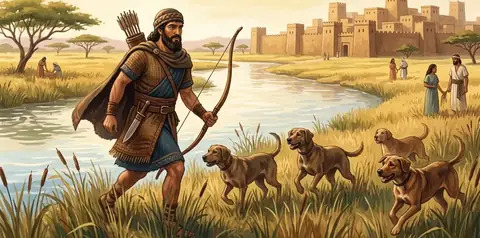 PersonNimrodA great-grandson of Noah, "a mighty hunter before the LORD", who became the first great ruler on earth and founded…
 PersonJonahThe prophet who ran from God's call to preach at Nineveh, was swallowed by a great fish, and then sulked when the city…
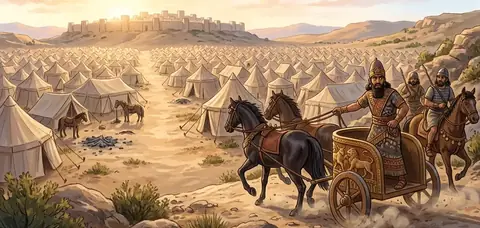 PersonSennacheribThe king of Assyria who invaded Judah in Hezekiah's reign and threatened Jerusalem. God answered Hezekiah's prayer…Person · ProphetNahumThe prophet from Elkosh who foretold the fall of Nineveh, the cruel capital of Assyria. His message was comfort for…PersonZephaniahA prophet of Judah, descended from King Hezekiah, who warned of the great Day of the LORD in the reign of Josiah, and…
Written for this app in its own words, from the Bible, with the facts checked against Bible dictionaries and encyclopedias: Easton's, Smith's, Fausset's, ISBE, Holman, the New Bible Dictionary, Vine's and the Thompson Chain topics. People and places: STEPBible.org (TIPNR), CC BY 4.0; where a place is today and its photo: OpenBible.info, CC BY 4.0.
