
Plant
Juniper (broom tree)
Hebrew rothem; the white broom of the desert
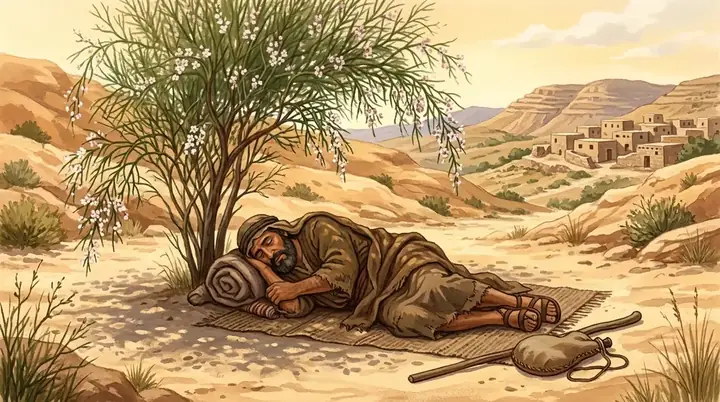
Not a true juniper but the white broom, a desert shrub with long thin twigs and small pale flowers. Elijah slept under one when he wanted to die.
- Where it grows
- Dry wadis and sandy places of the Sinai, the Negev and the Jordan valley
- In the Bible
- Elijah's shelter (1 Kings 19:4), roots eaten by the starving (Job 30:4), coals of juniper (Psalms 120:4)
- Also
- Rithmah, one of Israel's camps, means "place of broom" (Numbers 33:18)
What it is
The plant the KJV calls juniper is the white broom, retem in Arabic, which still grows across the deserts of the Bible lands. It is the biggest bush of those wastes, often head high, with a mass of long, nearly leafless green twigs and pale pink-white flowers in spring. Desert travellers have always camped beside it, because it gives the only shade and the only shelter from the wind for miles.
In the Bible
After his victory on Carmel, Elijah fled from Jezebel a day's walk into the desert beyond Beersheba, sat down under a juniper and prayed to die. He slept, and an angel woke him twice with fresh bread and water for the journey to Horeb (1 Kings 19:4–8). The thin shade of a broom bush was enough for God to meet his worn-out servant.
Job speaks of outcasts so poor that they dig up broom roots for food (Job 30:4); the roots are bitter, so this was a sign of the last extreme of hunger. Broom wood makes the hottest and longest-lasting charcoal, which is why the psalmist compares a slanderer's tongue to "coals of juniper" (Psalms 120:4).
Key verses
- 1 Kings 19:4–5
But he himself went a day’s journey into the wilderness, and came and sat down under a juniper tree: and he requested for himself that he might die; and said, It is enough; now, O Lord, take away my life; for I am not better than my fathers. And as he lay and slept under a juniper tree, behold, then an angel touched him, and said unto him, Arise and eat.
- Job 30:4
Who cut up mallows by the bushes, and juniper roots for their meat.
- Psalms 120:4
Sharp arrows of the mighty, with coals of juniper.
Read next
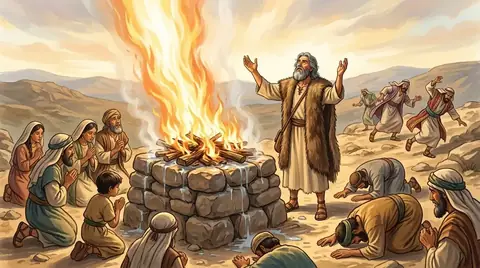 PlaceCarmelMount Carmel is the wooded ridge by the sea where Elijah faced the prophets of Baal. Carmel was also a town in Judah's…PersonElijahThe fiery prophet who stood alone against King Ahab and the prophets of Baal, called down fire on Mount Carmel, and was…
 PersonJezebelAhab's foreign queen, who brought Baal worship to Israel, killed the LORD's prophets and had Naboth stoned for his…
 Place · TownBeershebaThe well where Abraham swore a treaty, and the home of all three patriarchs. As the last town before the desert, "from…
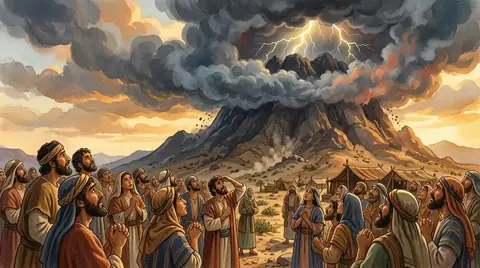 Place · MountainSinaiThe mountain where God came down in fire and smoke, spoke the Ten Commandments, and made his covenant with Israel. The…
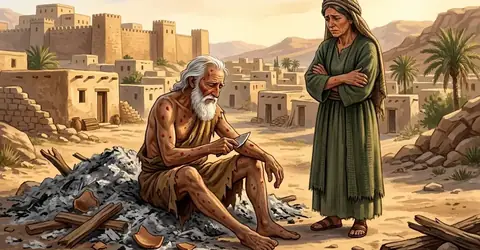 PersonJobA rich and godly man who lost his children, his wealth and his health in a single stroke, and would not curse God. His…
Written for this app in its own words, from the Bible, with the facts checked against Bible dictionaries and encyclopedias: Easton's, Smith's, Fausset's, ISBE, Holman, the New Bible Dictionary, Vine's and the Thompson Chain topics.
