
Teaching
Idolatry
Giving to anything made what belongs to God alone. It was Israel's great national sin until the exile cured them of it, and Paul says it is still with us whenever a person's heart is set on something other than God.
- Forms
- Worship of images, of the sun, moon and stars, of ancestors and heroes, of nature
- Punishment in Israel
- Death for the idolater (Deuteronomy 17:2–5); a whole town could be destroyed (Deuteronomy 13:12–16)
- The modern form
- Covetousness (Colossians 3:5; Ephesians 5:5)
The problem
Paul explains where idolatry comes from. People knew God from the world he made, but did not want to honour him, so they swapped the glory of the Creator for images of men, birds, animals and reptiles, and worshipped the creature instead of the Creator. Every other kind of sin followed (Romans 1:21–25). Idolatry is not first a mistake about statues; it is a heart that will not have God as God.
In the Old Testament
Abraham's own family had served other gods beyond the Euphrates (Joshua 24:2). Israel picked up the gods of Egypt (Ezekiel 20:7–8) and, after the conquest, the Baals and Ashtoreths of Canaan (Judges 2:11–13). The books of Kings tell the long story: Solomon's foreign wives and their shrines, Jeroboam's calves, Ahab and Jezebel, child sacrifice in the valley of Hinnom under Manasseh (2 Kings 21:6). Prophets pleaded and threatened; a few kings reformed; the people went back. God treated it as a wife's unfaithfulness (Hosea 2) and as treason against her King (1 Samuel 15:23). At last he sent Judah into Babylon for it (2 Chronicles 36:14–20). The exile did its work: the Jews who came home never bowed to idols again.
In Jesus
Jesus put it simply: "No man can serve two masters... Ye cannot serve God and mammon" (Matthew 6:24). Money, in his teaching, is the rival god most of his hearers actually served.
For us
The New Testament church met idols on every street. The council at Jerusalem told Gentile believers to keep clear of food offered to them (Acts 15:20), and Paul told the Corinthians to flee idolatry and not to share the Lord's table with the table of demons (1 Corinthians 10:14–21). But he also named the idolatry that needs no statue: "covetousness, which is idolatry" (Colossians 3:5). Whatever a person loves, trusts and serves above God, whether money, success, a person or pleasure, is an idol, and the cure is the same as ever: to turn to the living God (1 Thessalonians 1:9). See Idols.
Key verses
- Exodus 20:3–5
Thou shalt have no other gods before me. Thou shalt not make unto thee any graven image, or any likeness of any thing that is in heaven above, or that is in the earth beneath, or that is in the water under the earth: Thou shalt not bow down thyself to them, nor serve them: for I the Lord thy God am a jealous God, visiting the iniquity of the fathers upon the children unto the third and fourth generation of them that hate me;
- Romans 1:21–25
Because that, when they knew God, they glorified him not as God, neither were thankful; but became vain in their imaginations, and their foolish heart was darkened. Professing themselves to be wise, they became fools, And changed the glory of the uncorruptible God into an image made like to corruptible man, and to birds, and fourfooted beasts, and creeping things. …
- 1 Corinthians 10:14
Wherefore, my dearly beloved, flee from idolatry.
- Colossians 3:5
Mortify therefore your members which are upon the earth; fornication, uncleanness, inordinate affection, evil concupiscence, and covetousness, which is idolatry:
- 1 Thessalonians 1:9
For they themselves shew of us what manner of entering in we had unto you, and how ye turned to God from idols to serve the living and true God;
Read next
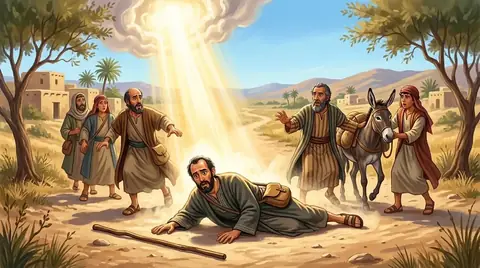 PersonPaulA Pharisee who hated the church until the risen Jesus met him on the road to Damascus. He became the apostle to the…
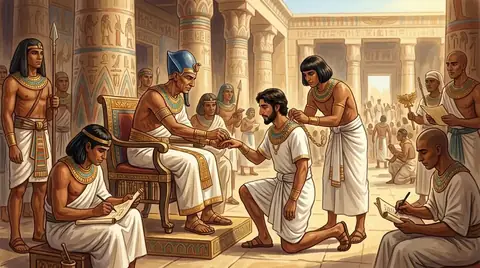 Place · NationEgyptThe great kingdom of the Nile, where Israel grew from a family into a nation and was then enslaved. The Exodus from…
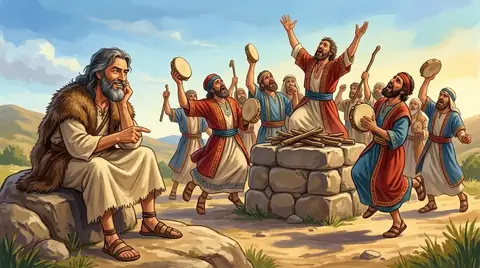 IdolBaalThe Canaanites' chief god, a storm god believed to send rain and harvests. Israel kept falling into his worship, until…
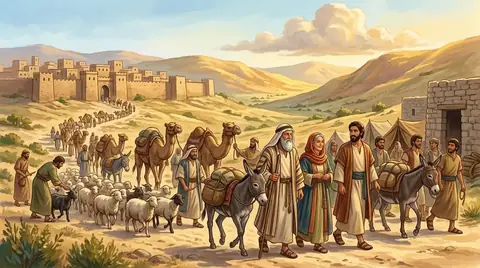 PlaceCanaanThe land between the Jordan and the Mediterranean that God promised to Abraham and gave to Israel under Joshua. It took…
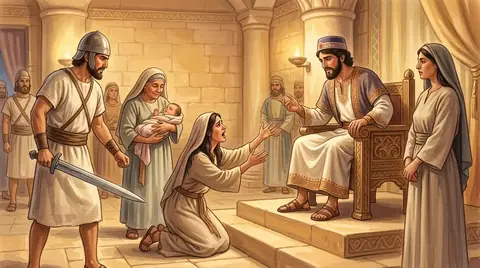 Person · KingSolomonDavid's son and Israel's third king, who asked God for wisdom and received riches and fame as well. He built the temple…
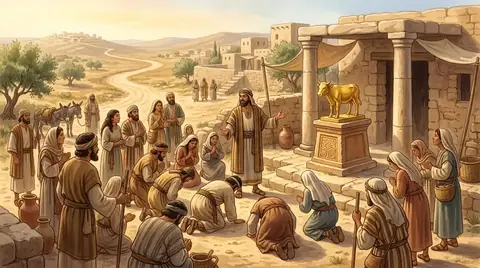 PersonJeroboamSolomon's overseer who became the first king of the breakaway northern kingdom. He set up golden calves at Bethel and…
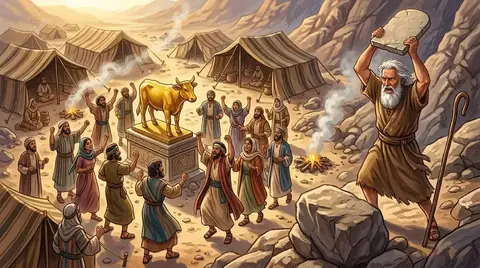 IdolThe golden calfThe image of a young bull that Aaron made at Sinai while Moses was on the mountain, and that Israel worshipped as the…
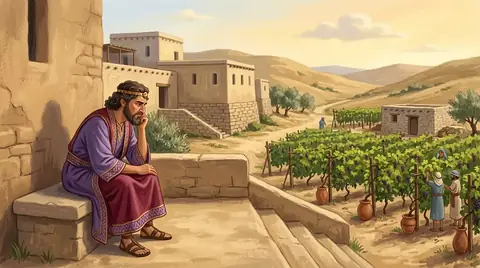 Person · KingAhabThe seventh king of the northern kingdom of Israel, who married Jezebel and led the nation into Baal worship. He…
Written for this app in its own words, from the Bible, with the facts checked against Bible dictionaries and encyclopedias: Easton's, Smith's, Fausset's, ISBE, Holman, the New Bible Dictionary, Vine's and the Thompson Chain topics.
