
Idol · Custom
Idols
Also "graven image", "molten image"
Figures of wood, stone or metal that people bowed down to as gods. The second commandment forbids them, and the prophets mock gods that have mouths but cannot speak and must be carried about by their worshippers.
- Forbidden
- The second commandment (Exodus 20:4–5); Leviticus 26:1; Deuteronomy 4:15–19
- Made of
- Wood plated with gold or silver, cast metal, carved stone (Isaiah 40:19–20; Isaiah 44:13–17)
- Hebrew names
- Many, mostly words of contempt: "nothings", "worthless things", "dung", "a shame"
What they were
An idol was an image, a shape made by men to be worshipped or to represent the god being worshipped. The Hebrew language has more than a dozen words for them, and almost all are insults: "nothing", "vanity", "a thing of naught", "terror", "filth", "a shameful thing". Israel's neighbours made their gods of carved wood overlaid with metal, or cast them in bronze and gold, and set them in temples or at street corners, and fed, clothed and carried them.
What God said
The first commandment forbids other gods; the second forbids any carved likeness made for worship, even one meant to stand for the LORD himself (Exodus 20:3–5). At Mount Sinai God spoke out of the fire and the people saw no shape at all, "lest ye corrupt yourselves" by making one (Deuteronomy 4:15–16). The golden calf was exactly that sin (Exodus 32:4–5). Israel were told to smash the idols of Canaan, not keep them (Deuteronomy 7:5; Deuteronomy 7:25).
The prophets' mockery
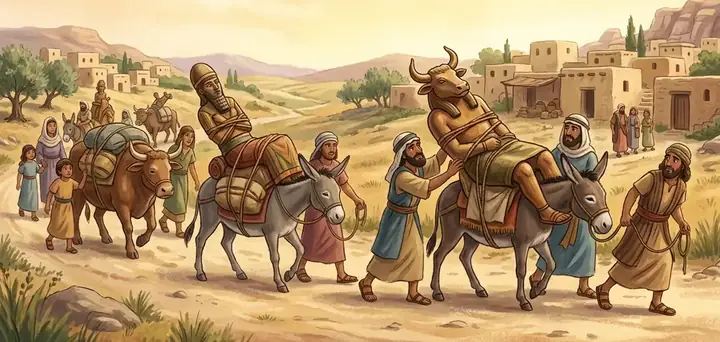
Isaiah describes a man who cuts down a tree, burns half of it to cook his dinner and warm himself, and carves the other half into a god and prays to it for help (Isaiah 44:13–17). He pictures the gods of Babylon loaded onto weary animals and carried off, while the living God carries his people (Isaiah 46:1–4). The psalmist says idols "have mouths, but they speak not: eyes have they, but they see not", and adds that those who make them become as lifeless as they are (Psalms 115:4–8). Jeremiah calls them scarecrows in a cucumber field (Jeremiah 10:5).
In the New Testament
At Athens Paul was grieved to see a city full of idols and told the philosophers that God is not like gold or silver shaped by man's art (Acts 17:16; Acts 17:29). An idol "is nothing in the world", he told the Corinthians, yet behind idol worship are demons, and believers must flee it (1 Corinthians 8:4; 1 Corinthians 10:14; 1 Corinthians 10:20). Then he widens the word: covetousness is idolatry (Colossians 3:5). Anything loved, feared or trusted more than God has become an idol, and John ends his letter, "Little children, keep yourselves from idols" (1 John 5:21). See Idolatry.
Key verses
- Exodus 20:4–5
Thou shalt not make unto thee any graven image, or any likeness of any thing that is in heaven above, or that is in the earth beneath, or that is in the water under the earth: Thou shalt not bow down thyself to them, nor serve them: for I the Lord thy God am a jealous God, visiting the iniquity of the fathers upon the children unto the third and fourth generation of them that hate me;
- Psalms 115:4–8
Their idols are silver and gold, the work of men’s hands. They have mouths, but they speak not: eyes have they, but they see not: They have ears, but they hear not: noses have they, but they smell not: …
- Isaiah 44:13–17
The carpenter stretcheth out his rule; he marketh it out with a line; he fitteth it with planes, and he marketh it out with the compass, and maketh it after the figure of a man, according to the beauty of a man; that it may remain in the house. He heweth him down cedars, and taketh the cypress and the oak, which he strengtheneth for himself among the trees of the forest: he planteth an ash, and the rain doth nourish it. Then shall it be for a man to burn: for he will take thereof, and warm himself; yea, he kindleth it, and baketh bread; yea, he maketh a god, and worshippeth it; he maketh it a graven image, and falleth down thereto. …
- Acts 17:29
Forasmuch then as we are the offspring of God, we ought not to think that the Godhead is like unto gold, or silver, or stone, graven by art and man’s device.
- 1 John 5:21
Little children, keep yourselves from idols. Amen.
Read next
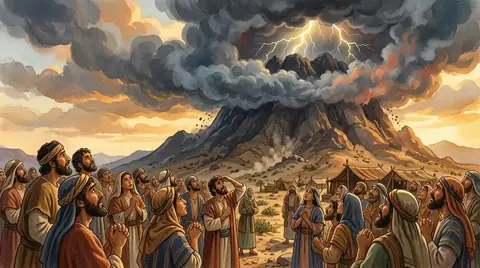 Place · MountainSinaiThe mountain where God came down in fire and smoke, spoke the Ten Commandments, and made his covenant with Israel. The…
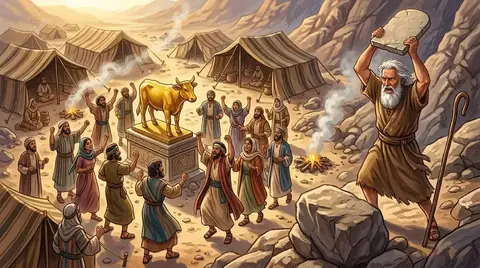 IdolThe golden calfThe image of a young bull that Aaron made at Sinai while Moses was on the mountain, and that Israel worshipped as the…
 PlaceCanaanThe land between the Jordan and the Mediterranean that God promised to Abraham and gave to Israel under Joshua. It took…
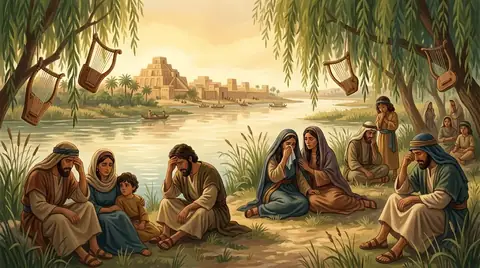 Place · CityBabylonThe great city on the Euphrates where the tower of Babel was built. Under Nebuchadnezzar it ruled the world, destroyed…
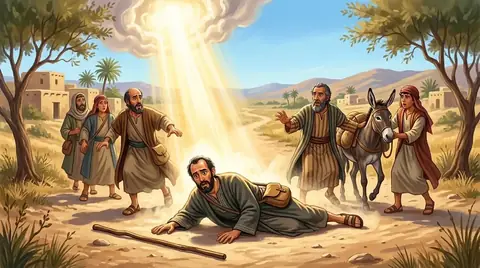 PersonPaulA Pharisee who hated the church until the risen Jesus met him on the road to Damascus. He became the apostle to the…TeachingCovetousnessA grasping desire for what belongs to someone else, or for more than God has given. The tenth commandment forbids it…TeachingIdolatryGiving to anything made what belongs to God alone. It was Israel's great national sin until the exile cured them of it…
Written for this app in its own words, from the Bible, with the facts checked against Bible dictionaries and encyclopedias: Easton's, Smith's, Fausset's, ISBE, Holman, the New Bible Dictionary, Vine's and the Thompson Chain topics.
