
Teaching
Covetousness
A grasping desire for what belongs to someone else, or for more than God has given. The tenth commandment forbids it, and Jesus called it a kind of idolatry.
- Forbidden
- Exodus 20:17; Luke 12:15; Colossians 3:5
- Examples
- Achan (Joshua 7:21), Ahab (1 Kings 21), Gehazi (2 Kings 5), Judas (Matthew 26:15), the rich fool (Luke 12:16–21)
- Its cure
- Contentment (1 Timothy 6:6; Hebrews 13:5)
What it is
The last of the Ten Commandments is different from the others. Killing, stealing and lying are things people do; coveting is something they want. "Thou shalt not covet" reaches past the hands to the heart (Exodus 20:17). To covet is to set your heart on your neighbour's house, wife, servant or ox, or on money and possessions in general, so that getting them matters more than God or people. Paul says that for him this was the commandment that showed him he was a sinner (Romans 7:7).
In the Bible
The Bible shows where it leads. Eve saw that the fruit was desirable and took it (Genesis 3:6). Achan saw a fine robe and silver and gold in Jericho, "then I coveted them, and took them", and brought defeat on Israel (Joshua 7:21). Ahab wanted Naboth's vineyard, sulked for it, and got it by murder (1 Kings 21). Gehazi ran after Naaman for a gift and came back a leper (2 Kings 5:20–27). Judas sold his master for thirty pieces of silver (Matthew 26:15). Jesus told a man quarrelling over an inheritance to beware of covetousness, because life does not consist in how much a person owns, and told of a rich farmer who planned bigger barns and died that night (Luke 12:15–21). Paul calls the love of money a root of every kind of evil (1 Timothy 6:10), and says covetousness is idolatry (Colossians 3:5): the thing wanted has taken God's place.
For us
The cure is not to want less of everything but to want the right thing. The commandment ends the law by turning us inward, where only God can see; the gospel answers it with a Father who knows what we need (Matthew 6:32–33) and a Saviour who promised never to leave us (Hebrews 13:5).
Key verses
- Exodus 20:17
Thou shalt not covet thy neighbour’s house, thou shalt not covet thy neighbour’s wife, nor his manservant, nor his maidservant, nor his ox, nor his ass, nor any thing that is thy neighbour’s.
- Joshua 7:21
When I saw among the spoils a goodly Babylonish garment, and two hundred shekels of silver, and a wedge of gold of fifty shekels weight, then I coveted them, and took them; and, behold, they are hid in the earth in the midst of my tent, and the silver under it.
- Luke 12:15
And he said unto them, Take heed, and beware of covetousness: for a man’s life consisteth not in the abundance of the things which he possesseth.
- Colossians 3:5
Mortify therefore your members which are upon the earth; fornication, uncleanness, inordinate affection, evil concupiscence, and covetousness, which is idolatry:
- 1 Timothy 6:10
For the love of money is the root of all evil: which while some coveted after, they have erred from the faith, and pierced themselves through with many sorrows.
Read next
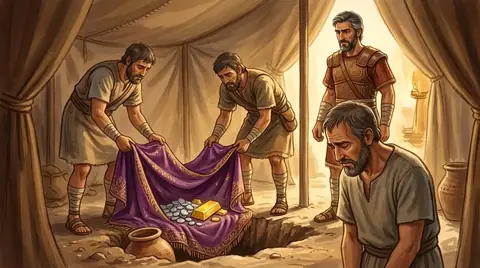 PersonAchanThe man who stole from Jericho's plunder, which God had set apart for himself. His hidden sin caused Israel's defeat at…
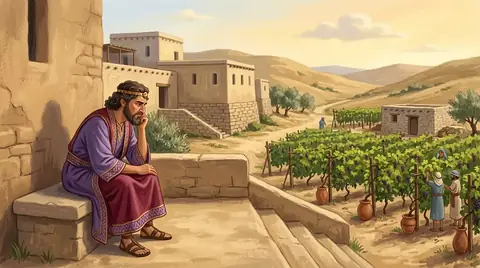 Person · KingAhabThe seventh king of the northern kingdom of Israel, who married Jezebel and led the nation into Baal worship. He…
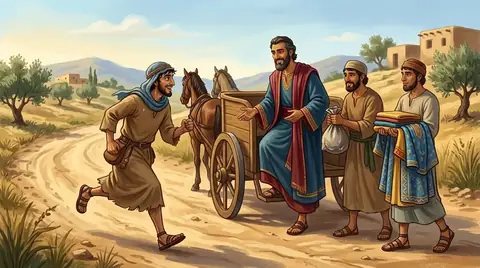 PersonGehaziElisha's servant, who ran after Naaman to get the silver and clothes his master had refused, lied about it, and was…
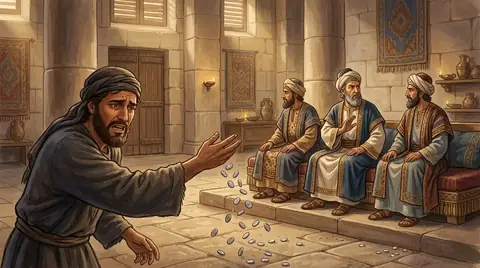 PersonJudasThe disciple who sold Jesus to the priests for thirty pieces of silver and pointed him out with a kiss. Full of…
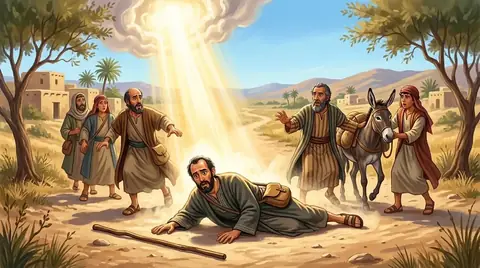 PersonPaulA Pharisee who hated the church until the risen Jesus met him on the road to Damascus. He became the apostle to the…PersonNabothA man of Jezreel whose vineyard lay beside King Ahab's palace. He would not sell his family's land, so Jezebel had him…
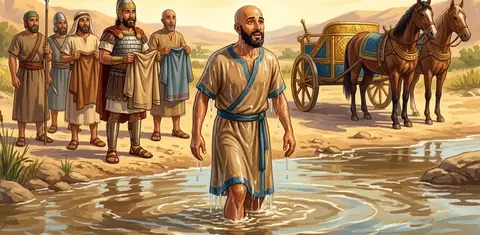 PersonNaamanThe Syrian general who had leprosy and was healed when he humbled himself and washed seven times in the Jordan at…
Written for this app in its own words, from the Bible, with the facts checked against Bible dictionaries and encyclopedias: Easton's, Smith's, Fausset's, ISBE, Holman, the New Bible Dictionary, Vine's and the Thompson Chain topics.
