
Animal
Horse
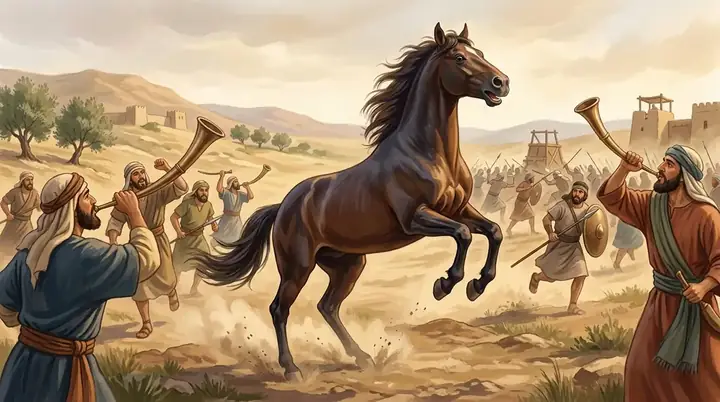
In the Bible the horse is nearly always an animal of war, pulling chariots or carrying soldiers. Israel's kings were told not to gather horses, so that the nation would trust God and not its army.
- Known for
- War, chariots, speed and strength
- Famous owners
- Pharaoh (Exodus 14:9), Solomon (1 Kings 4:26), the Assyrians and Babylonians
- Harness
- A bridle and bit (Psalms 32:9; James 3:3); bells in Zechariah's vision (Zechariah 14:20)
In the Bible
Horses were not farm animals in Bible lands; donkeys and oxen did that work. A horse meant an army. Pharaoh chased Israel to the Red Sea with horses and chariots (Exodus 14:9), and the Canaanite kings fought Joshua with them (Joshua 11:4). The law said a king of Israel must not build up a stable of horses, nor send to Egypt to buy them (Deuteronomy 17:16). The nation was to depend on God, not on a cavalry.
David kept only a hundred chariot horses from a victory and lamed the rest (2 Samuel 8:4). Solomon broke the law outright: he had thousands of stalls, bought horses from Egypt and traded them on to other kings (1 Kings 4:26; 1 Kings 10:28–29). From then on horses were common in Israel and Judah, and the prophets rebuked the people for trusting them. "Woe to them that go down to Egypt for help; and stay on horses" (Isaiah 31:1). A horse, says the psalmist, "is a vain thing for safety" (Psalms 33:17).
The war horse
The finest description is God's own, in his questions to Job: a creature with thunder in its neck, pawing the ground, laughing at fear, smelling the battle far off (Job 39:19–25). Jeremiah says the Babylonian horses were swifter than eagles (Jeremiah 4:13).
In visions
In Zechariah's night vision, riders on red, speckled and white horses patrol the earth for God (Zechariah 1:8–11). In Revelation four horses bring conquest, war, famine and death (Revelation 6:2–8), and at the end Christ rides out on a white horse, followed by the armies of heaven (Revelation 19:11–14). See The horses and their riders.
Key verses
- Deuteronomy 17:16
But he shall not multiply horses to himself, nor cause the people to return to Egypt, to the end that he should multiply horses: forasmuch as the Lord hath said unto you, Ye shall henceforth return no more that way.
- Job 39:19–25
Hast thou given the horse strength? hast thou clothed his neck with thunder? Canst thou make him afraid as a grasshopper? the glory of his nostrils is terrible. He paweth in the valley, and rejoiceth in his strength: he goeth on to meet the armed men. …
- Psalms 33:17
An horse is a vain thing for safety: neither shall he deliver any by his great strength.
- Isaiah 31:1
Woe to them that go down to Egypt for help; and stay on horses, and trust in chariots, because they are many; and in horsemen, because they are very strong; but they look not unto the Holy One of Israel, neither seek the Lord!
- Revelation 19:11
And I saw heaven opened, and behold a white horse; and he that sat upon him was called Faithful and True, and in righteousness he doth judge and make war.
Read next
 Title · RulerPharaohNot a personal name but the title borne by every king of Egypt, like "Caesar". The Bible names several, the best known…
 PlaceRed SeaThe sea God parted so Israel could escape from Egypt on dry ground, and then closed over Pharaoh's army. Its crossing…
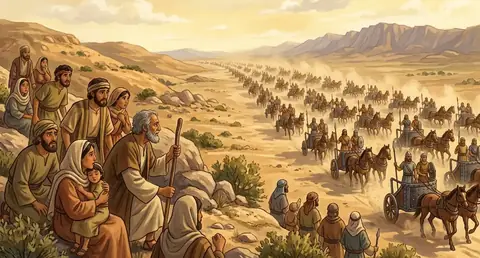 Thing · WarChariotA light two-wheeled car drawn by horses, the tank of the ancient world. Pharaoh's chariots were drowned in the Red Sea…
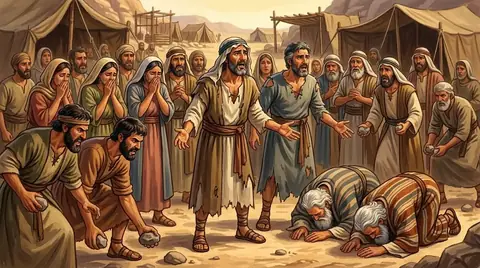 PersonJoshuaMoses' helper who took over from him and led Israel across the Jordan into the Promised Land. He fought the wars of…
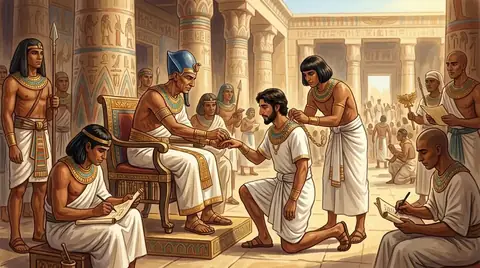 Place · NationEgyptThe great kingdom of the Nile, where Israel grew from a family into a nation and was then enslaved. The Exodus from…
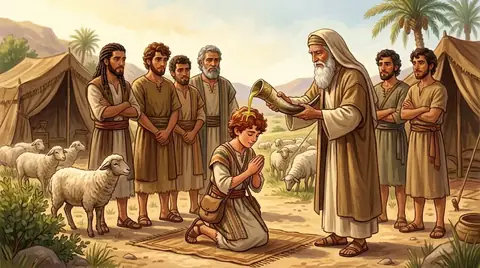 Person · KingDavidThe shepherd boy who killed Goliath and became Israel's greatest king, "a man after God's own heart". He wrote many…
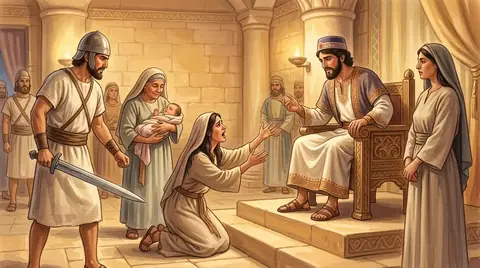 Person · KingSolomonDavid's son and Israel's third king, who asked God for wisdom and received riches and fame as well. He built the temple…
 PersonJudahJacob's fourth son, who became leader among his brothers and the father of Israel's royal tribe. David, the kings of…
Written for this app in its own words, from the Bible, with the facts checked against Bible dictionaries and encyclopedias: Easton's, Smith's, Fausset's, ISBE, Holman, the New Bible Dictionary, Vine's and the Thompson Chain topics.
