
Dress
Head-bands
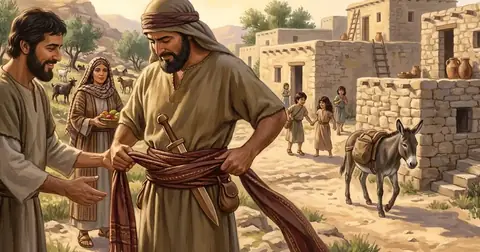
In the KJV, one of the ornaments of the proud women of Jerusalem in Isaiah's day. The Hebrew word really means sashes or belts tied round the waist, the same word as a bride's "attire" in Jeremiah.
- Hebrew
- Kishshurim, sashes or girdles
- See also
- Girdle, Dress
Isaiah lists the finery of the fashionable women of Jerusalem, who walked with outstretched necks and tinkling feet. Among "the bonnets, and the ornaments of the legs, and the headbands" (Isaiah 3:20) the word translated headbands means things tied on, most likely sashes worn round the waist. God warned that instead of a sash there would be a rope, and instead of beauty, burning (Isaiah 3:24).
The same word comes in Jeremiah: "Can a maid forget her ornaments, or a bride her attire? yet my people have forgotten me days without number" (Jeremiah 2:32). No bride forgets her wedding sash, yet Israel forgot the God who had loved her. Outward ornaments are not wrong in themselves, but they are worth nothing when the heart has turned from God (1 Peter 3:3–4).
Key verses
- Isaiah 3:20
The bonnets, and the ornaments of the legs, and the headbands, and the tablets, and the earrings,
- Isaiah 3:24
And it shall come to pass, that instead of sweet smell there shall be stink; and instead of a girdle a rent; and instead of well set hair baldness; and instead of a stomacher a girding of sackcloth; and burning instead of beauty.
- Jeremiah 2:32
Can a maid forget her ornaments, or a bride her attire? yet my people have forgotten me days without number.
Read next

Written for this app in its own words, from the Bible, with the facts checked against Bible dictionaries and encyclopedias: Easton's, Smith's, Fausset's, ISBE, Holman, the New Bible Dictionary, Vine's and the Thompson Chain topics.
