
Custom · Daily life
Dress
Also hat, raiment, clothing
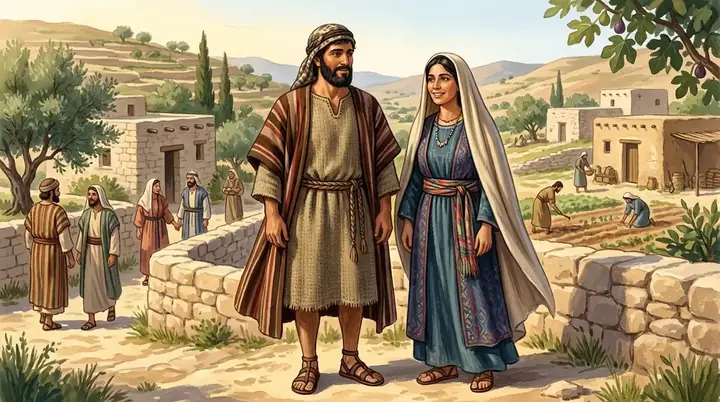
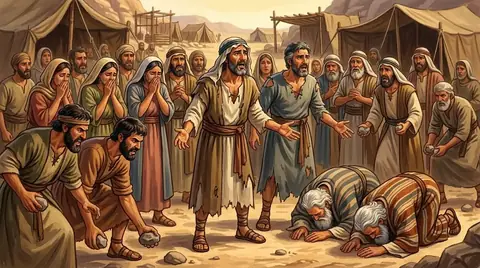
Everyday clothes in Bible times were an inner tunic, a belt, an outer cloak and sandals, with a head covering against the sun. They were mostly wool or linen, home-made, and the cloak doubled as a blanket.
- Materials
- Fig leaves and skins at first (Genesis 3:7,21); then wool, linen, goat's hair and camel's hair; wool and linen not to be mixed (Deuteronomy 22:11)
- Main garments
- The coat or tunic (John 19:23); the girdle; the cloak or mantle (Exodus 22:26–27); the robe of the well-off (1 Samuel 18:4)
- Rules
- Men and women not to swap clothes (Deuteronomy 22:5); tassels on the hem (Numbers 15:38); a cloak taken in pledge returned by night (Exodus 22:26)
What people wore
Men and women dressed much alike. Next to the skin went the tunic, a long shirt of wool or linen with or without sleeves, reaching to the knees or the ankles; Jesus' tunic was woven in one piece (John 19:23). A belt or girdle held it in; to "gird up the loins" was to tuck it up for work or running (1 Kings 18:46). Over it went the cloak, a large square of heavy wool that was wrapped about the body or slung across the shoulders, with the fold at the chest serving as a pocket. It was a man's blanket at night, which is why a cloak taken in pledge had to be given back by sunset (Exodus 22:26–27). A man in only his tunic was called "naked" (John 21:7). Women wore the tunic longer, with a mantle or veil over the head and down the back, as Ruth did when she carried home six measures of barley in it (Ruth 3:15). Sandals went on the feet, and some cloth or turban on the head against the sun.
Rich and poor
Cloth was usually its natural white or brown. Dyed cloth, embroidery and fine linen marked the rich: Joseph's coat of many colours (Genesis 37:3), the purple and fine linen of the rich man (Luke 16:19), the scarlet that Saul had given Israel's daughters (2 Samuel 1:24). A new set of clothes was a princely gift (Genesis 45:22; 2 Kings 5:5). Prophets and mourners wore rough sackcloth of goat's hair; John the Baptist wore camel's hair with a leather belt (Matthew 3:4). Changing one's clothes was a sign that life had changed, as when Joseph left prison for Pharaoh's court (Genesis 41:14,42).
What it meant
Clothes in the Bible often speak of standing before God. He clothed Adam and Eve when their fig leaves failed (Genesis 3:21). Our best deeds are "filthy rags" (Isaiah 64:6), but God clothes his people "with the garments of salvation" (Isaiah 61:10), as Joshua the high priest had his filthy clothes taken off and clean ones put on (Zechariah 3:3–4). The guest without a wedding garment was thrown out (Matthew 22:11–13). Jesus told his followers not to worry about what to wear, for the Father who dresses the lilies knows what they need (Matthew 6:28–30). Paul and Peter ask Christian women to be known for good works and a gentle spirit rather than for costly dress (1 Timothy 2:9–10; 1 Peter 3:3–4).
Key verses
- Exodus 22:26–27
If thou at all take thy neighbour’s raiment to pledge, thou shalt deliver it unto him by that the sun goeth down: For that is his covering only, it is his raiment for his skin: wherein shall he sleep? and it shall come to pass, when he crieth unto me, that I will hear; for I am gracious.
- Matthew 3:4
And the same John had his raiment of camel’s hair, and a leathern girdle about his loins; and his meat was locusts and wild honey.
- Matthew 6:28–30
And why take ye thought for raiment? Consider the lilies of the field, how they grow; they toil not, neither do they spin: And yet I say unto you, That even Solomon in all his glory was not arrayed like one of these. Wherefore, if God so clothe the grass of the field, which to day is, and to morrow is cast into the oven, shall he not much more clothe you, O ye of little faith?
- Isaiah 61:10
I will greatly rejoice in the Lord, my soul shall be joyful in my God; for he hath clothed me with the garments of salvation, he hath covered me with the robe of righteousness, as a bridegroom decketh himself with ornaments, and as a bride adorneth herself with her jewels.
- 1 Timothy 2:9–10
In like manner also, that women adorn themselves in modest apparel, with shamefacedness and sobriety; not with broided hair, or gold, or pearls, or costly array; But (which becometh women professing godliness) with good works.
Read next
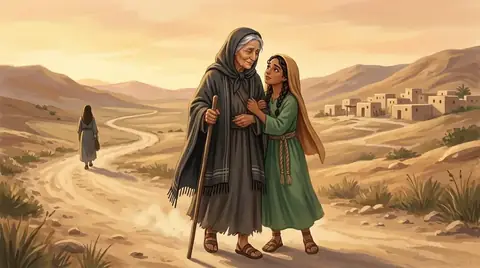 PersonRuthA young widow from Moab who left her own land to stay with her mother-in-law Naomi and trust Israel's God. She married…
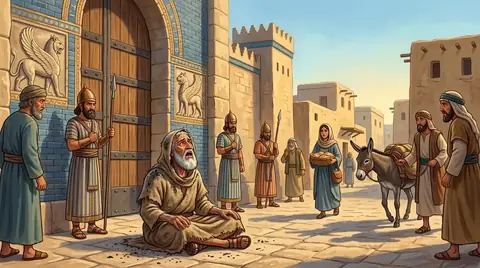 Thing · ClothingSackclothA coarse, dark cloth woven from goats' hair, used for sacks and worn next to the skin by people in mourning or in…
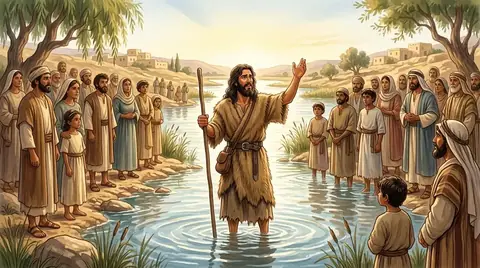 PersonJohn the BaptistThe prophet God sent to prepare the way for Jesus. He called Israel to repent, baptized in the Jordan, pointed to Jesus…
 PersonJoshuaMoses' helper who took over from him and led Israel across the Jordan into the Promised Land. He fought the wars of…
Written for this app in its own words, from the Bible, with the facts checked against Bible dictionaries and encyclopedias: Easton's, Smith's, Fausset's, ISBE, Holman, the New Bible Dictionary, Vine's and the Thompson Chain topics.
