
Teaching
Government
Also: the Sanhedrin, tyranny
How God's people were ruled, from elders and judges to kings, and what the Bible says about rulers. All authority comes from God, and rulers answer to him.
- Under Moses
- Elders, and judges over thousands, hundreds, fifties and tens (Exodus 18:21–26)
- Kings
- Allowed, with limits (Deuteronomy 17:14–20); asked for in rejection of God (1 Samuel 8:7)
- In Jesus' day
- Roman governors over Judea, and the Sanhedrin, the Jewish council of seventy-one
- For Christians
- "The powers that be are ordained of God" (Romans 13:1)
In Israel
Before the kings, Israel was ruled by its tribal elders and, in a crisis, by leaders God raised up. Moses took Jethro's advice and set judges over the people in tiers, hearing only the hardest cases himself (Exodus 18:13–26), and later seventy elders shared the load (Numbers 11:16–17). The people as a whole accepted God's law (Exodus 24:3,7) and could be consulted on great decisions. Local justice was done by the elders in the city gate (Deuteronomy 21:19; Ruth 4:1–2). God himself was the real King (Judges 8:23).
Kings
God allowed Israel a king, but a limited one: not too many horses, wives or riches, and a copy of the law to read every day (Deuteronomy 17:14–20). When the people demanded a king "like all the nations", Samuel warned how he would tax and conscript them, and God said they were rejecting him (1 Samuel 8:4–22). Good kings such as David, Hezekiah and Josiah ruled under God's word; bad ones like Ahab became tyrants, and Naboth's murder shows how the courts could be bought (1 Kings 21). After the exile, Judah was ruled by governors for Persia, like Nehemiah.
In the New Testament
Judea was governed by Rome through governors such as Pilate, with the Sanhedrin, the council of chief priests, elders and scribes, handling religious and local matters. It was this council that condemned Jesus and tried the apostles (Matthew 26:59; Acts 5:21–40). Jesus said to give Caesar what is Caesar's and God what is God's (Matthew 22:21).
For us
Paul says every ruler, even a pagan one, holds authority from God to punish wrong and reward right, so Christians pay taxes and show respect (Romans 13:1–7). They pray for kings and all in authority (1 Timothy 2:1–2). But when rulers command what God forbids, "we ought to obey God rather than men" (Acts 5:29). Isaiah promised a child on whose shoulder the government would rest, and of whose peace there would be no end (Isaiah 9:6–7). Paul also lists "governments", gifts of leadership, among what God gives the church (1 Corinthians 12:28).
Key verses
- Exodus 18:21
Moreover thou shalt provide out of all the people able men, such as fear God, men of truth, hating covetousness; and place such over them, to be rulers of thousands, and rulers of hundreds, rulers of fifties, and rulers of tens:
- Deuteronomy 17:18–20
And it shall be, when he sitteth upon the throne of his kingdom, that he shall write him a copy of this law in a book out of that which is before the priests the Levites: And it shall be with him, and he shall read therein all the days of his life: that he may learn to fear the Lord his God, to keep all the words of this law and these statutes, to do them: That his heart be not lifted up above his brethren, and that he turn not aside from the commandment, to the right hand, or to the left: to the end that he may prolong his days in his kingdom, he, and his children, in the midst of Israel.
- 1 Samuel 8:7
And the Lord said unto Samuel, Hearken unto the voice of the people in all that they say unto thee: for they have not rejected thee, but they have rejected me, that I should not reign over them.
- Isaiah 9:6
For unto us a child is born, unto us a son is given: and the government shall be upon his shoulder: and his name shall be called Wonderful, Counsellor, The mighty God, The everlasting Father, The Prince of Peace.
- Romans 13:1–7
Let every soul be subject unto the higher powers. For there is no power but of God: the powers that be are ordained of God. Whosoever therefore resisteth the power, resisteth the ordinance of God: and they that resist shall receive to themselves damnation. For rulers are not a terror to good works, but to the evil. Wilt thou then not be afraid of the power? do that which is good, and thou shalt have praise of the same: …
- Acts 5:29
Then Peter and the other apostles answered and said, We ought to obey God rather than men.
Read next
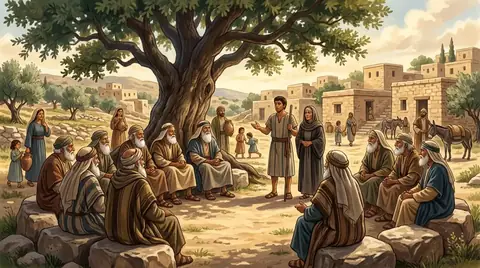 Custom · LeadershipEldersThe senior men who led Israel's families, towns and nation, judged disputes and spoke for the people. In the church…
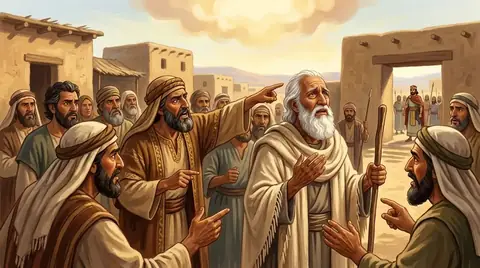 Group · LeadersKingA ruler with power over a people. Israel first had God alone as King, then asked for a king like the nations. Its kings…
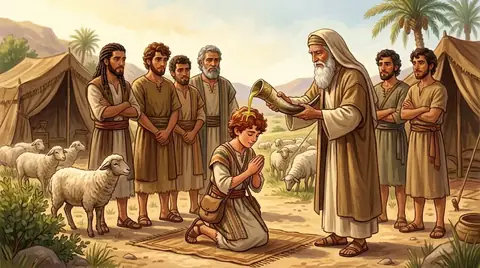 Person · KingDavidThe shepherd boy who killed Goliath and became Israel's greatest king, "a man after God's own heart". He wrote many…
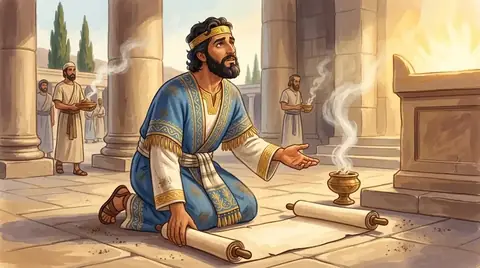 Person · KingHezekiahOne of Judah's best kings. He cleansed the temple, smashed the idols, trusted God when Assyria besieged Jerusalem, and…
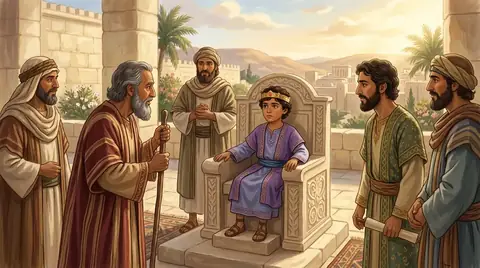 PersonJosiahThe boy king of Judah who turned the nation back to God. When the lost Book of the Law was found in the temple, he tore…
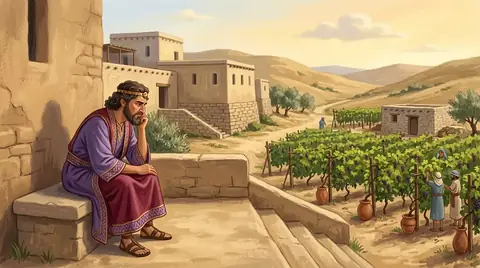 Person · KingAhabThe seventh king of the northern kingdom of Israel, who married Jezebel and led the nation into Baal worship. He…
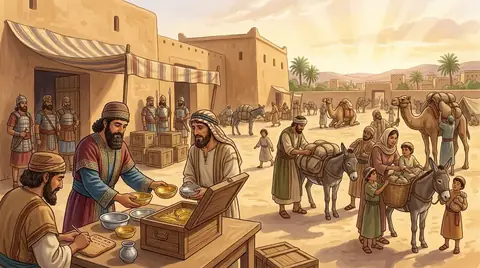 Place · EmpirePersiaThe great empire that conquered Babylon and ruled the Jews for two centuries. Its king Cyrus let the exiles go home…
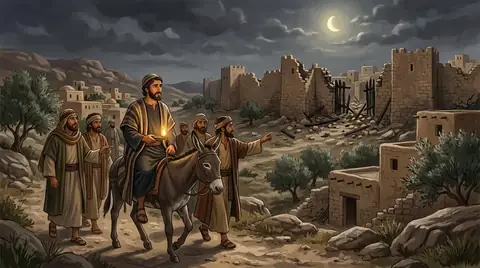 PersonNehemiahThe king of Persia's cupbearer who got leave to go to Jerusalem and rebuilt its broken walls in fifty-two days, despite…
Written for this app in its own words, from the Bible, with the facts checked against Bible dictionaries and encyclopedias: Easton's, Smith's, Fausset's, ISBE, Holman, the New Bible Dictionary, Vine's and the Thompson Chain topics.
