
Custom
Gleaning
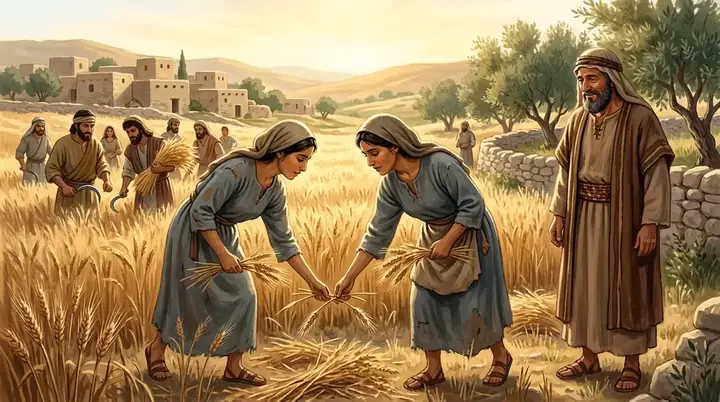
Picking up what the harvesters left behind. God's law told farmers to leave the corners of the field and the dropped stalks for the poor, the widow and the foreigner.
- Law
- Leviticus 19:9–10; Leviticus 23:22; Deuteronomy 24:19–22
- Best known
- Ruth gleaning in the field of Boaz (Ruth 2)
What it was
When a field was reaped, the owner was not to cut right up to the edges or go back for the sheaf he had forgotten. The same held for the vineyard and the olive tree: once the branches had been beaten or picked, no one was to go over them again. Whatever was left belonged to anyone in need: poor families, each widow and orphan, and the stranger living among them (Leviticus 19:9–10; Deuteronomy 24:19–22). It was not charity at the owner's whim but a share God had set aside, and he reminded Israel why: "thou wast a bondman in the land of Egypt".
Ruth
The best-loved story of gleaning is Ruth's. A widow from Moab, she went out to pick up grain behind the reapers and happened on the field of Boaz, a relative of her dead husband. He told his men to let her glean among the sheaves and to drop some on purpose for her (Ruth 2:15–16). From that field came her marriage, and her great-grandson was King David.
As a picture
The prophets use the gleanings for the few who are left after judgment: a few olives on the topmost branches, a few grapes after the vintage (Isaiah 17:6; Micah 7:1). Gideon soothed the proud men of Ephraim by saying their gleanings were better than his whole harvest (Judges 8:2).
Key verses
- Leviticus 19:9–10
And when ye reap the harvest of your land, thou shalt not wholly reap the corners of thy field, neither shalt thou gather the gleanings of thy harvest. And thou shalt not glean thy vineyard, neither shalt thou gather every grape of thy vineyard; thou shalt leave them for the poor and stranger: I am the Lord your God.
- Deuteronomy 24:19–22
When thou cuttest down thine harvest in thy field, and hast forgot a sheaf in the field, thou shalt not go again to fetch it: it shall be for the stranger, for the fatherless, and for the widow: that the Lord thy God may bless thee in all the work of thine hands. When thou beatest thine olive tree, thou shalt not go over the boughs again: it shall be for the stranger, for the fatherless, and for the widow. When thou gatherest the grapes of thy vineyard, thou shalt not glean it afterward: it shall be for the stranger, for the fatherless, and for the widow. …
- Ruth 2:2–3
And Ruth the Moabitess said unto Naomi, Let me now go to the field, and glean ears of corn after him in whose sight I shall find grace. And she said unto her, Go, my daughter. And she went, and came, and gleaned in the field after the reapers: and her hap was to light on a part of the field belonging unto Boaz, who was of the kindred of Elimelech.
- Ruth 2:15–16
And when she was risen up to glean, Boaz commanded his young men, saying, Let her glean even among the sheaves, and reproach her not: And let fall also some of the handfuls of purpose for her, and leave them, that she may glean them, and rebuke her not.
- Isaiah 17:6
Yet gleaning grapes shall be left in it, as the shaking of an olive tree, two or three berries in the top of the uppermost bough, four or five in the outmost fruitful branches thereof, saith the Lord God of Israel.
Read next
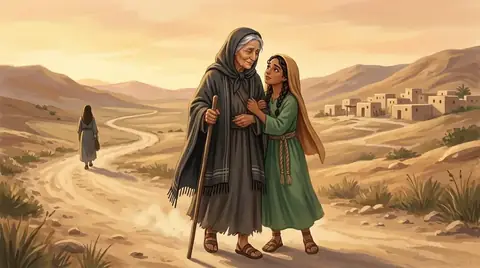 PersonRuthA young widow from Moab who left her own land to stay with her mother-in-law Naomi and trust Israel's God. She married…
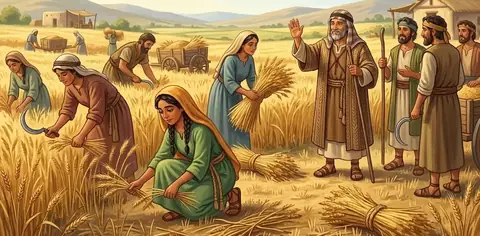 PersonBoazA wealthy farmer of Bethlehem who married Ruth, the Moabite widow, as her kinsman-redeemer. Their great-grandson was…
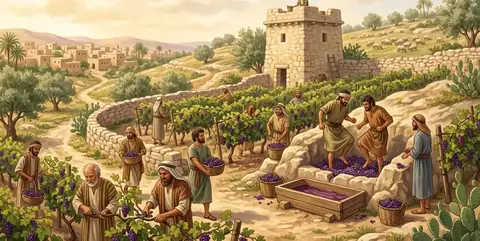 Custom · Daily lifeVineyardA planted field of grapevines, usually on a hillside, fenced with a hedge or wall, with a watchtower, a hut for the…
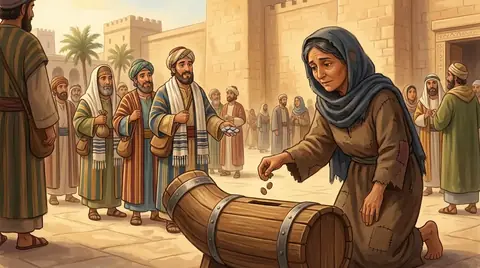 Person · CustomWidowA woman whose husband has died. In Bible times she was often poor and without protection, so God's law commanded care…
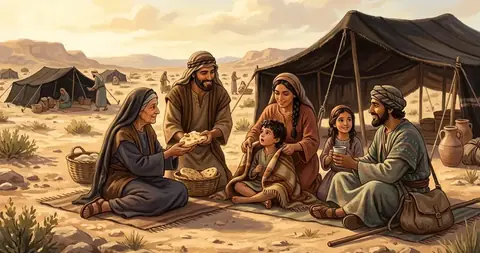 Teaching · Daily lifeOrphanA child with no father to provide for and protect them. God calls himself the Father of the fatherless, and his law and…Teaching · CustomAlienA foreigner living in a land not his own, without the rights of those born there. God told Israel to love such people…Place · NationMoabThe land and people east of the Dead Sea, descended from Lot. Balak of Moab hired Balaam to curse Israel, Moses died on…
 Person · KingDavidThe shepherd boy who killed Goliath and became Israel's greatest king, "a man after God's own heart". He wrote many…
Written for this app in its own words, from the Bible, with the facts checked against Bible dictionaries and encyclopedias: Easton's, Smith's, Fausset's, ISBE, Holman, the New Bible Dictionary, Vine's and the Thompson Chain topics.
