
Thing · Punishment
Gallows
The tall post Haman built to hang Mordecai on, and was hanged on himself. In Hebrew it is simply "the tree": a pole on which a body was hung up, not the trapdoor gallows of later times.
- Where
- Esther 5:14; Esther 6:4; Esther 7:9–10; Esther 9:13–25
- Size
- Fifty cubits, about 75 feet (23 m) (Esther 5:14)
In Esther
Haman, furious that Mordecai would not bow to him, took his wife's advice and had a gallows built fifty cubits high, about 75 feet (23 m), meaning to ask the king for Mordecai's death the next morning (Esther 5:14). That same night the king could not sleep, found in the records that Mordecai had once saved his life, and asked Haman how to honour a man; Haman, thinking it meant himself, had to lead Mordecai through the city in royal robes (Esther 6). At Esther's banquet the plot came out, and the king ordered Haman hanged "on the gallows that he had prepared for Mordecai" (Esther 7:9–10). His ten sons were later hanged on it too (Esther 9:13–14).
What it was
The Hebrew word is the ordinary word for a tree or timber. In Persia a condemned man was usually killed first and his body raised on a stake for all to see, as Pharaoh's baker was hanged on a tree (Genesis 40:19). The law of Moses allowed a body to be hung up after execution but ordered it taken down by nightfall, "for he that is hanged is accursed of God" (Deuteronomy 21:22–23). Paul takes those words to the cross: Christ was "made a curse for us: for it is written, Cursed is every one that hangeth on a tree" (Galatians 3:13).
Key verses
- Esther 5:14
Then said Zeresh his wife and all his friends unto him, Let a gallows be made of fifty cubits high, and to morrow speak thou unto the king that Mordecai may be hanged thereon: then go thou in merrily with the king unto the banquet. And the thing pleased Haman; and he caused the gallows to be made.
- Esther 7:10
So they hanged Haman on the gallows that he had prepared for Mordecai. Then was the king’s wrath pacified.
- Deuteronomy 21:22–23
And if a man have committed a sin worthy of death, and he be to be put to death, and thou hang him on a tree: His body shall not remain all night upon the tree, but thou shalt in any wise bury him that day; (for he that is hanged is accursed of God;) that thy land be not defiled, which the Lord thy God giveth thee for an inheritance.
- Galatians 3:13
Christ hath redeemed us from the curse of the law, being made a curse for us: for it is written, Cursed is every one that hangeth on a tree:
Read next
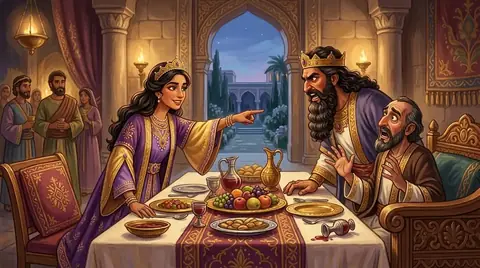 PersonHamanThe proud prime minister of King Ahasuerus of Persia, who plotted to kill every Jew in the empire because Mordecai…
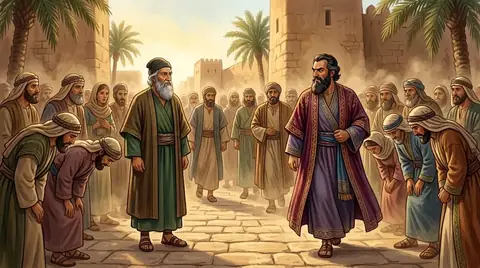 PersonMordecaiThe Jew who raised his cousin Esther, refused to bow to Haman, and with Esther saved the Jews of Persia from being…
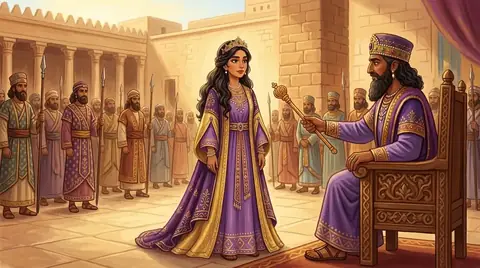 PersonEstherA Jewish orphan who became queen of Persia and risked her life to stop Haman's plan to kill every Jew in the empire.…
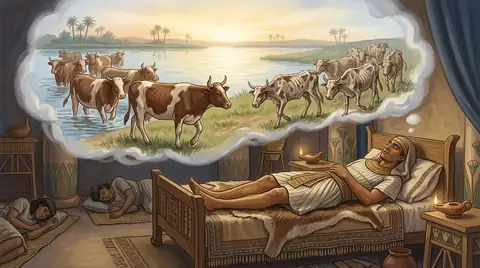 Title · RulerPharaohNot a personal name but the title borne by every king of Egypt, like "Caesar". The Bible names several, the best known…
 Custom · RomeCrossThe wooden post and crossbeam on which the Romans executed criminals, and on which Jesus died. In the New Testament…
Written for this app in its own words, from the Bible, with the facts checked against Bible dictionaries and encyclopedias: Easton's, Smith's, Fausset's, ISBE, Holman, the New Bible Dictionary, Vine's and the Thompson Chain topics.
