
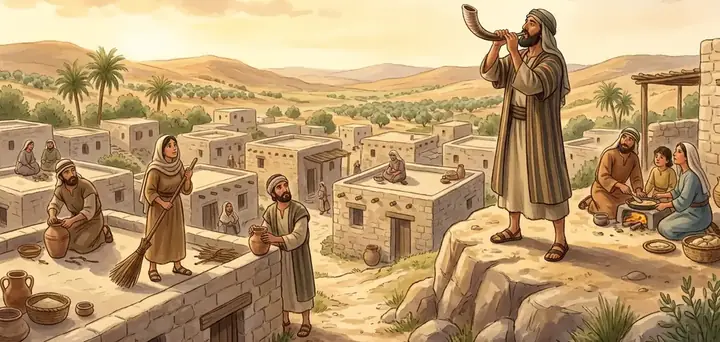
Feast
The Feast of Trumpets
1 Tishri (September–October) · Lev 23:23-25 · later the Jewish New Year
A day of rest and worship on the first of the seventh month, opened with trumpet blasts. It began Israel's most solemn month, ten days before the Day of Atonement, and later became the Jewish New Year, Rosh Hashanah.
- When
- The new moon of the seventh month (Tishri), in September or October
- Offerings
- A bull, a ram, seven lambs and a goat, besides the usual new-moon offerings (Numbers 29:1–6)
- Later called
- Rosh Hashanah, "head of the year"
What it was
Trumpets were blown at the start of every month (Numbers 10:10), but when the seventh month began they were blown with special solemnity. The day was "a memorial of blowing of trumpets, an holy convocation": no ordinary work, and extra sacrifices (Leviticus 23:24–25; Numbers 29:1–6). The ram's horn (shofar) and the priests' silver trumpets called the people to attention, as a trumpet calls an army. The Law does not explain the day further; it seems meant to summon the nation to prepare for the Day of Atonement ten days later and the Feast of Tabernacles after that, the most solemn stretch of the year.
In the Bible
It was on this day that Ezra read the law to the people gathered at the Water Gate, and Nehemiah told them to stop weeping and celebrate (Nehemiah 8:2–12). The returned exiles had begun the sacrifices again on this same day (Ezra 3:6). In later Judaism the seventh month began the civil year, and the day became Rosh Hashanah, a day of self-examination that opens ten days of repentance ending at the Day of Atonement.
What it means
A trumpet in the Bible gathers God's people and announces his coming (Exodus 19:16; Joel 2:1, 15). The New Testament says the Lord himself will return "with the trump of God" and the dead in Christ will rise (1 Thessalonians 4:16; 1 Corinthians 15:52). The feast is a yearly reminder to wake up and be ready.
Key verses
- Leviticus 23:23–25
And the Lord spake unto Moses, saying, Speak unto the children of Israel, saying, In the seventh month, in the first day of the month, shall ye have a sabbath, a memorial of blowing of trumpets, an holy convocation. Ye shall do no servile work therein: but ye shall offer an offering made by fire unto the Lord.
- Numbers 29:1
And in the seventh month, on the first day of the month, ye shall have an holy convocation; ye shall do no servile work: it is a day of blowing the trumpets unto you.
- Nehemiah 8:2
And Ezra the priest brought the law before the congregation both of men and women, and all that could hear with understanding, upon the first day of the seventh month.
- 1 Thessalonians 4:16
For the Lord himself shall descend from heaven with a shout, with the voice of the archangel, and with the trump of God: and the dead in Christ shall rise first:
Read next
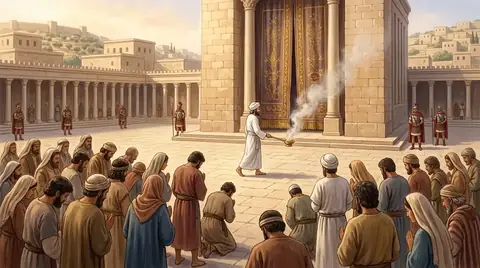 Feast · FastThe Day of AtonementThe one day in the year when the high priest went behind the veil with blood to atone for all Israel's sins, while a…
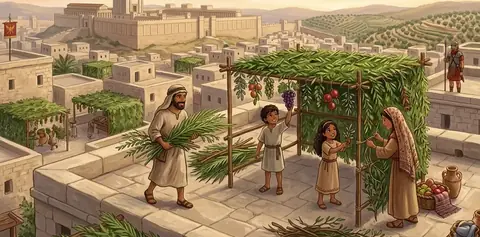 FeastThe Feast of Tabernacles (Booths)Israel's joyful autumn harvest feast, seven days of living in leafy shelters to remember the years in the wilderness…
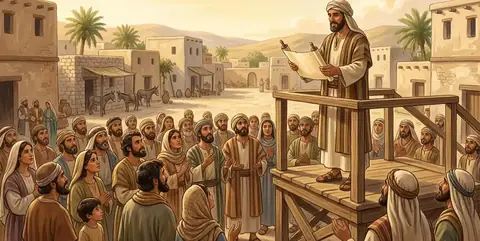 PersonEzraA priest and scribe who led a second group of exiles back from Babylon, taught the people God's law and read it to them…
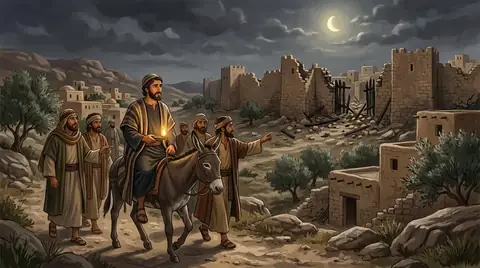 PersonNehemiahThe king of Persia's cupbearer who got leave to go to Jerusalem and rebuilt its broken walls in fifty-two days, despite…
Written for this app in its own words, from the Bible, with the facts checked against Bible dictionaries and encyclopedias: Easton's, Smith's, Fausset's, ISBE, Holman, the New Bible Dictionary, Vine's and the Thompson Chain topics.
