
Month
Ethanim
ETH-ah-nimLater called Tishri · the seventh month of the religious year · September–October
The seventh month of Israel's religious year, in early autumn, and the first of the civil year. Its feasts were the Trumpets, the Day of Atonement and Tabernacles, and Solomon dedicated the temple in it.
- When
- New moon of September to new moon of October
- Meaning
- Perhaps "the ever-flowing streams", the only ones still running at summer's end
- Feasts
- Trumpets on the 1st, the Day of Atonement on the 10th, Tabernacles from the 15th (Leviticus 23:23–43)
- Known for
- The temple dedicated (1 Kings 8:2); the altar rebuilt after the exile (Ezra 3:1–6)
Ethanim is the old Canaanite name for the month, used once in the Bible, for the feast at which Solomon brought the ark of the covenant into the new temple and the glory of the LORD filled the house (1 Kings 8:1–11). After the exile the Babylonian name Tishri took its place. It opened the year of farming and business, so that Jewish New Year, Rosh Hashanah, still falls on its first day, which the law called the feast of Trumpets. The Jubilee was announced with a trumpet on its tenth day, the Day of Atonement (Leviticus 25:9). The month came at the end of the fruit harvest, when the whole nation camped out in leafy shelters for the week of Tabernacles. When the exiles returned, it was in this month that they rebuilt the altar in the ruins of Jerusalem and offered sacrifice again (Ezra 3:1–6), and in it Ezra read the law to the people from a wooden platform (Nehemiah 8:1–18).
Key verses
- 1 Kings 8:2
And all the men of Israel assembled themselves unto king Solomon at the feast in the month Ethanim, which is the seventh month.
- Leviticus 23:24–34
Speak unto the children of Israel, saying, In the seventh month, in the first day of the month, shall ye have a sabbath, a memorial of blowing of trumpets, an holy convocation. Ye shall do no servile work therein: but ye shall offer an offering made by fire unto the Lord. And the Lord spake unto Moses, saying, …
- Ezra 3:6
From the first day of the seventh month began they to offer burnt offerings unto the Lord. But the foundation of the temple of the Lord was not yet laid.
Read next
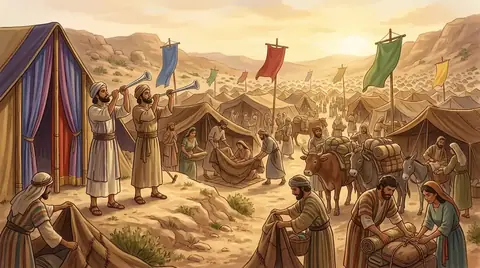 Thing · SymbolThe trumpetIsrael's trumpets, a ram's horn and silver tubes, called the people together, warned of danger, sounded for battle and…
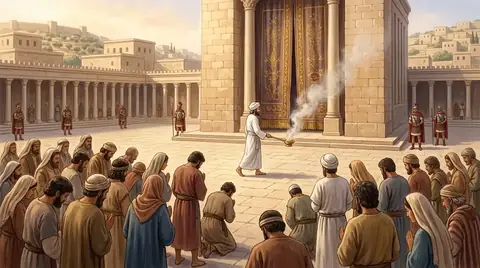 Feast · FastThe Day of AtonementThe one day in the year when the high priest went behind the veil with blood to atone for all Israel's sins, while a…
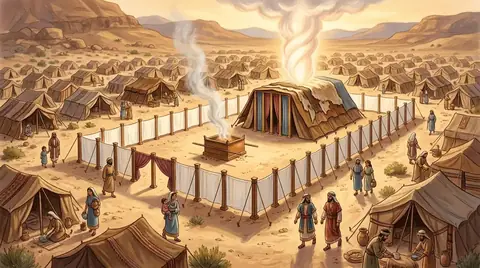 Thing · WorshipThe tabernacleThe holy tent Israel built in the wilderness, by God's own pattern, so that he could dwell in the middle of his people.…
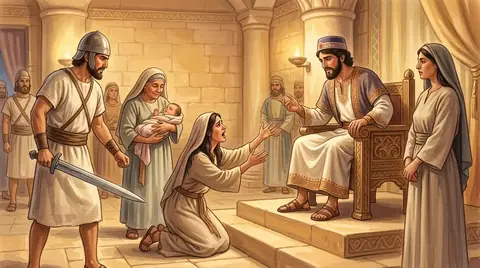 Person · KingSolomonDavid's son and Israel's third king, who asked God for wisdom and received riches and fame as well. He built the temple…
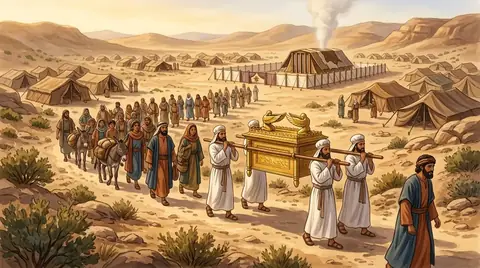 Thing · WorshipThe ark of the covenantThe gold-covered chest that held the Ten Commandments and stood in the Most Holy Place. God promised to meet with…
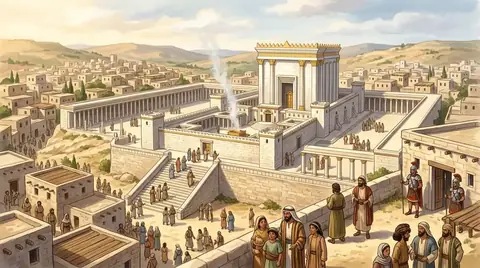 Thing · WorshipThe TempleGod's house in Jerusalem, where he was worshipped and the sacrifices offered. Solomon built it, Babylon burned it, the…
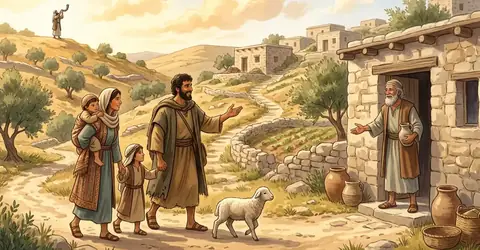 Feast · LawThe JubileeEvery fiftieth year in Israel, announced by a trumpet blast on the Day of Atonement. Sold land went back to its first…
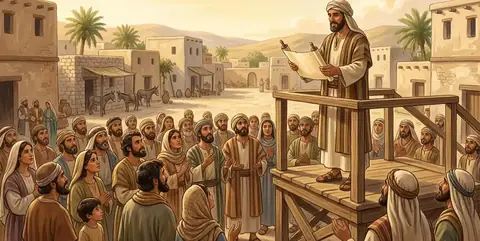 PersonEzraA priest and scribe who led a second group of exiles back from Babylon, taught the people God's law and read it to them…
Written for this app in its own words, from the Bible, with the facts checked against Bible dictionaries and encyclopedias: Easton's, Smith's, Fausset's, ISBE, Holman, the New Bible Dictionary, Vine's and the Thompson Chain topics.
