
Feast
Easter
The festival of Christ's resurrection, kept by Christians since the earliest centuries at Passover time. The word itself appears once in the King James Bible, in Acts 12:4, where it translates "Passover".
- Where
- Acts 12:4 only; the Greek is pascha, "Passover"
- The name
- Old English, perhaps from a spring goddess Eostre or from a word for dawn; most languages call the feast Pascha
- The date
- The Sunday after the first full moon of spring, fixed by the Council of Nicaea in AD 325
In the Bible
The word is not a Bible word at all. In Acts 12 Herod Agrippa had James killed and Peter arrested in the Passover week, "intending after Easter to bring him forth to the people" (Acts 12:4). The Greek word there is pascha, which the King James Bible renders "Passover" in its twenty-eight other places. The old English translations had used "Easter" freely for the feast, and this one survived into 1611. Herod meant the Jewish Passover; he was waiting for the holy days to end. That night an angel led Peter out of prison (Acts 12:6–11).
The Christian feast
Christ died at Passover and rose on the first day of the week, and from the earliest days Christians kept that day each year with joy. In most languages the feast still bears the Passover name, Pascha; English and German took a spring word instead. Where the Easter name came from isn't certain, and it is the thing, not the word, that matters: "the Lord is risen indeed" (Luke 24:34). Paul draws the two feasts together: "Christ our passover is sacrificed for us: therefore let us keep the feast" (1 Corinthians 5:7–8).
Key verses
- Acts 12:4
And when he had apprehended him, he put him in prison, and delivered him to four quaternions of soldiers to keep him; intending after Easter to bring him forth to the people.
- Luke 24:34
Saying, The Lord is risen indeed, and hath appeared to Simon.
- 1 Corinthians 5:7–8
Purge out therefore the old leaven, that ye may be a new lump, as ye are unleavened. For even Christ our passover is sacrificed for us: Therefore let us keep the feast, not with old leaven, neither with the leaven of malice and wickedness; but with the unleavened bread of sincerity and truth.
- 1 Corinthians 15:20
But now is Christ risen from the dead, and become the firstfruits of them that slept.
Read next
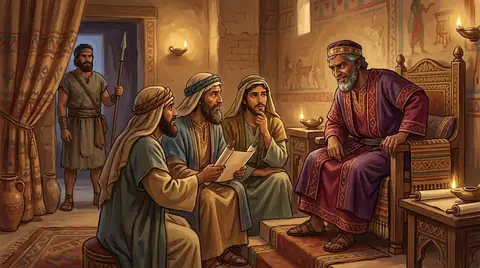 Person · KingHerodThe name of a family of rulers under Rome. Herod the Great tried to kill the infant Jesus; his son Antipas beheaded…
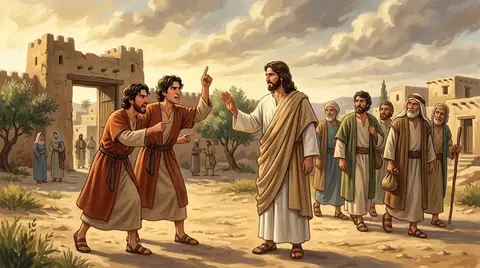 Person · ApostleJamesThe fisherman son of Zebedee, brother of John and one of Jesus' three closest disciples. Jesus called the brothers…
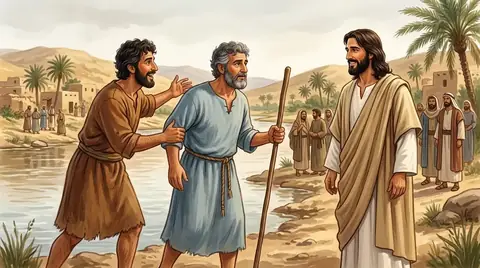 PersonPeterA Galilean fisherman who became the leader of the twelve apostles. Bold and impulsive, he confessed Jesus as the…
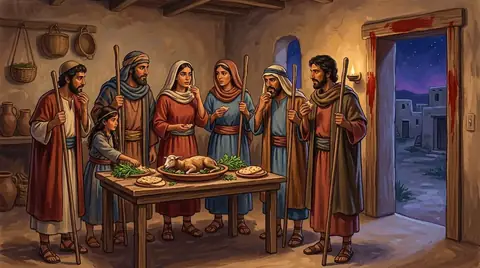 FeastPassoverThe yearly feast remembering the night God rescued Israel from Egypt, when death passed over every house marked with a…
Written for this app in its own words, from the Bible, with the facts checked against Bible dictionaries and encyclopedias: Easton's, Smith's, Fausset's, ISBE, Holman, the New Bible Dictionary, Vine's and the Thompson Chain topics.
