
Custom · Worship
Convocation
A "holy convocation" was a day on which all Israel was called together for worship and rest from work: every Sabbath and the great days of the yearly feasts.
- Hebrew
- miqra qodesh, a holy calling-together
- The days
- Every Sabbath; the first and last days of Passover and Unleavened Bread; Pentecost; the Feast of Trumpets; the Day of Atonement; the first and eighth days of Tabernacles
- Where
- Leviticus 23; Numbers 28–29
What it was
Leviticus 23 lists the "feasts of the LORD" and calls each of their chief days a holy convocation. On such a day the people were summoned together, no ordinary work was done, and special offerings were made at the sanctuary (Numbers 28–29). The weekly Sabbath heads the list (Leviticus 23:3), so the ordinary week already had its holy gathering. Then came the yearly days: the first and seventh days of Unleavened Bread (Leviticus 23:7–8), the day of Pentecost (Leviticus 23:21), the first day of the seventh month with its trumpets (Leviticus 23:24), the Day of Atonement, a convocation of fasting rather than feasting (Leviticus 23:27), and the first and eighth days of the Feast of Tabernacles (Leviticus 23:35–36).
What it meant
These days taught Israel that time belongs to God. Work stopped not because the people were tired but because God had called them. The gathering was for worship, not for law or politics, which is why the word "holy" is always attached. Isaiah later warned that God had come to hate the convocations of a people whose hands were full of blood (Isaiah 1:13–15): the gathering meant nothing without the heart.
For us
The New Testament does not bind Christians to Israel's calendar (Colossians 2:16–17), but it keeps the habit of gathering. Hebrews tells believers not to give up meeting together (Hebrews 10:25). The call to come together before God did not end with the feasts.
Key verses
- Leviticus 23:2–3
Speak unto the children of Israel, and say unto them, Concerning the feasts of the Lord, which ye shall proclaim to be holy convocations, even these are my feasts. Six days shall work be done: but the seventh day is the sabbath of rest, an holy convocation; ye shall do no work therein: it is the sabbath of the Lord in all your dwellings.
- Leviticus 23:27
Also on the tenth day of this seventh month there shall be a day of atonement: it shall be an holy convocation unto you; and ye shall afflict your souls, and offer an offering made by fire unto the Lord.
- Numbers 28:26
Also in the day of the firstfruits, when ye bring a new meat offering unto the Lord, after your weeks be out, ye shall have an holy convocation; ye shall do no servile work:
- Isaiah 1:13
Bring no more vain oblations; incense is an abomination unto me; the new moons and sabbaths, the calling of assemblies, I cannot away with; it is iniquity, even the solemn meeting.
- Hebrews 10:25
Not forsaking the assembling of ourselves together, as the manner of some is; but exhorting one another: and so much the more, as ye see the day approaching.
Read next
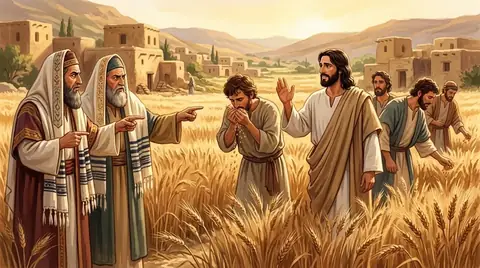 Custom · Day of restThe SabbathThe seventh day of the week, kept holy for rest and worship because God rested after creation. It was the sign of God's…
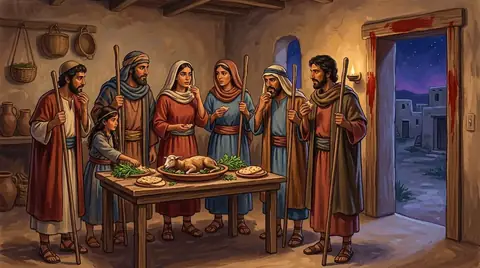 FeastPassoverThe yearly feast remembering the night God rescued Israel from Egypt, when death passed over every house marked with a…
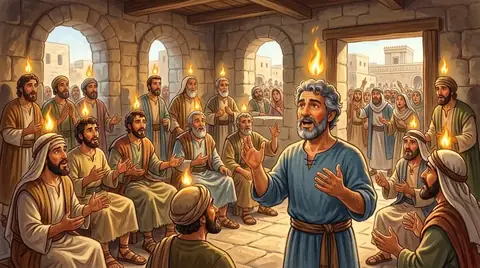 FeastPentecost (the Feast of Weeks)The harvest feast kept fifty days after Passover, when two loaves baked from the new wheat were offered to God. On the…
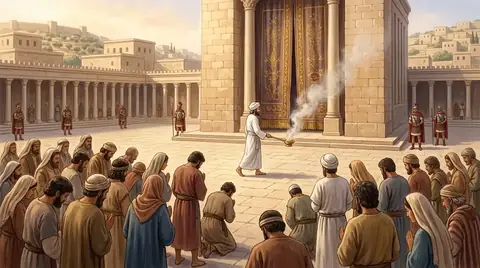 Feast · FastThe Day of AtonementThe one day in the year when the high priest went behind the veil with blood to atone for all Israel's sins, while a…
 Person · ProphetIsaiahThe prophet of Jerusalem who served four kings, saw the LORD on his throne, and foretold the virgin's son, the…
Written for this app in its own words, from the Bible, with the facts checked against Bible dictionaries and encyclopedias: Easton's, Smith's, Fausset's, ISBE, Holman, the New Bible Dictionary, Vine's and the Thompson Chain topics.
