
Office · Court
Chamberlain
Old and New Testaments · Hebrew saris, often a eunuch
An officer close to a king, in charge of his private rooms and household. In the Old Testament the word usually means a eunuch at court; in the New, Blastus served Herod and Erastus kept the accounts of Corinth.
- Hebrew
- Saris, a court officer, usually a eunuch
- In Persia
- Seven served King Ahasuerus (Esther 1:10); Hegai kept the women (Esther 2:3)
- In the New Testament
- Blastus, Herod's chamberlain (Acts 12:20); Erastus, the city's treasurer (Romans 16:23)
At the king's side
A chamberlain looked after a king's private quarters, and so he was trusted with the king's person. In the Old Testament the Hebrew word, saris, usually means a eunuch, since such men were thought safe to serve close to the king and his wives. In the book of Esther, King Ahasuerus sent seven chamberlains to fetch Queen Vashti (Esther 1:10). Hegai had charge of the young women brought to the palace (Esther 2:3), and Hatach carried messages between Esther and Mordecai (Esther 4:5). Two others, Bigthan and Teresh, plotted to kill the king; Mordecai found them out and saved his life (Esther 2:21–23).
In the New Testament
Blastus was Herod Agrippa's chamberlain, and the people of Tyre and Sidon won his help to make peace with the king (Acts 12:20). When Paul sends greetings from "Erastus the chamberlain of the city", the Greek means the city's treasurer, an important public officer, probably at Corinth (Romans 16:23). The gospel had reached even men of rank.
Key verses
- Esther 1:10
On the seventh day, when the heart of the king was merry with wine, he commanded Mehuman, Biztha, Harbona, Bigtha, and Abagtha, Zethar, and Carcas, the seven chamberlains that served in the presence of Ahasuerus the king,
- Esther 2:21
In those days, while Mordecai sat in the king’s gate, two of the king’s chamberlains, Bigthan and Teresh, of those which kept the door, were wroth, and sought to lay hand on the king Ahasuerus.
- Acts 12:20
And Herod was highly displeased with them of Tyre and Sidon: but they came with one accord to him, and, having made Blastus the king’s chamberlain their friend, desired peace; because their country was nourished by the king’s country.
- Romans 16:23
Gaius mine host, and of the whole church, saluteth you. Erastus the chamberlain of the city saluteth you, and Quartus a brother.
Read next
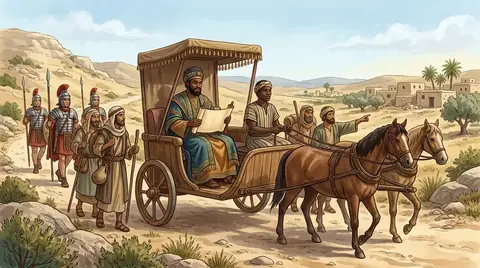 Custom · CourtEunuchsMen who had been castrated, often in boyhood, to serve in a king's palace and guard his wives; the word also came to…
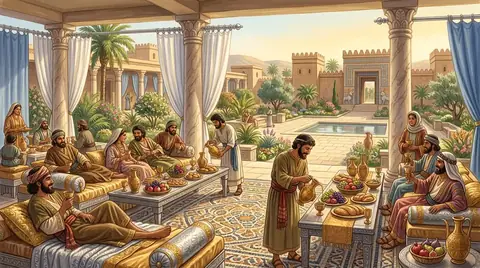 Person · KingAhasuerusThe king of Persia in the book of Esther, who put away Queen Vashti, made Esther his queen, and was tricked by Haman…PersonHegaiThe Persian king's chamberlain in charge of the young women brought to the palace. He took a liking to Esther, gave her…
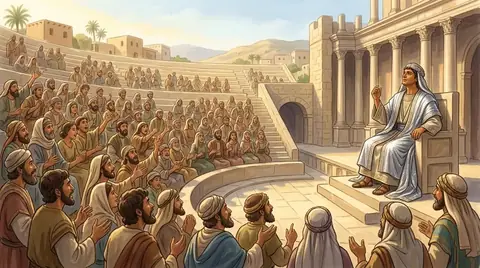 PersonBlastusThe chamberlain of King Herod Agrippa I. The people of Tyre and Sidon won him over so that he would help them make…
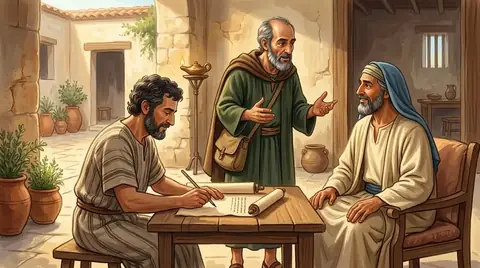 PersonErastusA helper of Paul who was sent with Timothy into Macedonia. An Erastus who was the city treasurer of Corinth, very…
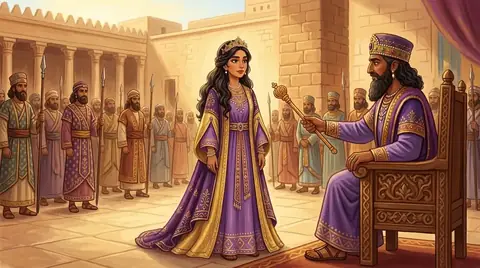 PersonEstherA Jewish orphan who became queen of Persia and risked her life to stop Haman's plan to kill every Jew in the empire.…
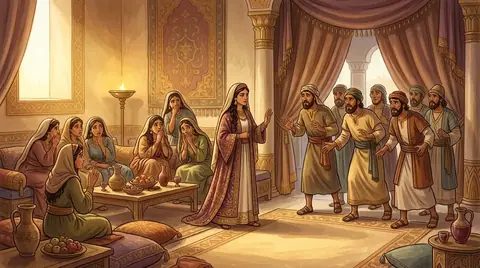 PersonVashtiThe queen of the Persian king Ahasuerus (Xerxes). When she refused to come and show her beauty to his drunken guests…
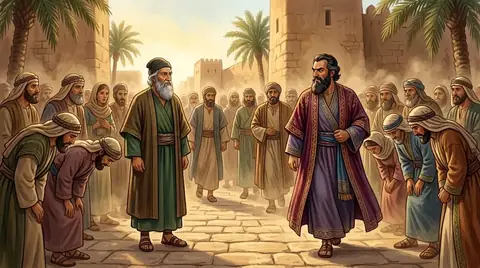 PersonMordecaiThe Jew who raised his cousin Esther, refused to bow to Haman, and with Esther saved the Jews of Persia from being…
Written for this app in its own words, from the Bible, with the facts checked against Bible dictionaries and encyclopedias: Easton's, Smith's, Fausset's, ISBE, Holman, the New Bible Dictionary, Vine's and the Thompson Chain topics.
