
Animal
Badger
Hebrew tachash; "seal" or "porpoise" in later versions
The King James Version says the tabernacle's outer cover was of badgers' skins. The Hebrew word's meaning isn't certain; many think it was the hide of the dugong, a sea cow of the Red Sea, or just fine leather.
- Where
- Exodus 25:5; Exodus 26:14; Numbers 4:6–14; Ezekiel 16:10
- Used for
- The tabernacle's outermost covering; wrapping the holy things on the march; women's sandals
The word "badger" appears in the Bible only for a kind of skin. Israel brought "badgers' skins" among the gifts for the tabernacle (Exodus 25:5); they formed the weatherproof outer layer over the tent (Exodus 26:14), and when the camp moved, the ark of the covenant and the altar were wrapped in them (Numbers 4:6–14). Ezekiel speaks of God shoeing Jerusalem with the same leather (Ezekiel 16:10).
What animal it was isn't certain. The Hebrew tachash sounded like the Latin word for a badger, which is probably how the old translators chose it; but a badger's small hide would hardly cover a tent. The Arabs of Sinai used a similar word for the dugong, a large sea creature of the Red Sea whose tough skin made good sandals, so many think that is meant. Others take the word to describe the leather's quality or colour rather than the animal. Whatever it was, it was strong and plain on the outside, while inside were the gold and the glory. See also Badger skins (tachash).
Key verses
- Exodus 25:5
And rams’ skins dyed red, and badgers’ skins, and shittim wood,
- Exodus 26:14
And thou shalt make a covering for the tent of rams’ skins dyed red, and a covering above of badgers’ skins.
- Numbers 4:6
And shall put thereon the covering of badgers’ skins, and shall spread over it a cloth wholly of blue, and shall put in the staves thereof.
- Ezekiel 16:10
I clothed thee also with broidered work, and shod thee with badgers’ skin, and I girded thee about with fine linen, and I covered thee with silk.
Read next
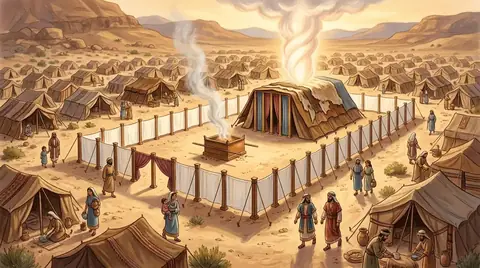 Thing · WorshipThe tabernacleThe holy tent Israel built in the wilderness, by God's own pattern, so that he could dwell in the middle of his people.…
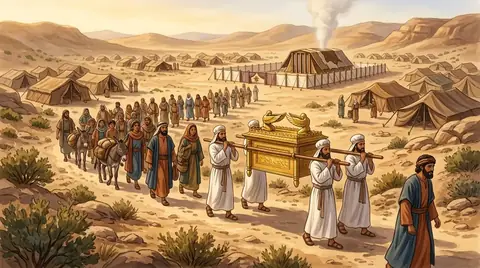 Thing · WorshipThe ark of the covenantThe gold-covered chest that held the Ten Commandments and stood in the Most Holy Place. God promised to meet with…Thing · TabernacleBadger skins (tachash)The tough outer covering of the tabernacle and the wrapping for its holy furniture on the march. "Badger" is the King…
Written for this app in its own words, from the Bible, with the facts checked against Bible dictionaries and encyclopedias: Easton's, Smith's, Fausset's, ISBE, Holman, the New Bible Dictionary, Vine's and the Thompson Chain topics.
