
Place · Region
Arabia
the deserts south and east of Israel
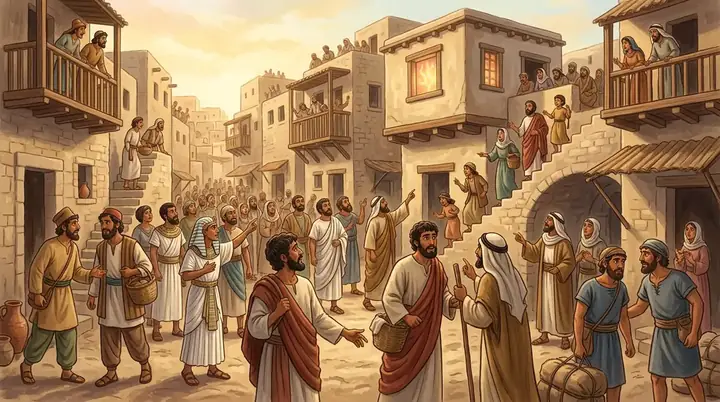
The vast dry land south and east of Israel, home to wandering tribes who traded in spices and gold. Mount Sinai lies in it, and Paul went there after he met Christ.
- Where
- From the Sinai peninsula and Edom across the great desert to the Persian Gulf and the Red Sea
- People
- Descendants of Ishmael, Esau, Midian and Keturah's sons; Sheba in the far south
- Known for
- Camels, gold and spices; the queen of Sheba; Paul's retreat (Galatians 1:17)
- Today
- Arabia Petraea, across Egypt, Jordan, Saudi Arabia and Israel.
Where
Arabia is the great peninsula between the Red Sea and the Persian Gulf, together with the deserts that run north from it to the edge of Syria. To Israel it was the land of the east and south: Edom, Midian and the wilderness of Sinai in the near part, and far beyond them Sheba, the land of spices. Most of it is sand and rock, with scattered oases, and its people lived in tents and moved with their herds, or carried goods by camel along the trade roads.
In the Old Testament
Israel's own wilderness years were spent in Arabia, for Paul says plainly that Mount Sinai is there (Galatians 4:25). The Arabians brought gifts and tribute to Solomon and to Jehoshaphat (1 Kings 10:15; 2 Chronicles 17:11), but in the next reign they raided Judah and carried off King Jehoram's sons (2 Chronicles 21:16–17). Geshem the Arabian joined Sanballat and Tobiah in mocking Nehemiah as he rebuilt the walls (Nehemiah 2:19; Nehemiah 6:1).
Isaiah has a burden for Arabia, foretelling that its glory would fade within a year (Isaiah 21:13–17). Jeremiah hands the cup of God's wrath to "all the kings of Arabia" with the other nations (Jeremiah 25:24), and Ezekiel lists Arabia among the traders of Tyre, selling lambs, rams and goats (Ezekiel 27:21).
In the New Testament
Arabs were in the crowd at Pentecost and heard God's wonders told in their own tongue (Acts 2:11). After his conversion Paul did not go up to Jerusalem but "went into Arabia" and then returned to Damascus (Galatians 1:17). The Bible does not say what he did there or for how long; many think it was a time alone with God before he began to preach. Damascus at that time was under Aretas, an Arabian king (2 Corinthians 11:32).
Today
Arabia is Saudi Arabia, Yemen and the Gulf states, with its northern reaches in Jordan, Syria and Iraq, and the Sinai peninsula in Egypt. The Bedouin still live in tents in its deserts as Ishmael's sons did.
Key verses
- 1 Kings 10:15
Beside that he had of the merchantmen, and of the traffick of the spice merchants, and of all the kings of Arabia, and of the governors of the country.
- Isaiah 21:13
The burden upon Arabia. In the forest in Arabia shall ye lodge, O ye travelling companies of Dedanim.
- Acts 2:11
Cretes and Arabians, we do hear them speak in our tongues the wonderful works of God.
- Galatians 1:17
Neither went I up to Jerusalem to them which were apostles before me; but I went into Arabia, and returned again unto Damascus.
- Galatians 4:25
For this Agar is mount Sinai in Arabia, and answereth to Jerusalem which now is, and is in bondage with her children.
On the map
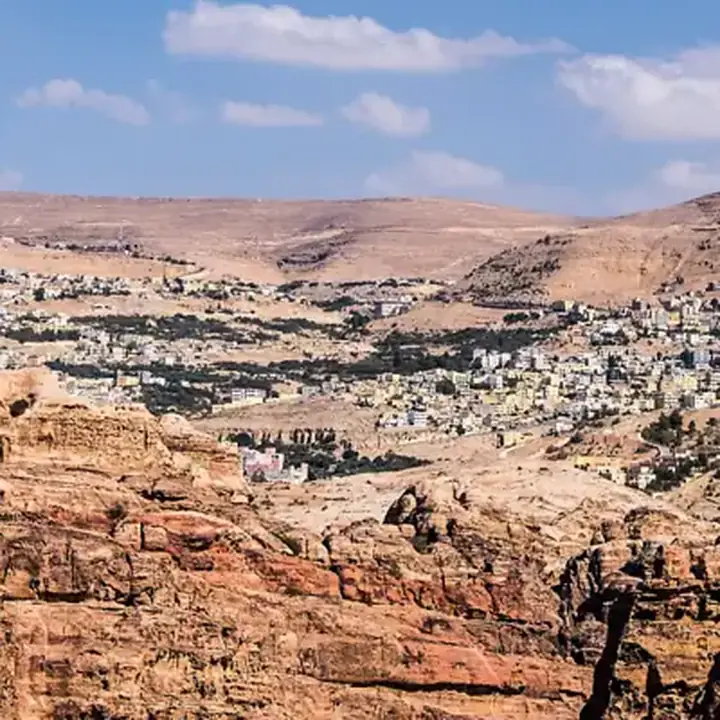
Mentioned in 19 verses
- 2 Samuel 1
- 1 Kings 1
- 2 Chronicles 5
- Nehemiah 3
- Isaiah 2
- Jeremiah 2
- Ezekiel 2
- Acts 1
- Galatians 2
Read next
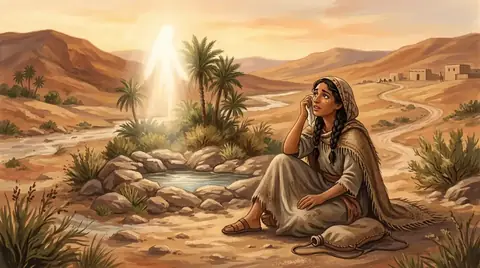 PersonIshmaelAbraham's first son, born to Hagar, Sarah's Egyptian maid. Sent away into the desert as a boy, he became a great archer…
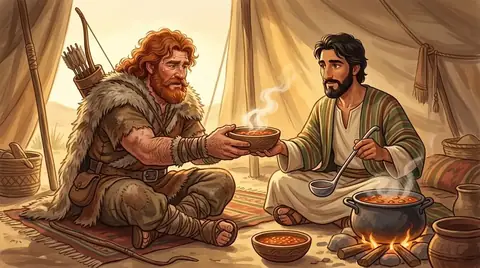 PersonEsauIsaac's elder twin, a hunter who traded away his birthright for a meal and lost his father's blessing to Jacob's trick.…
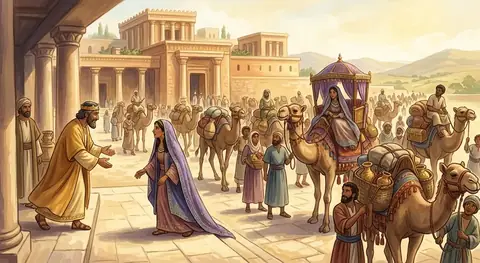 PlaceShebaA rich trading kingdom in south Arabia, famous for gold, spices and incense. Its queen travelled to Jerusalem to test…
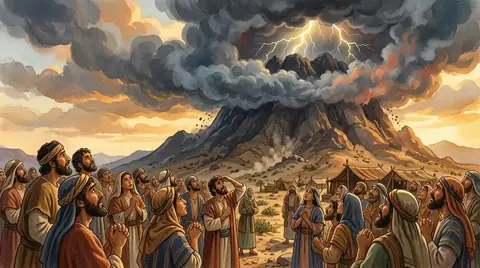 Place · MountainSinaiThe mountain where God came down in fire and smoke, spoke the Ten Commandments, and made his covenant with Israel. The…
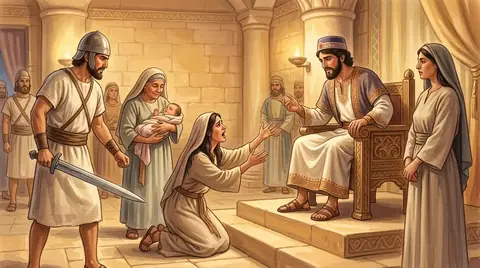 Person · KingSolomonDavid's son and Israel's third king, who asked God for wisdom and received riches and fame as well. He built the temple…
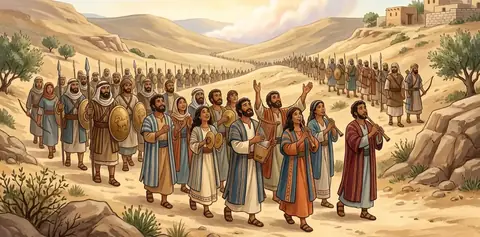 PersonJehoshaphatOne of Judah's best kings, who sent teachers of God's law through the land and won a battle by sending singers ahead of…
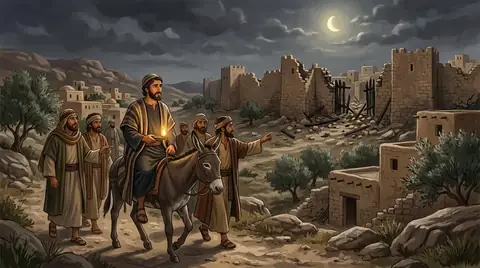 PersonNehemiahThe king of Persia's cupbearer who got leave to go to Jerusalem and rebuilt its broken walls in fifty-two days, despite…
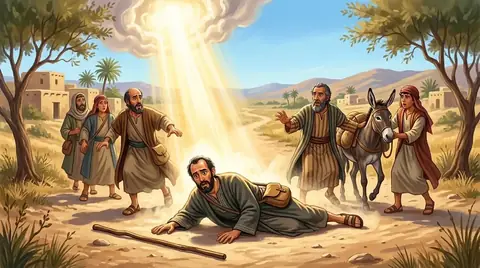 PersonPaulA Pharisee who hated the church until the risen Jesus met him on the road to Damascus. He became the apostle to the…
Written for this app in its own words, from the Bible, with the facts checked against Bible dictionaries and encyclopedias: Easton's, Smith's, Fausset's, ISBE, Holman, the New Bible Dictionary, Vine's and the Thompson Chain topics. People and places: STEPBible.org (TIPNR), CC BY 4.0; where a place is today and its photo: OpenBible.info, CC BY 4.0.
