
Teaching · Heaven
The angel of the LORD
A heavenly messenger in the Old Testament who speaks and acts as God himself. Many Christians have understood him to be God's Son, showing himself long before his birth at Bethlehem.
- Appeared to
- Hagar, Abraham, Moses, Balaam, Gideon, Manoah and his wife, David, Elijah
- Also called
- The angel of God; "the angel of his presence" (Isaiah 63:9)
- Known for
- Speaking as God, yet sent by God
Who he is
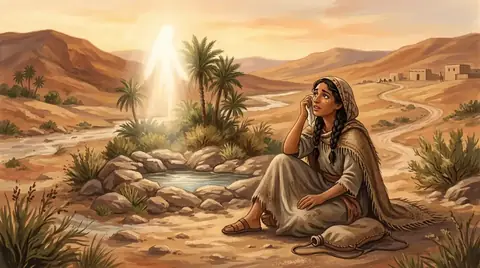
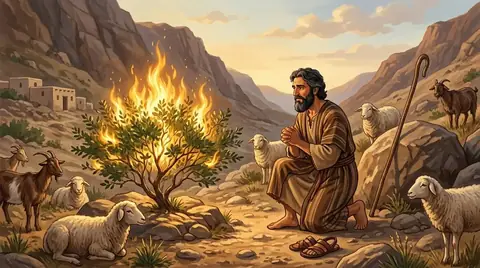
An angel is a messenger. But one messenger in the Old Testament stands apart. When he speaks, he speaks as God in the first person, and the people who meet him know they have met God. When Hagar ran away into the desert, this angel found her by a spring, and afterwards she said she had seen the one who sees her (Genesis 16:7–13). At the burning bush the angel of the LORD appeared to Moses in the flame, and then the voice said, "I am the God of thy father" (Exodus 3:2–6).
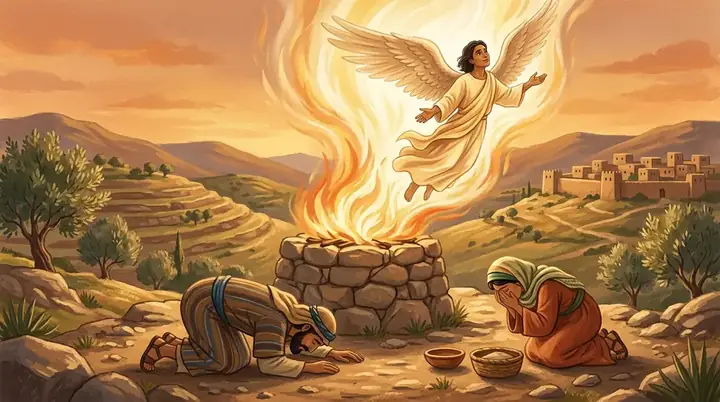
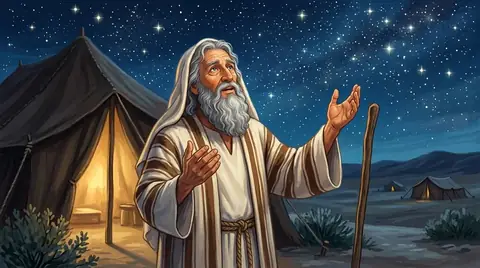
The same happened to others. The angel stopped Abraham's hand on Mount Moriah and swore an oath "by myself" (Genesis 22:11–18). Gideon built an altar after the angel spoke to him, afraid because he had seen him face to face (Judges 6:11–24). Manoah and his wife were told of the birth of Samson by a visitor whose name was "secret", and when he went up in the flame of their offering Manoah cried, "We shall surely die, because we have seen God" (Judges 13:3–22).
Why it matters
Here is the puzzle. The angel is sent by God, and yet he is addressed as God and accepts worship, which ordinary angels refuse (Revelation 22:8–9). From the early church fathers on, many have understood him as God's own Son, showing himself to his people long before he took on flesh. Isaiah calls him "the angel of his presence", who saved Israel and carried them (Isaiah 63:9).
In the New Testament
After Jesus is born, the Bible speaks of "an angel of the Lord", one of the angels God sends: the angel who told Joseph to take Mary as his wife (Matthew 1:20), and the one who told the shepherds the good news (Luke 2:9). These are messengers, not God himself. The Son is now on earth in person.
Points to Christ
If the traditional view is right, then the one who met Hagar in her distress, called Moses, strengthened Gideon and announced Samson's birth was the same Lord who later walked in Galilee. The God who speaks to his people has always come near to them.
Key verses
- Genesis 16:7–13
And the angel of the Lord found her by a fountain of water in the wilderness, by the fountain in the way to Shur. And he said, Hagar, Sarai’s maid, whence camest thou? and whither wilt thou go? And she said, I flee from the face of my mistress Sarai. And the angel of the Lord said unto her, Return to thy mistress, and submit thyself under her hands. …
- Exodus 3:2–6
And the angel of the Lord appeared unto him in a flame of fire out of the midst of a bush: and he looked, and, behold, the bush burned with fire, and the bush was not consumed. And Moses said, I will now turn aside, and see this great sight, why the bush is not burnt. And when the Lord saw that he turned aside to see, God called unto him out of the midst of the bush, and said, Moses, Moses. And he said, Here am I. …
- Judges 13:21–22
But the angel of the Lord did no more appear to Manoah and to his wife. Then Manoah knew that he was an angel of the Lord. And Manoah said unto his wife, We shall surely die, because we have seen God.
- Isaiah 63:9
In all their affliction he was afflicted, and the angel of his presence saved them: in his love and in his pity he redeemed them; and he bare them, and carried them all the days of old.
- Matthew 1:20
But while he thought on these things, behold, the angel of the Lord appeared unto him in a dream, saying, Joseph, thou son of David, fear not to take unto thee Mary thy wife: for that which is conceived in her is of the Holy Ghost.
Read next
 PersonHagarSarah's Egyptian servant, given to Abraham to bear a child, and the mother of Ishmael. Twice she was driven out into…
 PersonAbrahamThe man God called out of Ur to a land he had never seen, promising him a people and a blessing for the whole world. He…
 PersonMosesThe man God used to bring Israel out of Egypt, give them his Law at Sinai, and lead them for forty years in the…
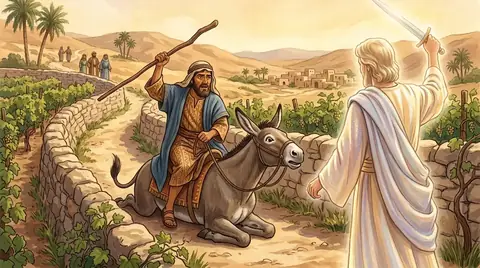 Person · ProphetBalaamA soothsayer hired by the king of Moab to curse Israel. God let him go but put only blessings in his mouth; his donkey…
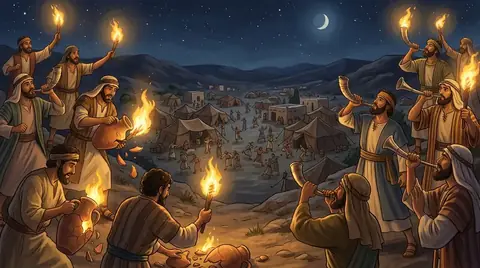 Person · JudgeGideonThe farmer God called to free Israel from the Midianites. Timid and full of questions, he obeyed, and with three…
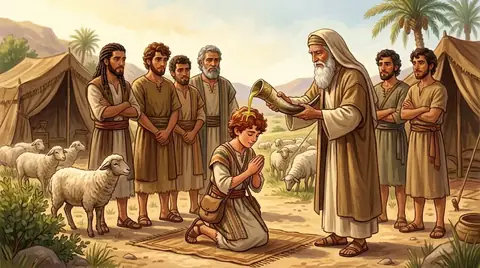 Person · KingDavidThe shepherd boy who killed Goliath and became Israel's greatest king, "a man after God's own heart". He wrote many…
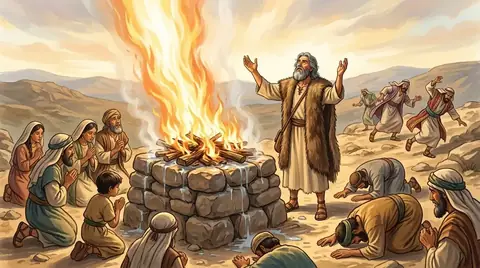 PersonElijahThe fiery prophet who stood alone against King Ahab and the prophets of Baal, called down fire on Mount Carmel, and was…
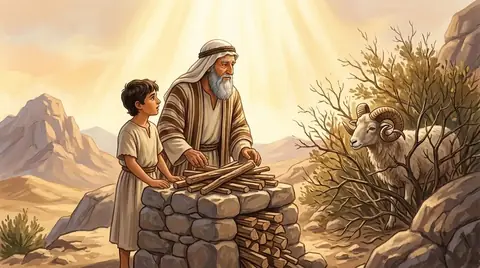 PlaceMount MoriahThe hill in Jerusalem where Solomon built the temple. It is the same land of Moriah where God told Abraham to offer…
Written for this app in its own words, from the Bible, with the facts checked against Bible dictionaries and encyclopedias: Easton's, Smith's, Fausset's, ISBE, Holman, the New Bible Dictionary, Vine's and the Thompson Chain topics. Also: Matthew Henry's Commentary.
