
Teaching · Custom
Adoption
Taking someone else's child as your own, with full rights as a son. Paul uses the Roman custom to explain what God does for believers: he makes them his children and heirs.
- In the Old Testament
- Pharaoh's daughter adopted Moses; Mordecai adopted Esther; God called Israel his son
- In Paul
- Romans 8:15; Romans 8:23; Romans 9:4; Galatians 4:5; Ephesians 1:5
The custom
Under Roman law a man could adopt a son, often a grown one, to carry on his name. From that day the adopted son was a son in every way: he took the father's name, shared his inheritance equally with sons born to him, and his old debts were wiped out. The old life was over, and the new family was his for good. Paul, a Roman citizen writing to churches in Roman cities, knew that his readers understood this.
In the Old Testament
The Jews had no formal law of adoption, but the idea is there. Pharaoh's daughter took the baby Moses as her son (Exodus 2:10). Mordecai brought up his orphaned cousin Esther as his own daughter (Esther 2:7). Jacob took Joseph's two sons as his own (Genesis 48:5). And God called the whole nation his firstborn son (Exodus 4:22; Hosea 11:1).
In the New Testament
Paul says that God chose believers "unto the adoption of children by Jesus Christ" before the world began (Ephesians 1:5), and that Christ came "to redeem them that were under the law, that we might receive the adoption of sons" (Galatians 4:5). The proof is the Spirit in the heart, who makes us cry "Abba, Father" (Romans 8:15). Sons are heirs, and so believers are heirs of God along with Christ (Romans 8:17). The adoption is already real but not yet complete; we wait for the day when our bodies are raised and the whole family is gathered (Romans 8:23).
For us
Nobody adopts a child because the child has earned it. God's children are chosen, wanted and secure, with his name on them and his inheritance ahead of them.
Key verses
- Romans 8:15–17
For ye have not received the spirit of bondage again to fear; but ye have received the Spirit of adoption, whereby we cry, Abba, Father. The Spirit itself beareth witness with our spirit, that we are the children of God: And if children, then heirs; heirs of God, and joint-heirs with Christ; if so be that we suffer with him, that we may be also glorified together.
- Galatians 4:4–7
But when the fulness of the time was come, God sent forth his Son, made of a woman, made under the law, To redeem them that were under the law, that we might receive the adoption of sons. And because ye are sons, God hath sent forth the Spirit of his Son into your hearts, crying, Abba, Father. …
- Ephesians 1:5
Having predestinated us unto the adoption of children by Jesus Christ to himself, according to the good pleasure of his will,
- John 1:12
But as many as received him, to them gave he power to become the sons of God, even to them that believe on his name:
Read next
 PersonPaulA Pharisee who hated the church until the risen Jesus met him on the road to Damascus. He became the apostle to the…
 Title · RulerPharaohNot a personal name but the title borne by every king of Egypt, like "Caesar". The Bible names several, the best known…
 PersonMosesThe man God used to bring Israel out of Egypt, give them his Law at Sinai, and lead them for forty years in the…
 PersonMordecaiThe Jew who raised his cousin Esther, refused to bow to Haman, and with Esther saved the Jews of Persia from being…
 PersonEstherA Jewish orphan who became queen of Persia and risked her life to stop Haman's plan to kill every Jew in the empire.…
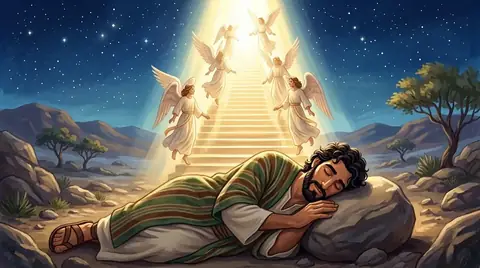 PersonJacobIsaac's younger twin son, who won his brother's birthright and blessing by cunning, was changed by God, and was renamed…
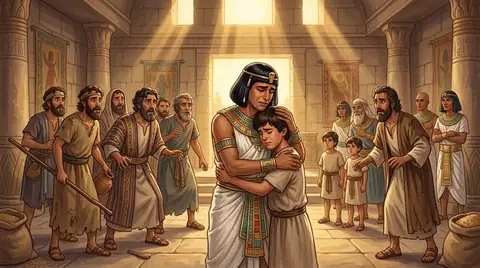 PersonJosephJacob's favourite son, sold by his brothers into Egypt, where he rose from prison to rule the land and saved his family…Word · Name of GodAbbaThe Aramaic word for father that Jesus used when he prayed. It is the warm, trusting word of a child at home, and Paul…
Written for this app in its own words, from the Bible, with the facts checked against Bible dictionaries and encyclopedias: Easton's, Smith's, Fausset's, ISBE, Holman, the New Bible Dictionary, Vine's and the Thompson Chain topics.
