
Teaching · Law
Treason
Rising against one's ruler. The Bible tells of revolts against Moses, Saul, Rehoboam and David, of a plot against Ahasuerus that ended on the gallows, and of Jesus and Paul falsely accused of it.
- Revolts
- Korah against Moses (Numbers 16); Absalom against David (2 Samuel 15); the ten tribes against Rehoboam (1 Kings 12:16–19)
- Punished
- The plotters against Ahasuerus were hanged (Esther 2:21–23)
- Falsely charged
- Jesus (Luke 23:2); Paul and Silas (Acts 17:7)
Treason is betraying or rising against one's king or leader. Korah, Dathan and Abiram gathered a party against Moses and Aaron, and the earth swallowed them (Numbers 16:1–33). Absalom stole the hearts of Israel and drove his father from Jerusalem (2 Samuel 15:6–14). When Rehoboam spoke harshly, ten tribes cried, "What portion have we in David?" and broke away (1 Kings 12:16–19). Two of the king's doorkeepers plotted against Ahasuerus; Mordecai reported it and they were hanged (Esther 2:21–23).
The charge was also used falsely. Jesus' enemies told Pilate that he forbade paying tribute to Caesar and called himself a king (Luke 23:2), and the Jews of Thessalonica said Paul's friends acted "contrary to the decrees of Caesar" (Acts 17:7). Yet Jesus taught to render to Caesar what is Caesar's (Matthew 22:21).
There was mercy too. After Absalom's revolt David spared Shimei, who had cursed him, and made Amasa, Absalom's general, captain of his own army (2 Samuel 19:13; 2 Samuel 19:23). Scripture calls believers to honour rulers and pray for them (Romans 13:1; 1 Timothy 2:1–2).
Key verses
- Numbers 16:1–3
Now Korah, the son of Izhar, the son of Kohath, the son of Levi, and Dathan and Abiram, the sons of Eliab, and On, the son of Peleth, sons of Reuben, took men: And they rose up before Moses, with certain of the children of Israel, two hundred and fifty princes of the assembly, famous in the congregation, men of renown: And they gathered themselves together against Moses and against Aaron, and said unto them, Ye take too much upon you, seeing all the congregation are holy, every one of them, and the Lord is among them: wherefore then lift ye up yourselves above the congregation of the Lord?
- 1 Kings 12:16
So when all Israel saw that the king hearkened not unto them, the people answered the king, saying, What portion have we in David? neither have we inheritance in the son of Jesse: to your tents, O Israel: now see to thine own house, David. So Israel departed unto their tents.
- Esther 2:21–23
In those days, while Mordecai sat in the king’s gate, two of the king’s chamberlains, Bigthan and Teresh, of those which kept the door, were wroth, and sought to lay hand on the king Ahasuerus. And the thing was known to Mordecai, who told it unto Esther the queen; and Esther certified the king thereof in Mordecai’s name. And when inquisition was made of the matter, it was found out; therefore they were both hanged on a tree: and it was written in the book of the chronicles before the king.
- Luke 23:2
And they began to accuse him, saying, We found this fellow perverting the nation, and forbidding to give tribute to Cesar, saying that he himself is Christ a King.
- Romans 13:1
Let every soul be subject unto the higher powers. For there is no power but of God: the powers that be are ordained of God.
Read next
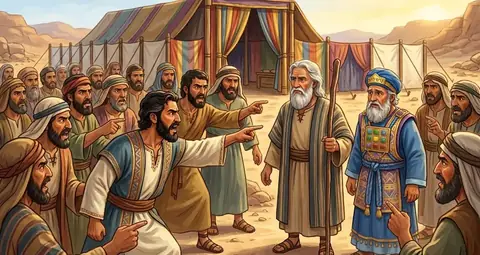 PersonKorahA Levite, Moses' cousin, who led a revolt in the wilderness against Moses and Aaron, demanding the priesthood. The…
 PersonAbsalomDavid's handsome third son, who murdered his brother Amnon, won the hearts of Israel and rose in rebellion against his…
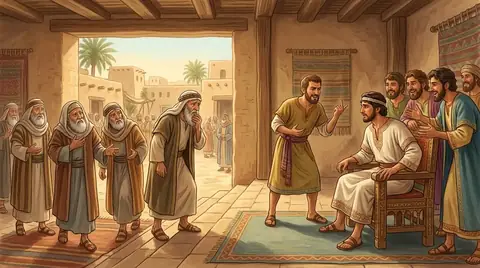 PersonRehoboamSolomon's son, whose harsh answer to the people at Shechem split the kingdom in two. He ruled Judah and Benjamin for…
 Person · KingAhasuerusThe king of Persia in the book of Esther, who put away Queen Vashti, made Esther his queen, and was tricked by Haman…
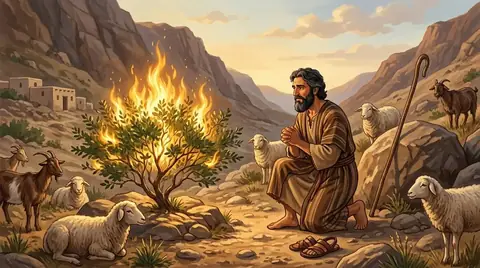 PersonMosesThe man God used to bring Israel out of Egypt, give them his Law at Sinai, and lead them for forty years in the…
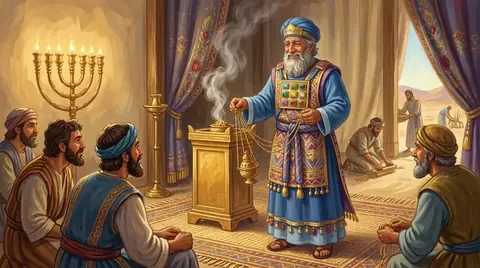 PersonAaronMoses' older brother and Israel's first high priest. He spoke for Moses before Pharaoh and served God at the tabernacle…
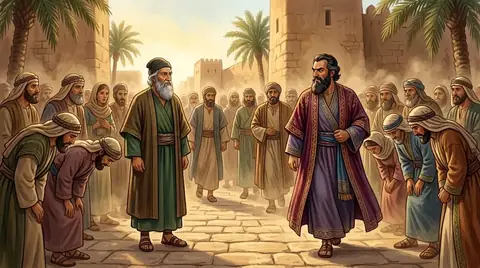 PersonMordecaiThe Jew who raised his cousin Esther, refused to bow to Haman, and with Esther saved the Jews of Persia from being…
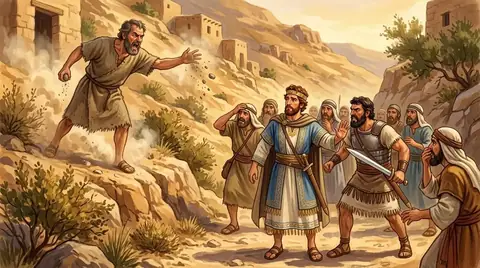 PersonShimeiA relative of Saul who cursed David and threw stones at him as the king fled from Absalom. David spared him, but…
Written for this app in its own words, from the Bible, with the facts checked against Bible dictionaries and encyclopedias: Easton's, Smith's, Fausset's, ISBE, Holman, the New Bible Dictionary, Vine's and the Thompson Chain topics.
