
Plant
Tamarisk
TAM-uh-riskHebrew ʼeshel · "grove" or "tree" in the KJV
A graceful desert tree with thin feathery branches, tiny leaves and pink blossoms in spring. Abraham planted one at Beersheba, and Saul sat and was later buried under one.
- Hebrew
- ʼeshel
- Grows
- In dry, sandy and salty ground, in the south of the land and by the Jordan
What it was
The tamarisk is a small tree or large shrub that thrives where little else will grow: in sand, in salty soil and along dry stream beds. Its slender branches are covered with tiny scale-like leaves, and in spring it is clothed in sprays of small pink or white flowers. Several kinds grow in the land of Israel. The KJV calls it "grove" or "tree".
In the Bible
After making a treaty at Beersheba, Abraham planted a tamarisk there "and called there on the name of the LORD, the everlasting God" (Genesis 21:33). Planting a slow-growing tree in the desert was an act of faith that his family would stay. Centuries later King Saul held court sitting under a tamarisk at Gibeah, spear in hand (1 Samuel 22:6), and after his death on Gilboa the men of Jabesh-gilead buried his bones under the tamarisk in their town (1 Samuel 31:13).
Key verses
- Genesis 21:33
And Abraham planted a grove in Beer–sheba, and called there on the name of the Lord, the everlasting God.
- 1 Samuel 22:6
When Saul heard that David was discovered, and the men that were with him, (now Saul abode in Gibeah under a tree in Ramah, having his spear in his hand, and all his servants were standing about him;)
- 1 Samuel 31:13
And they took their bones, and buried them under a tree at Jabesh, and fasted seven days.
Read next
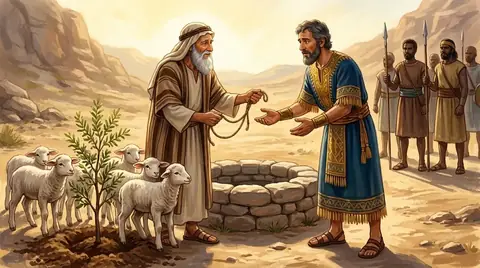 Place · TownBeershebaThe well where Abraham swore a treaty, and the home of all three patriarchs. As the last town before the desert, "from…
 PersonAbrahamThe man God called out of Ur to a land he had never seen, promising him a people and a blessing for the whole world. He…
 Person · KingSaulIsrael's first king, a tall Benjamite chosen when the people demanded a king like the nations. He began humbly and won…
 Place · TownGibeahSaul's home town in Benjamin, and his capital as king. Long before that it was the scene of the crime against a…
 PlaceJabeshA town east of the Jordan whose men never forgot that Saul saved them from the Ammonites. When he died they marched all…
Written for this app in its own words, from the Bible, with the facts checked against Bible dictionaries and encyclopedias: Easton's, Smith's, Fausset's, ISBE, Holman, the New Bible Dictionary, Vine's and the Thompson Chain topics.
