
Custom · War
Siege
Surrounding a walled city to starve it out or break in. Many Bible cities were besieged, Samaria and Jerusalem most terribly; the law told Israel to offer peace first and to spare fruit trees.
- Law
- Offer peace first (Deuteronomy 20:10–12); do not cut down fruit trees (Deuteronomy 20:19–20)
- Methods
- Earth ramps, siege towers and battering rams (Ezekiel 4:2)
- Famous
- Jericho (Joshua 6); Samaria (2 Kings 6:24–29; 2 Kings 17:5); Jerusalem by Sennacherib (2 Kings 18–19) and Nebuchadnezzar (2 Kings 25:1–3)
How it was done
Cities were built on hills with thick walls and a spring or cisterns inside, so an army had to sit outside, cut off food and water and wait, or pile up an earth ramp against the wall and bring up battering rams. Ezekiel acted out the siege of Jerusalem on a clay tile, with a ramp, a camp and rams round about (Ezekiel 4:1–2). Before attacking a city far off, Israel was to offer it peace, and they were not to cut down its fruit trees for siege works (Deuteronomy 20:10–20).
The suffering
A long siege brought hunger and worse. In Samaria, besieged by the Syrians, a donkey's head sold for eighty pieces of silver, and mothers ate their children (2 Kings 6:25–29), just as Moses had warned (Deuteronomy 28:52–57). When Nebuchadnezzar besieged Jerusalem for a year and a half, the famine was so severe that there was no bread left (2 Kings 25:1–3); Lamentations mourns it.
Rescue
Yet God saved besieged cities too. Samaria was set free overnight when the Syrians fled in panic (2 Kings 7:6–7), and Jerusalem was spared when the angel of the LORD struck Sennacherib's camp (2 Kings 19:32–35). Jesus wept over Jerusalem, knowing enemies would one day dig a trench round it (Luke 19:43).
Key verses
- Deuteronomy 20:10–12
When thou comest nigh unto a city to fight against it, then proclaim peace unto it. And it shall be, if it make thee answer of peace, and open unto thee, then it shall be, that all the people that is found therein shall be tributaries unto thee, and they shall serve thee. And if it will make no peace with thee, but will make war against thee, then thou shalt besiege it:
- Deuteronomy 20:19–20
When thou shalt besiege a city a long time, in making war against it to take it, thou shalt not destroy the trees thereof by forcing an axe against them: for thou mayest eat of them, and thou shalt not cut them down (for the tree of the field is man’s life) to employ them in the siege: Only the trees which thou knowest that they be not trees for meat, thou shalt destroy and cut them down; and thou shalt build bulwarks against the city that maketh war with thee, until it be subdued.
- 2 Kings 6:24–29
And it came to pass after this, that Ben–hadad king of Syria gathered all his host, and went up, and besieged Samaria. And there was a great famine in Samaria: and, behold, they besieged it, until an ass’s head was sold for fourscore pieces of silver, and the fourth part of a cab of dove’s dung for five pieces of silver. And as the king of Israel was passing by upon the wall, there cried a woman unto him, saying, Help, my lord, O king. …
- 2 Kings 25:1–3
And it came to pass in the ninth year of his reign, in the tenth month, in the tenth day of the month, that Nebuchadnezzar king of Babylon came, he, and all his host, against Jerusalem, and pitched against it; and they built forts against it round about. And the city was besieged unto the eleventh year of king Zedekiah. And on the ninth day of the fourth month the famine prevailed in the city, and there was no bread for the people of the land.
- Luke 19:43
For the days shall come upon thee, that thine enemies shall cast a trench about thee, and compass thee round, and keep thee in on every side,
Read next
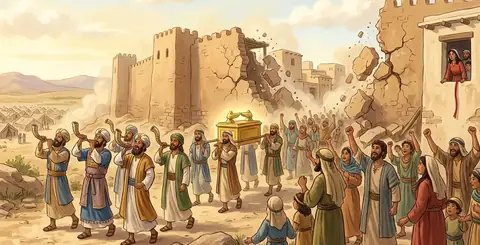 PlaceJerichoThe walled city in the Jordan valley whose walls fell flat when Israel marched round it. Called the city of palm trees…
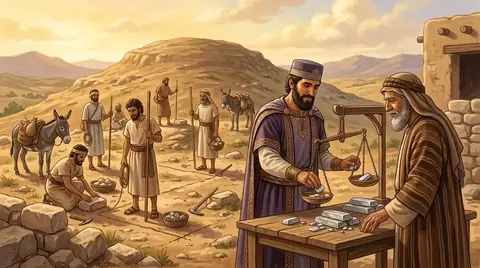 Place · City and regionSamariaThe hill city Omri built as capital of the northern kingdom of Israel. It saw Ahab and Jezebel, Elijah and Elisha…
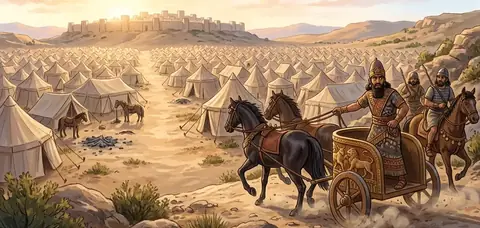 PersonSennacheribThe king of Assyria who invaded Judah in Hezekiah's reign and threatened Jerusalem. God answered Hezekiah's prayer…
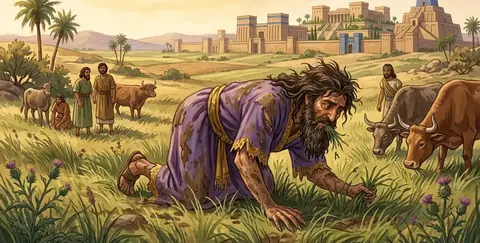 Person · KingNebuchadnezzarThe great king of Babylon who destroyed Jerusalem and its temple and carried Judah into exile. In Daniel he dreams of a…
Written for this app in its own words, from the Bible, with the facts checked against Bible dictionaries and encyclopedias: Easton's, Smith's, Fausset's, ISBE, Holman, the New Bible Dictionary, Vine's and the Thompson Chain topics.
