
Thing · Travel
Ship
Also "boat" · the Bible's ships range from fishing boats on Galilee to the big grain ships of Rome
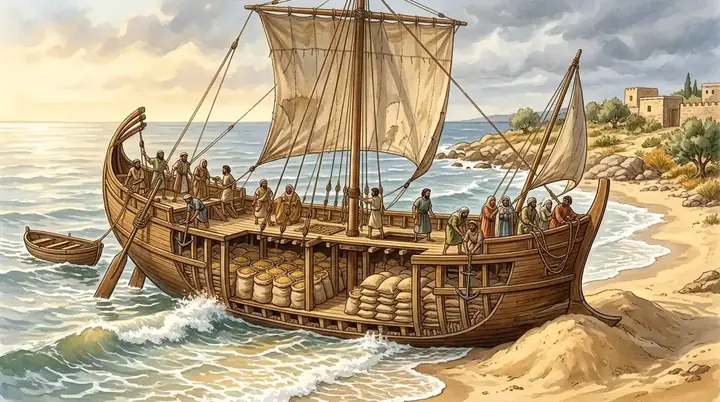
Israel was never a seafaring people; its ships were built with help from Tyre, and its sailors were mostly foreigners. The New Testament's ships are the fishing boats of Galilee and the great grain ships that carried Paul towards Rome.
- Built by
- Noah (the ark); Solomon at Ezion-geber with Hiram's sailors; Jehoshaphat, whose fleet was wrecked
- Fitted with
- Mast, sail, oars, rudder, anchors, a lifeboat, a figurehead (Acts 27–28)
- Where
- Genesis 6:14; 1 Kings 9:26–28; 1 Kings 22:48; Psalms 107:23–30; Jonah 1; Mark 4:36–41; Acts 27
In the Old Testament
The Hebrews were farmers and shepherds, and the sea in the Bible is usually a place of danger. The first ship is Noah's ark, a huge wooden box sealed with pitch. Jacob's blessing says Zebulun would live by the shore and be "an haven of ships" (Genesis 49:13). The real sailors of the region were the Phoenicians of Tyre and Sidon; Ezekiel describes a Tyrian ship with planks of fir, a mast of cedar, oars of oak and an embroidered linen sail (Ezekiel 27:5–7). Solomon built a fleet at Ezion-geber on the Red Sea, manned by Hiram's experienced crews, which brought back gold from Ophir (1 Kings 9:26–28). Jehoshaphat tried to do the same and his ships were smashed in harbour (1 Kings 22:48). Jonah found a ship at Joppa going to Tarshish and slept in the hold through the storm (Jonah 1:3–5). Psalm 107 pictures sailors reeling like drunk men until God stills the waves (Psalms 107:23–30).
In the New Testament
The "ships" of the Gospels are the fishing boats of the Sea of Galilee, big enough for a dozen men, with oars and a small sail. Jesus taught from one, slept in one through a storm, and walked on the water to one (Mark 4:1; Mark 4:37–39; Mark 6:48). A boat from that time, 27 feet (8 m) long, has been dug out of the lake's mud.
Paul crossed the Mediterranean many times, and Acts 27 is the best account of ancient sailing that survives. His ship to Rome was a grain carrier from Alexandria with 276 people on board. Luke describes the anchors let down from the stern, the ropes passed under the hull to hold it together, the lifeboat, the sounding of the depth, and the wreck on Malta (Acts 27:17–44). The next ship had the twins Castor and Pollux as its figurehead (Acts 28:11).
What it means
James compares the tongue to a ship's rudder: a small thing that steers the whole vessel (James 3:4). Hebrews calls hope "an anchor of the soul" (Hebrews 6:19), and Paul warns of those who have "made shipwreck" of their faith (1 Timothy 1:19).
Key verses
- 1 Kings 9:26–28
And king Solomon made a navy of ships in Ezion–geber, which is beside Eloth, on the shore of the Red sea, in the land of Edom. And Hiram sent in the navy his servants, shipmen that had knowledge of the sea, with the servants of Solomon. And they came to Ophir, and fetched from thence gold, four hundred and twenty talents, and brought it to king Solomon.
- Psalms 107:23–30
They that go down to the sea in ships, that do business in great waters; These see the works of the Lord, and his wonders in the deep. For he commandeth, and raiseth the stormy wind, which lifteth up the waves thereof. …
- Mark 4:37–39
And there arose a great storm of wind, and the waves beat into the ship, so that it was now full. And he was in the hinder part of the ship, asleep on a pillow: and they awake him, and say unto him, Master, carest thou not that we perish? And he arose, and rebuked the wind, and said unto the sea, Peace, be still. And the wind ceased, and there was a great calm.
- Acts 27:17–20
Which when they had taken up, they used helps, undergirding the ship; and, fearing lest they should fall into the quicksands, strake sail, and so were driven. And we being exceedingly tossed with a tempest, the next day they lightened the ship; And the third day we cast out with our own hands the tackling of the ship. …
- James 3:4
Behold also the ships, which though they be so great, and are driven of fierce winds, yet are they turned about with a very small helm, whithersoever the governor listeth.
Read next
 PersonNoahThe one righteous man of his age. God told him to build an ark, and through it saved him, his family and the animals…
 Person · KingSolomonDavid's son and Israel's third king, who asked God for wisdom and received riches and fame as well. He built the temple…
 PersonJehoshaphatOne of Judah's best kings, who sent teachers of God's law through the land and won a battle by sending singers ahead of…
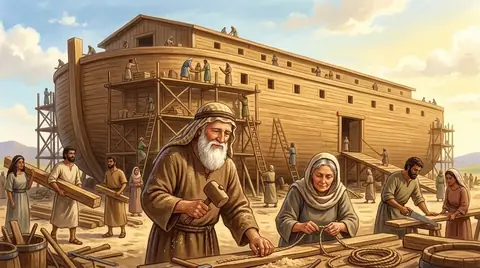 Symbol · SalvationThe ark of NoahThe great wooden vessel in which Noah, his family and the animals were kept safe through the flood. Peter compares it…
 Person · TribeZebulunJacob's tenth son and the tribe descended from him, settled in the hills of lower Galilee. Jesus grew up and did much…
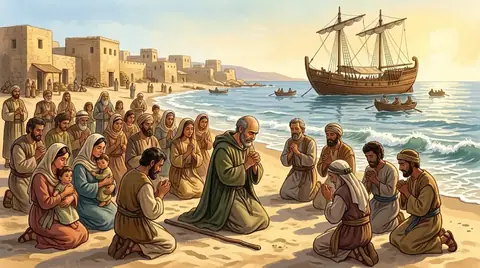 PlacePhoeniciaThe narrow coastland north of Israel, home of the sea-trading cities of Tyre and Sidon. In Acts, believers brought the…
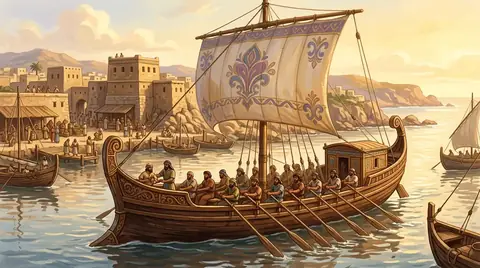 Place · CityTyreThe great trading port of Phoenicia, on the coast north of Israel. Its king Hiram helped build Solomon's temple; later…
 Place · CitySidonOne of the two great Phoenician port cities, with Tyre. Its sailors and craftsmen were famous, its goddess Ashtoreth…
Written for this app in its own words, from the Bible, with the facts checked against Bible dictionaries and encyclopedias: Easton's, Smith's, Fausset's, ISBE, Holman, the New Bible Dictionary, Vine's and the Thompson Chain topics.
