
Custom · Prayer
The Shema
shem-AHHebrew for "Hear", its first word
"Hear, O Israel: the LORD our God is one LORD", the confession of faith from Deuteronomy 6 that every Jew says morning and evening. Jesus called the command that follows it the first and greatest of all.
- Text
- Deuteronomy 6:4–9; Deuteronomy 11:13–21; Numbers 15:37–41
- Said
- Morning and evening; by the dying; worn in phylacteries and fixed on doorposts
- Jesus
- "The first of all the commandments" (Mark 12:29)
What it is
The Shema takes its name from its first Hebrew word, "Hear". It begins, "Hear, O Israel: The LORD our God is one LORD: and thou shalt love the LORD thy God with all thine heart, and with all thy soul, and with all thy might" (Deuteronomy 6:4–5). There is one God, he is Israel's God, and he is to be loved with everything one has. The passage goes on: these words are to be kept in the heart, taught to the children, talked of at home and on the road, bound on the hand and forehead, and written on the doorposts (Deuteronomy 6:6–9).
Two more passages were joined to it, one promising rain and harvest for obedience (Deuteronomy 11:13–21) and one about the tassels on the corners of garments (Numbers 15:37–41). Together they make up the Shema as Jews have recited it ever since.
How it was used
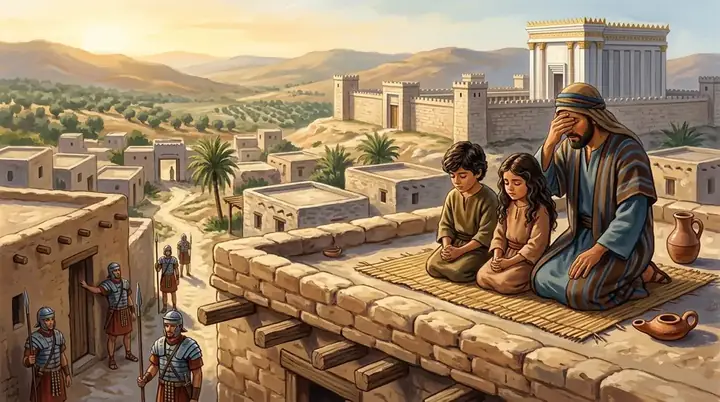
Devout Jews in Jesus' day said the Shema when they rose and when they lay down, as the text itself suggests. They wore its words in little boxes, phylacteries, at prayer, and fixed them in a case on the doorpost. Children learned it as soon as they could speak. Martyrs died with it on their lips. It was the heart of Jewish faith: one God, and whole-hearted love for him.
Jesus and the Shema
When a scribe asked Jesus which commandment was the first of all, he answered with the Shema, word for word, and added a second from Leviticus: "Thou shalt love thy neighbour as thyself" (Mark 12:28–31; Leviticus 19:18). On these two, he said, hang all the Law and the Prophets (Matthew 22:40). The scribe agreed that this was worth more than all sacrifices. Jesus did not replace the Shema; he lived it, and showed that love of neighbour belongs with it.
Others called Shema
Several men bear the name, among them one who stood at Ezra's side during the reading of the Law (Nehemiah 8:4), a Reubenite (1 Chronicles 5:8), and a Benjamite who drove the men of Gath out of Aijalon (1 Chronicles 8:13); there was also a town called Shema in southern Judah (Joshua 15:26).
Key verses
- Deuteronomy 6:4–5
Hear, O Israel: The Lord our God is one Lord: And thou shalt love the Lord thy God with all thine heart, and with all thy soul, and with all thy might.
- Deuteronomy 11:13
And it shall come to pass, if ye shall hearken diligently unto my commandments which I command you this day, to love the Lord your God, and to serve him with all your heart and with all your soul,
- Mark 12:29–30
And Jesus answered him, The first of all the commandments is, Hear, O Israel; The Lord our God is one Lord: And thou shalt love the Lord thy God with all thy heart, and with all thy soul, and with all thy mind, and with all thy strength: this is the first commandment.
- Matthew 22:37–40
Jesus said unto him, Thou shalt love the Lord thy God with all thy heart, and with all thy soul, and with all thy mind. This is the first and great commandment. And the second is like unto it, Thou shalt love thy neighbour as thyself. …
Family
- Parents
- Hebron
- Brothers and sisters
- Korah, Tappuah, Rekem
- Children
- Raham
Mentioned in 2 verses
- 1 Chronicles 2
Read next
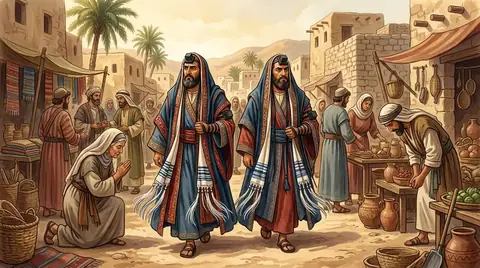 Custom · WorshipPhylacteriesSmall leather boxes holding Scripture verses, strapped to the forehead and left arm at prayer time. Jesus rebuked the…
 PersonEzraA priest and scribe who led a second group of exiles back from Babylon, taught the people God's law and read it to them…
 Place · CityHebronAn ancient city in the hills of Judah where Abraham lived and the patriarchs were buried in the cave of Machpelah.…
 PersonKorahA Levite, Moses' cousin, who led a revolt in the wilderness against Moses and Aaron, demanding the priesthood. The…Place · TownTappuahA Canaanite town on the border between Ephraim and Manasseh, whose king Joshua defeated. Another Tappuah was a town in…PersonRekemThe name of a man of Judah, son of Hebron in Caleb's family; of a Midianite king slain by Israel; and of a town of…PersonRahamA descendant of Caleb in the tribe of Judah, son of Shema. He was the father, or perhaps the founder, of a place or…
Written for this app in its own words, from the Bible, with the facts checked against Bible dictionaries and encyclopedias: Easton's, Smith's, Fausset's, ISBE, Holman, the New Bible Dictionary, Vine's and the Thompson Chain topics. People and places: STEPBible.org (TIPNR), CC BY 4.0; where a place is today and its photo: OpenBible.info, CC BY 4.0.
