
Custom · Daily life
Servants and slaves
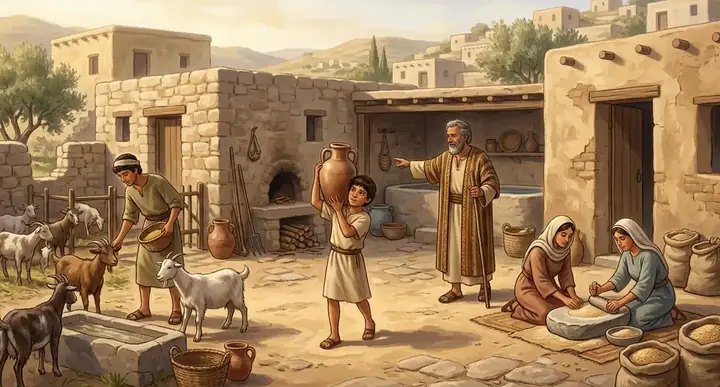
In Bible times many people were slaves: through debt, through war, or by birth. The law of Moses limited and softened it among Israelites, and the gospel declared that in Christ there is "neither bond nor free".
- How people became slaves
- Debt, selling oneself, capture in war, birth in a slave household
- In the Law
- A Hebrew servant was freed after six years (Exodus 21:2)
- Roman world
- In some cities perhaps a third of the people were slaves
In the Old Testament
Slavery was part of every ancient society, and Israel was no exception; but the Law set it in a new light. An Israelite who fell into debt could sell himself, but he served six years and went free in the seventh, and his master had to send him away with gifts (Exodus 21:2; Deuteronomy 15:12–14). If he loved his master and chose to stay, his ear was pierced at the doorpost as a sign (Exodus 21:5–6). A master who killed a servant was punished; one who injured him had to set him free (Exodus 21:20; Exodus 21:26–27). In the year of Jubilee every Israelite servant went home (Leviticus 25:39–41). The reason was given again and again: "thou wast a bondman in the land of Egypt" (Deuteronomy 15:15). Servants shared the Sabbath rest and the feasts. Foreign slaves had fewer rights, but even a runaway was not to be handed back (Deuteronomy 23:15–16).
A trusted servant could be a man of standing. Abraham's servant Eliezer was heir to his house before Isaac was born (Genesis 15:2), and Joseph, though a slave, ran all of Potiphar's household (Genesis 39:4).
In the New Testament
The Roman Empire was full of slaves, bought and sold like property. The gospel did not start a revolt, but it changed everything inside the house. Masters were told to treat their slaves justly, remembering that they too had a Master in heaven (Ephesians 6:9; Colossians 4:1); slaves were told to work as for the Lord (Colossians 3:22–24). In the church they sat together: "there is neither bond nor free... for ye are all one in Christ Jesus" (Galatians 3:28). Paul sent the runaway Onesimus back to Philemon not as a slave but as "a brother beloved" (Philemon 1:16), and told slaves to take their freedom if they could get it (1 Corinthians 7:21). Slave-traders are listed among the lawless (1 Timothy 1:10). From these seeds, in time, grew the end of slavery in Christian lands.
Key verses
- Exodus 21:2
If thou buy an Hebrew servant, six years he shall serve: and in the seventh he shall go out free for nothing.
- Deuteronomy 15:12–15
And if thy brother, an Hebrew man, or an Hebrew woman, be sold unto thee, and serve thee six years; then in the seventh year thou shalt let him go free from thee. And when thou sendest him out free from thee, thou shalt not let him go away empty: Thou shalt furnish him liberally out of thy flock, and out of thy floor, and out of thy winepress: of that wherewith the Lord thy God hath blessed thee thou shalt give unto him. …
- Galatians 3:28
There is neither Jew nor Greek, there is neither bond nor free, there is neither male nor female: for ye are all one in Christ Jesus.
- Ephesians 6:5–9
Servants, be obedient to them that are your masters according to the flesh, with fear and trembling, in singleness of your heart, as unto Christ; Not with eyeservice, as menpleasers; but as the servants of Christ, doing the will of God from the heart; With good will doing service, as to the Lord, and not to men: …
- Philemon 1:15–16
For perhaps he therefore departed for a season, that thou shouldest receive him for ever; Not now as a servant, but above a servant, a brother beloved, specially to me, but how much more unto thee, both in the flesh, and in the Lord?
Read next
 Feast · LawThe JubileeEvery fiftieth year in Israel, announced by a trumpet blast on the Day of Atonement. Sold land went back to its first…
 Custom · Day of restThe SabbathThe seventh day of the week, kept holy for rest and worship because God rested after creation. It was the sign of God's…
 PersonEliezer"My God is help." The best known Eliezer was Abraham's chief servant from Damascus, his heir until Isaac was promised.…
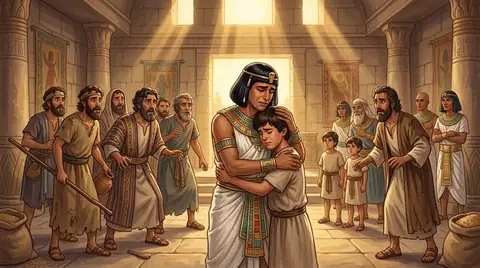 PersonJosephJacob's favourite son, sold by his brothers into Egypt, where he rose from prison to rule the land and saved his family…
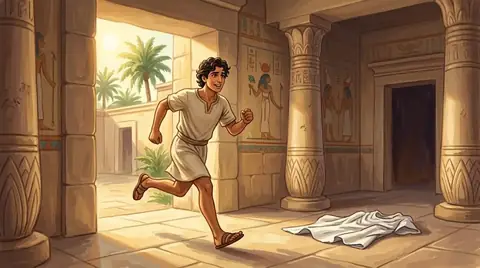 PersonPotipharAn Egyptian officer of Pharaoh, captain of the guard, who bought Joseph as a slave and made him steward of his house…
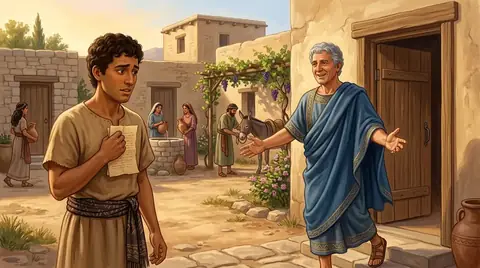 PersonOnesimusA runaway slave from Colossae who met Paul, became a Christian, and was sent back to his master Philemon with Paul's…
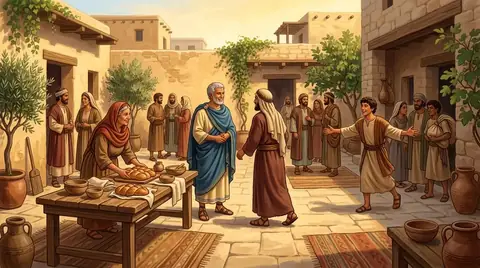 PersonPhilemonA Christian of Colossae, the man to whom Paul wrote his short letter about Onesimus, the slave who ran away and came…
Written for this app in its own words, from the Bible, with the facts checked against Bible dictionaries and encyclopedias: Easton's, Smith's, Fausset's, ISBE, Holman, the New Bible Dictionary, Vine's and the Thompson Chain topics.
