
Person
Philemon
fy-LEE-monNew Testament · about AD 60
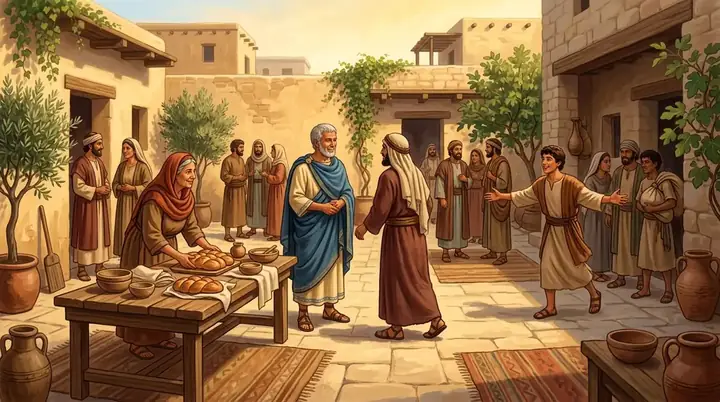
A Christian of Colossae, the man to whom Paul wrote his short letter about Onesimus, the slave who ran away and came back a brother in Christ.
- Where
- Colossae, in the province of Asia
- Known for
- Hosting a church in his home; Paul's letter about Onesimus
- Meaning
- Loving, affectionate
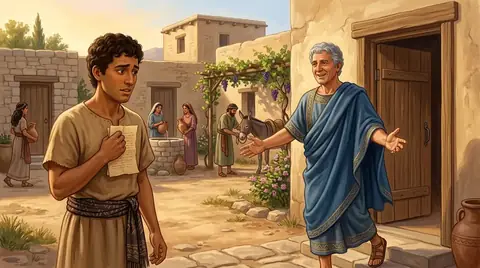
Philemon was a believer in Colossae who seems to have come to faith through Paul, for Paul reminds him that he owes him "thine own self" (Philemon 1:19). Paul calls him a dear friend and "fellowlabourer", and a church met in his house (Philemon 1:1–2). His slave Onesimus had run off, met Paul in prison and become a Christian. Paul sent him home with this letter, asking Philemon to welcome him "not now as a servant" but as a beloved brother, and offering to pay any debt himself (Philemon 1:16–18). The letter shows how the gospel changes the way believers treat one another.
Key verses
- Philemon 1:1–2
Paul, a prisoner of Jesus Christ, and Timothy our brother, unto Philemon our dearly beloved, and fellowlabourer, And to our beloved Apphia, and Archippus our fellowsoldier, and to the church in thy house:
- Philemon 1:10–12
I beseech thee for my son Onesimus, whom I have begotten in my bonds: Which in time past was to thee unprofitable, but now profitable to thee and to me: Whom I have sent again: thou therefore receive him, that is, mine own bowels:
- Philemon 1:16–19
Not now as a servant, but above a servant, a brother beloved, specially to me, but how much more unto thee, both in the flesh, and in the Lord? If thou count me therefore a partner, receive him as myself. If he hath wronged thee, or oweth thee ought, put that on mine account; …
Mentioned in 2 verses
- Philemon 2
Read next
Written for this app in its own words, from the Bible, with the facts checked against Bible dictionaries and encyclopedias: Easton's, Smith's, Fausset's, ISBE, Holman, the New Bible Dictionary, Vine's and the Thompson Chain topics. People and places: STEPBible.org (TIPNR), CC BY 4.0; where a place is today and its photo: OpenBible.info, CC BY 4.0.
