
Group
Scribes (teachers of the law)
also called lawyers, doctors of the law
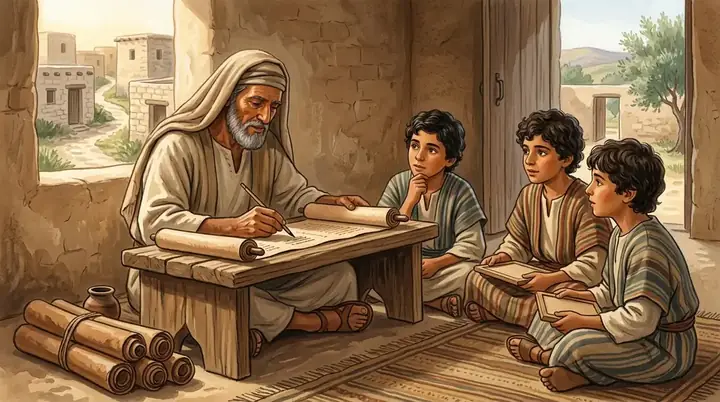
Men who copied the Law of Moses, studied it and taught how it applied to daily life. In Jesus' day most were Pharisees, and many opposed him; in earlier times a "scribe" was a royal secretary.
- Known for
- Copying the Law, teaching it, sitting on the council
- Best known
- Ezra; Baruch, Jeremiah's scribe; Gamaliel
- Also called
- Lawyers, doctors of the law (Luke 5:17; Luke 10:25)
In the Old Testament
At first a scribe was simply a man who could write. Kings kept scribes as secretaries: David and Solomon counted them among their chief officers, drafting letters and decrees (2 Samuel 8:17; 1 Kings 4:3). The prophet Jeremiah dictated his messages to Baruch the scribe, who wrote them on a scroll (Jeremiah 36:4).
After the exile the word took on a new sense. Ezra was "a ready scribe in the law of Moses" (Ezra 7:6): a man who had set his heart on studying God's law, keeping it and teaching it. From then on the scribes were the keepers of the Scriptures. They copied them with great care, counting letters so that nothing was lost, and explained them to the people (Nehemiah 8:8).
In the New Testament
By Jesus' day the scribes were the recognised teachers of the law. Most belonged to the Pharisees, many sat on the Sanhedrin, and people called them "Rabbi". They taught in the synagogues, settled questions of how the Law applied, and trained pupils. Alongside the written Law they taught a great body of tradition handed down from earlier teachers.
The crowds noticed the difference when Jesus taught: "as one having authority, and not as the scribes" (Matthew 7:29). The scribes quoted other teachers; Jesus spoke directly. Many of them watched him closely, questioned him, accused him of blasphemy when he forgave sins (Mark 2:6–7), and joined the chief priests in planning his death (Mark 14:1). Jesus in turn warned the people against their show of religion and against traditions that set God's commandment aside (Matthew 23; Mark 7:9).
Not all were against him. One scribe asked which commandment was the greatest, and Jesus told him he was "not far from the kingdom of God" (Mark 12:34). Jesus also spoke of a scribe "instructed unto the kingdom of heaven" who brings out treasures new and old (Matthew 13:52). After Pentecost Gamaliel, a respected teacher, urged the council to leave the apostles alone (Acts 5:34–39).
For us
The scribes knew the Scriptures better than anyone and still missed the one the Scriptures spoke of (John 5:39–40). Knowing the Bible is not the same as knowing its Lord.
Key verses
- Ezra 7:6–10
This Ezra went up from Babylon; and he was a ready scribe in the law of Moses, which the Lord God of Israel had given: and the king granted him all his request, according to the hand of the Lord his God upon him. And there went up some of the children of Israel, and of the priests, and the Levites, and the singers, and the porters, and the Nethinims, unto Jerusalem, in the seventh year of Artaxerxes the king. And he came to Jerusalem in the fifth month, which was in the seventh year of the king. …
- Matthew 7:29
For he taught them as one having authority, and not as the scribes.
- Matthew 23:2–3
Saying, The scribes and the Pharisees sit in Moses’ seat: All therefore whatsoever they bid you observe, that observe and do; but do not ye after their works: for they say, and do not.
- Mark 12:28–34
And one of the scribes came, and having heard them reasoning together, and perceiving that he had answered them well, asked him, Which is the first commandment of all? And Jesus answered him, The first of all the commandments is, Hear, O Israel; The Lord our God is one Lord: And thou shalt love the Lord thy God with all thy heart, and with all thy soul, and with all thy mind, and with all thy strength: this is the first commandment. …
- Luke 11:52
Woe unto you, lawyers! for ye have taken away the key of knowledge: ye entered not in yourselves, and them that were entering in ye hindered.
Read next
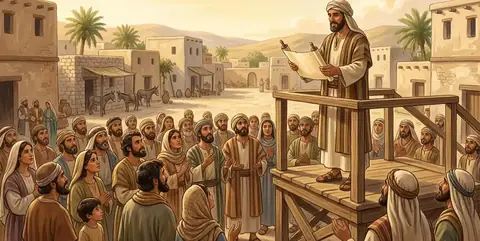 PersonEzraA priest and scribe who led a second group of exiles back from Babylon, taught the people God's law and read it to them…
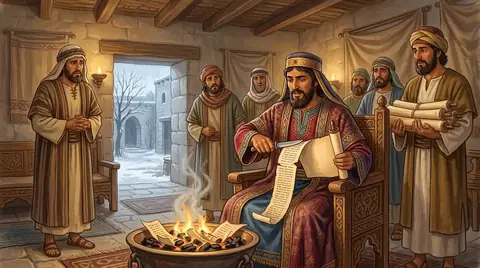 PersonBaruchJeremiah's faithful secretary. He wrote the prophet's words on a scroll, read them in the temple, and wrote them all…
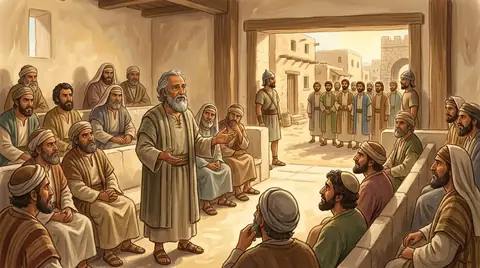 PersonGamalielThe most respected rabbi of his day, Paul's teacher, who persuaded the Jewish council not to kill the apostles: if…
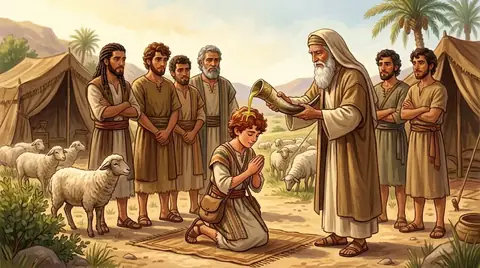 Person · KingDavidThe shepherd boy who killed Goliath and became Israel's greatest king, "a man after God's own heart". He wrote many…
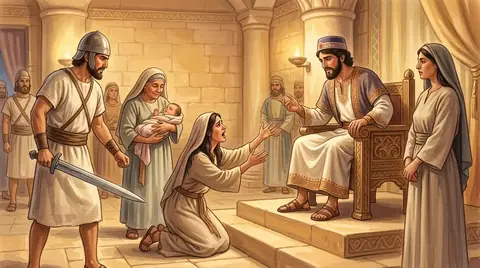 Person · KingSolomonDavid's son and Israel's third king, who asked God for wisdom and received riches and fame as well. He built the temple…
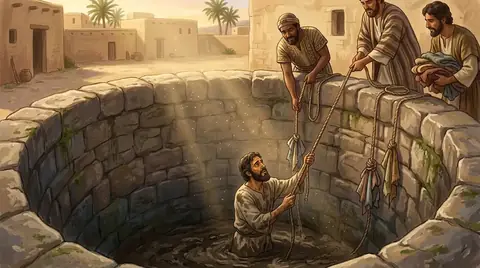 PersonJeremiahThe prophet who warned Judah for forty years that Babylon was coming, and wept as it came. He was beaten, put in the…
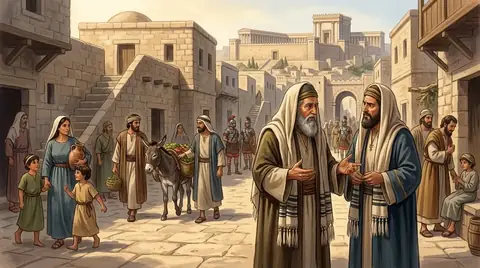 GroupPhariseesThe most exacting of the Jewish religious parties in Jesus' day, devoted to keeping the Law and the traditions added to…
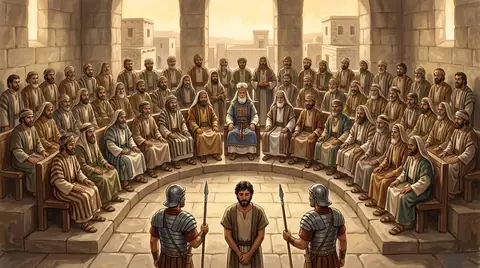 GroupThe council (Sanhedrin)The supreme Jewish court in Jerusalem, seventy-one chief priests, elders and scribes under the high priest. It…
Written for this app in its own words, from the Bible, with the facts checked against Bible dictionaries and encyclopedias: Easton's, Smith's, Fausset's, ISBE, Holman, the New Bible Dictionary, Vine's and the Thompson Chain topics.
