
Custom · Worship
The priests' linen garments
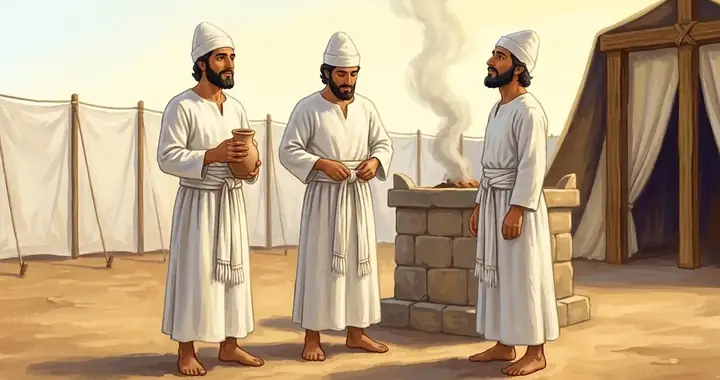
The white linen clothes every priest wore on duty: a long tunic, a sash, a cap and linen shorts. Plain, cool and clean, they spoke of holiness, and linen alone was worn into the Most Holy Place on the Day of Atonement.
- Pieces
- Tunic (KJV "coat"), sash ("girdle"), cap ("bonnet"), linen breeches (Exodus 28:40–42)
- Material
- Fine white linen; no wool, which makes sweat (Ezekiel 44:17–18)
- Where
- Exodus 28:39–43; Leviticus 6:10; Leviticus 16:4; Ezekiel 44:17–19
What they were
God gave Aaron's sons clothes "for glory and for beauty" (Exodus 28:40). An ordinary priest's outfit had four parts: a long-sleeved tunic woven of fine linen, a sash embroidered in colours and wound round the waist, a close-fitting linen cap, and linen breeches reaching from the hips to the thighs, worn so that no nakedness was seen at the altar (Exodus 28:42–43). The high priest wore these too, with his blue robe, ephod, breastplate and golden plate over them. The clothes belonged to the sanctuary; a priest put them on when he came on duty and took them off before going out to the people (Ezekiel 42:14).
How they were used
The priest wore his linen to tend the altar and carry out the ashes, then changed into other clothes to take the ashes outside the camp (Leviticus 6:10–11). Once a year, on the Day of Atonement, Aaron took off his golden garments, washed, and went into the Most Holy Place in plain linen alone, like the humblest of his brothers; afterwards he washed again and put his splendour back on (Leviticus 16:4, 23–24). The boy Samuel served in a linen ephod (1 Samuel 2:18), and the eighty-five priests of Nob who were killed by Doeg are described by it (1 Samuel 22:18).
What they meant
White linen is clean, light and cool, and nothing woollen was allowed, so that the priests would not sweat in God's presence (Ezekiel 44:18). The clothes said that the one who draws near to a holy God must be clean and at rest, not labouring. The angels in Daniel and Revelation wear linen (Daniel 10:5; Revelation 15:6), and the bride of the Lamb is dressed in "fine linen, clean and white: for the fine linen is the righteousness of saints" (Revelation 19:8). Christ clothes his people in a righteousness they did not weave.
Key verses
- Exodus 28:40–43
And for Aaron’s sons thou shalt make coats, and thou shalt make for them girdles, and bonnets shalt thou make for them, for glory and for beauty. And thou shalt put them upon Aaron thy brother, and his sons with him; and shalt anoint them, and consecrate them, and sanctify them, that they may minister unto me in the priest’s office. And thou shalt make them linen breeches to cover their nakedness; from the loins even unto the thighs they shall reach: …
- Leviticus 16:4
He shall put on the holy linen coat, and he shall have the linen breeches upon his flesh, and shall be girded with a linen girdle, and with the linen mitre shall he be attired: these are holy garments; therefore shall he wash his flesh in water, and so put them on.
- Ezekiel 44:17–18
And it shall come to pass, that when they enter in at the gates of the inner court, they shall be clothed with linen garments; and no wool shall come upon them, whiles they minister in the gates of the inner court, and within. They shall have linen bonnets upon their heads, and shall have linen breeches upon their loins; they shall not gird themselves with any thing that causeth sweat.
- Revelation 19:8
And to her was granted that she should be arrayed in fine linen, clean and white: for the fine linen is the righteousness of saints.
Read next
 Custom · WorshipThe priestsAaron's descendants, set apart to offer the sacrifices, burn the incense, pronounce the blessing and teach the law.…
 Custom · WorshipThe high priestThe head of Israel's priests, descended from Aaron, who alone went into the Most Holy Place once a year to make…Thing · WorshipEphodA sleeveless vest worn by priests. The high priest's ephod was richly woven with gold and colours; other priests wore a…
 ThingBreastplateArmour that covered a soldier's chest, and the KJV's name for the high priest's jewelled breastpiece. Paul tells…
 Feast · FastThe Day of AtonementThe one day in the year when the high priest went behind the veil with blood to atone for all Israel's sins, while a…
 Person · Prophet and judgeSamuelThe prophet who led Israel from the time of the judges into the time of the kings. Given to God by his mother Hannah…
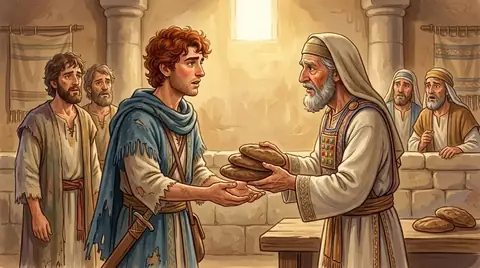 Place · TownNobA priests' town near Jerusalem where the tabernacle stood in Saul's day. Ahimelech gave David the holy bread and…PersonDoegAn Edomite who was chief of Saul's herdsmen. He saw the priest Ahimelech help David at Nob, reported it to Saul, and…
Written for this app in its own words, from the Bible, with the facts checked against Bible dictionaries and encyclopedias: Easton's, Smith's, Fausset's, ISBE, Holman, the New Bible Dictionary, Vine's and the Thompson Chain topics.
