
Animal · Bird
Pigeon
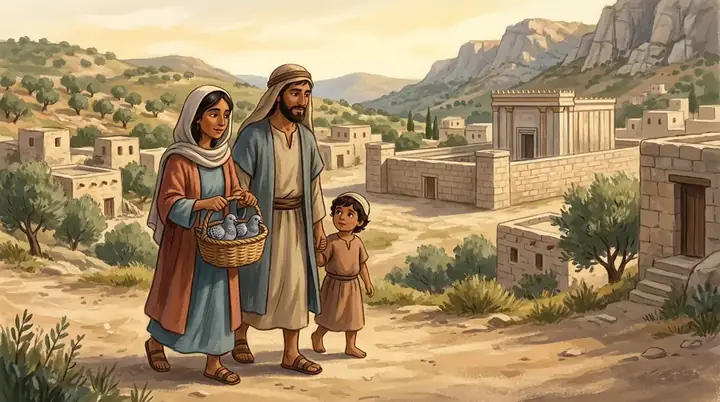
The common rock dove of Israel, kept and eaten everywhere. The Law let a poor family offer two young pigeons instead of a lamb, and Mary did so when she presented the baby Jesus.
- Hebrew
- Yonah, the same word as dove
- Offered
- By Abraham (Genesis 15:9); as a burnt offering (Leviticus 1:14); for a poor mother's purification (Leviticus 12:8); by Mary (Luke 2:24)
Pigeons are the tame cousins of the wild dove, and in Hebrew the two share a name. They nested in the cliffs and were kept in dovecotes in every village, and of all the birds they alone could be offered on God's altar. When God made his covenant with Abraham, a turtledove and a young pigeon lay among the animals cut in two (Genesis 15:9). The Law allowed a burnt offering of two pigeons (Leviticus 1:14), and whoever could not afford a lamb for a sin offering or after childbirth might bring "two turtledoves, or two young pigeons" instead (Leviticus 5:7; 12:8).
That was the offering Mary and Joseph brought when they presented Jesus at the temple forty days after his birth (Luke 2:24). It tells us, quietly, that the Son of God was born into a poor home. The sellers of pigeons in the temple courts, who charged the poor dearly for them, were among those Jesus drove out (Matthew 21:12).
Key verses
- Genesis 15:9
And he said unto him, Take me an heifer of three years old, and a she goat of three years old, and a ram of three years old, and a turtledove, and a young pigeon.
- Leviticus 5:7
And if he be not able to bring a lamb, then he shall bring for his trespass, which he hath committed, two turtledoves, or two young pigeons, unto the Lord; one for a sin offering, and the other for a burnt offering.
- Leviticus 12:8
And if she be not able to bring a lamb, then she shall bring two turtles, or two young pigeons; the one for the burnt offering, and the other for a sin offering: and the priest shall make an atonement for her, and she shall be clean.
- Luke 2:24
And to offer a sacrifice according to that which is said in the law of the Lord, A pair of turtledoves, or two young pigeons.
Read next
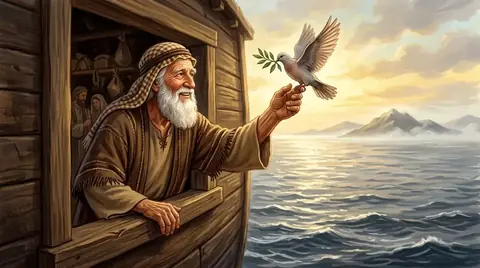 Symbol · BirdThe doveA gentle bird of the cliffs and dovecotes, the only bird the poor could offer in sacrifice. The dove brought Noah the…
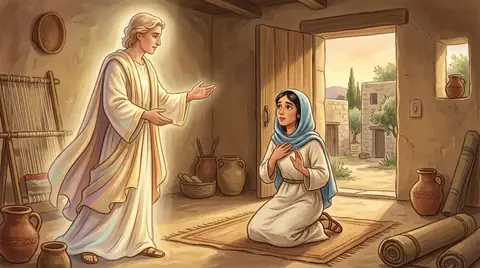 PersonMaryThe young woman of Nazareth chosen to be the mother of Jesus. She believed the angel's word, bore God's Son, and stood…
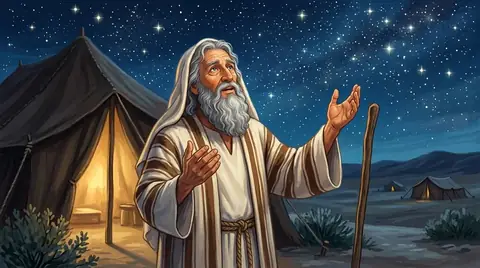 PersonAbrahamThe man God called out of Ur to a land he had never seen, promising him a people and a blessing for the whole world. He…
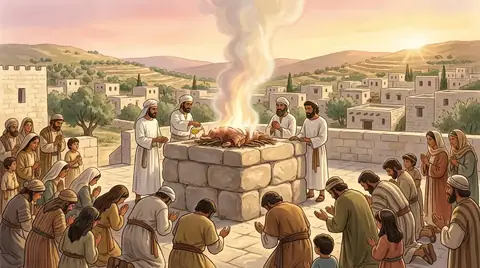 Custom · WorshipThe burnt offeringA sacrifice burned whole on the altar, with nothing held back: a picture of giving oneself completely to God. A lamb…
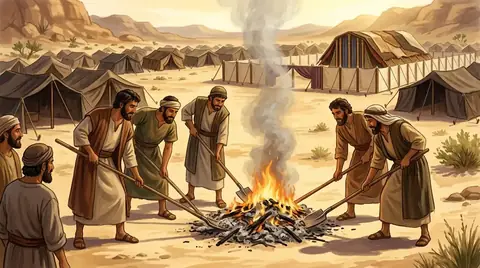 Custom · WorshipThe sin offeringThe sacrifice that dealt with sin: a bull, goat or lamb whose blood was put on the altar, with the animal burned…
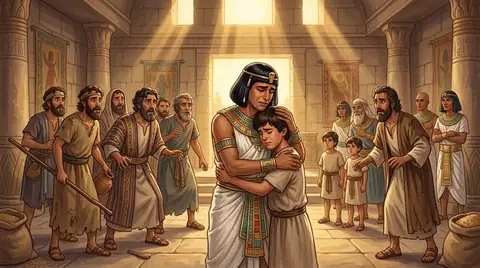 PersonJosephJacob's favourite son, sold by his brothers into Egypt, where he rose from prison to rule the land and saved his family…
Written for this app in its own words, from the Bible, with the facts checked against Bible dictionaries and encyclopedias: Easton's, Smith's, Fausset's, ISBE, Holman, the New Bible Dictionary, Vine's and the Thompson Chain topics.
