
Place
Philippi
FIL-ip-eyeNew Testament · a Roman colony in Macedonia · today ruins near Kavala, in northern Greece
A Roman colony in Macedonia, in northern Greece, where Paul founded the first church in Europe. Lydia and a jailer were among the first believers, and Paul later wrote them his warm letter to the Philippians.
- Where
- About 8 miles (13 km) inland from the port of Neapolis, now Kavala
- Named after
- Philip II of Macedon, father of Alexander the Great
- Status
- A Roman colony, "the chief city of that part of Macedonia" (Acts 16:12)
Why it mattered
Philip of Macedon took an older town and named it after himself. After a famous Roman battle there, it became a colony where veteran soldiers were settled, governed like a little Rome. Its citizens were proud to be Roman (Acts 16:21), which helps explain Paul's words to the church: "our citizenship is in heaven" (Philippians 3:20).
Paul in Philippi
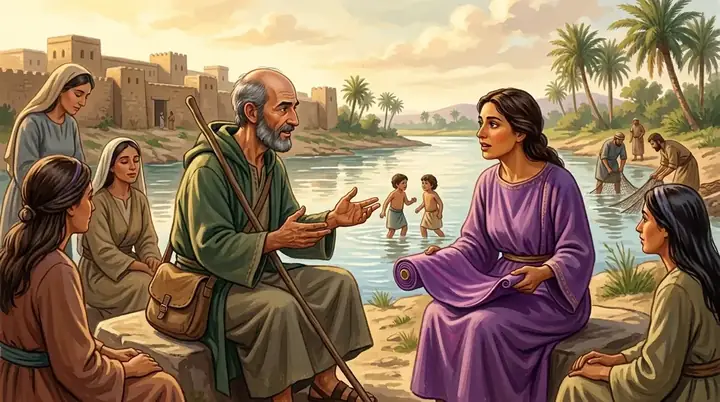
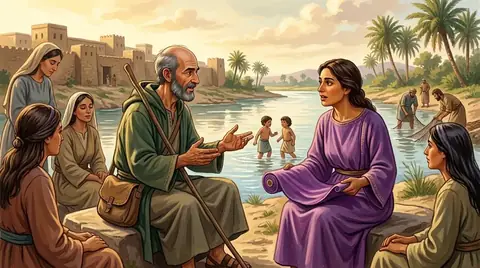
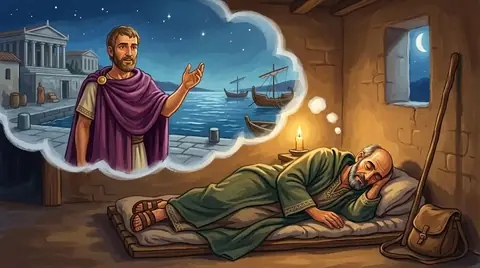
After a vision of a man of Macedonia calling for help, Paul, Silas, Timothy and Luke sailed across from Troas (Acts 16:9–12). There seems to have been no synagogue, so on the Sabbath they went to a place of prayer by the river. There Lydia, a seller of purple cloth, believed and was baptised with her household (Acts 16:13–15).
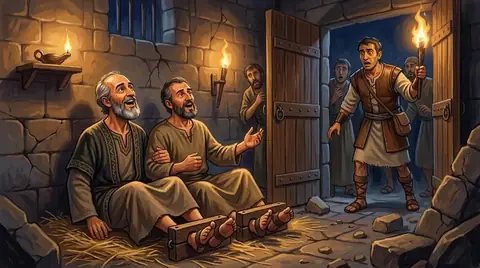
When Paul cast a spirit out of a slave girl who told fortunes, her owners dragged him and Silas to the magistrates. They were beaten and put in the stocks. At midnight they were praying and singing hymns when an earthquake opened the doors. The jailer asked, "what must I do to be saved?" and that night he and his household believed (Acts 16:16–34). Paul came back later on his third journey (Acts 20:6).
The church there
The Philippians were generous friends. They sent gifts to Paul again and again, even when he was in prison, and sent Epaphroditus to help him (Philippians 2:25; Philippians 4:15–18). His letter to them is full of joy, though he wrote it in chains (Philippians 1:3–7; Philippians 4:4).
Today
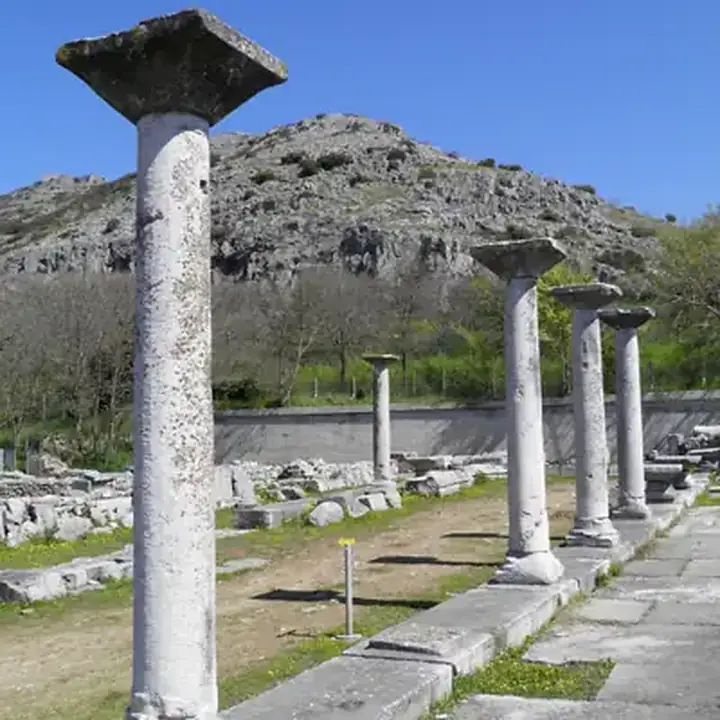
The ruins lie in northern Greece: the forum, a theatre, and stretches of the Via Egnatia, the Roman road Paul walked.
Key verses
- Acts 16:12–15
And from thence to Philippi, which is the chief city of that part of Macedonia, and a colony: and we were in that city abiding certain days. And on the sabbath we went out of the city by a river side, where prayer was wont to be made; and we sat down, and spake unto the women which resorted thither. And a certain woman named Lydia, a seller of purple, of the city of Thyatira, which worshipped God, heard us: whose heart the Lord opened, that she attended unto the things which were spoken of Paul. …
- Acts 16:25–34
And at midnight Paul and Silas prayed, and sang praises unto God: and the prisoners heard them. And suddenly there was a great earthquake, so that the foundations of the prison were shaken: and immediately all the doors were opened, and every one’s bands were loosed. And the keeper of the prison awaking out of his sleep, and seeing the prison doors open, he drew out his sword, and would have killed himself, supposing that the prisoners had been fled. …
- Philippians 1:3–5
I thank my God upon every remembrance of you, Always in every prayer of mine for you all making request with joy, For your fellowship in the gospel from the first day until now;
- Philippians 4:15
Now ye Philippians know also, that in the beginning of the gospel, when I departed from Macedonia, no church communicated with me as concerning giving and receiving, but ye only.
- 1 Thessalonians 2:2
But even after that we had suffered before, and were shamefully entreated, as ye know, at Philippi, we were bold in our God to speak unto you the gospel of God with much contention.
On the map
Mentioned in 9 verses
- Acts 2
- 1 Corinthians 1
- 2 Corinthians 2
- Philippians 3
- 1 Thessalonians 1
Read next
 Place · CityNeapolisThe harbour town of Philippi, where Paul first set foot in Europe after his vision of a man of Macedonia calling for…
 Place · Roman provinceMacedoniaThe Roman province north of Greece, home of Alexander the Great. Called there by a vision, Paul brought the gospel to…
 PersonSilasA leader of the Jerusalem church who became Paul's companion on his second missionary journey. He was beaten and jailed…PersonLydiaA businesswoman from Thyatira who sold purple cloth at Philippi. The Lord opened her heart as Paul spoke by the river…
Written for this app in its own words, from the Bible, with the facts checked against Bible dictionaries and encyclopedias: Easton's, Smith's, Fausset's, ISBE, Holman, the New Bible Dictionary, Vine's and the Thompson Chain topics. People and places: STEPBible.org (TIPNR), CC BY 4.0; where a place is today and its photo: OpenBible.info, CC BY 4.0.
