
Custom
Oaths
A solemn promise that calls on God to witness it and to punish the one who breaks it. The Bible allows honest oaths, but Jesus told his followers to be honest enough that a simple yes or no would do.
- How
- A hand raised to heaven, or placed under the other person's thigh
- Rule
- Never swear falsely, and keep what you swear (Leviticus 19:12; Numbers 30:2)
- Jesus said
- "Let your communication be, Yea, yea; Nay, nay" (Matthew 5:37)
What it was
In Bible times a promise could be made binding by swearing an oath. The one who swore named God as the witness, and in effect asked God to deal with him if he failed to keep his word. Abraham lifted his hand to heaven to swear that he would take nothing from the king of Sodom (Genesis 14:22). When he sent his servant to find a wife for Isaac, he had him put his hand under his thigh to swear it, and Jacob asked the same of Joseph when he made him promise to bury him in Canaan (Genesis 24:2–9; Genesis 47:29). Treaties were sealed by oath, as between Abraham and Abimelech (Genesis 21:22–31), and so were friendships: Jonathan and David swore loyalty to one another (1 Samuel 20:17).
God's rules about oaths
The law told Israel to swear by the LORD's name and by no other god (Deuteronomy 6:13), and never to swear falsely, which would be using his name for a lie (Leviticus 19:12; Exodus 20:7). An oath once made had to be kept, even when it hurt (Numbers 30:2; Psalms 15:4). Israel learned this the hard way when they swore peace to the people of Gibeon without asking God first and then had to honour the oath (Joshua 9). A rash oath could be a trap: Jephthah's vow cost him his daughter, and Herod's oath at a party cost John the Baptist his head (Judges 11:30–35; Matthew 14:7–9).
What Jesus taught
By Jesus' day people had worked out which oaths "counted" and which could be wriggled out of. Swearing by the temple meant nothing, they said, but swearing by its gold was binding (Matthew 23:16–22). Jesus swept all this away. His followers are not to swear by heaven, earth or their own head at all; they are simply to tell the truth (Matthew 5:33–37; James 5:12). The point is honesty so complete that no oath is needed to prop it up. Jesus himself answered the high priest when put under oath (Matthew 26:63–64), and Paul called God to witness what he wrote (2 Corinthians 1:23), so a serious oath in a serious place is not condemned. What is condemned is the careless and the crooked one.
God's own oath
God has no one greater to swear by, so he swore by himself when he promised to bless Abraham. Hebrews says he did this so that we might be doubly sure, resting on both his promise and his oath, "two immutable things" in which God cannot lie (Hebrews 6:13–18).
Key verses
- Genesis 24:2–9
And Abraham said unto his eldest servant of his house, that ruled over all that he had, Put, I pray thee, thy hand under my thigh: And I will make thee swear by the Lord, the God of heaven, and the God of the earth, that thou shalt not take a wife unto my son of the daughters of the Canaanites, among whom I dwell: But thou shalt go unto my country, and to my kindred, and take a wife unto my son Isaac. …
- Deuteronomy 6:13
Thou shalt fear the Lord thy God, and serve him, and shalt swear by his name.
- Matthew 5:33–37
Again, ye have heard that it hath been said by them of old time, Thou shalt not forswear thyself, but shalt perform unto the Lord thine oaths: But I say unto you, Swear not at all; neither by heaven; for it is God’s throne: Nor by the earth; for it is his footstool: neither by Jerusalem; for it is the city of the great King. …
- Hebrews 6:13–18
For when God made promise to Abraham, because he could swear by no greater, he sware by himself, Saying, Surely blessing I will bless thee, and multiplying I will multiply thee. And so, after he had patiently endured, he obtained the promise. …
- James 5:12
But above all things, my brethren, swear not, neither by heaven, neither by the earth, neither by any other oath: but let your yea be yea; and your nay, nay; lest ye fall into condemnation.
Read next
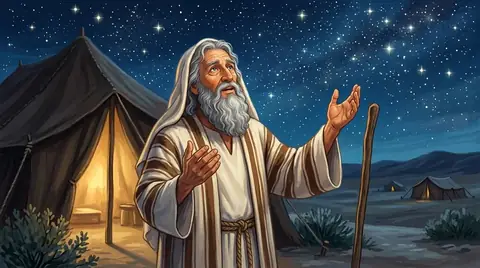 PersonAbrahamThe man God called out of Ur to a land he had never seen, promising him a people and a blessing for the whole world. He…
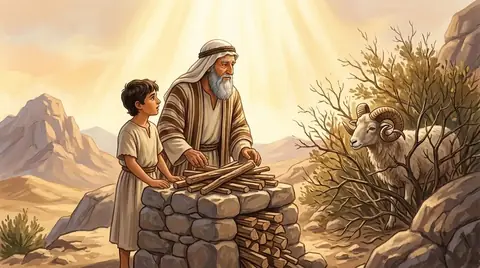 PersonIsaacThe son God promised to Abraham and Sarah when they were far too old for children, offered on Mount Moriah and spared.…
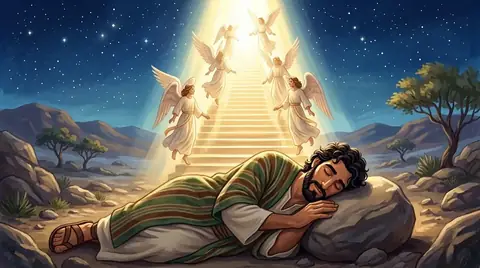 PersonJacobIsaac's younger twin son, who won his brother's birthright and blessing by cunning, was changed by God, and was renamed…
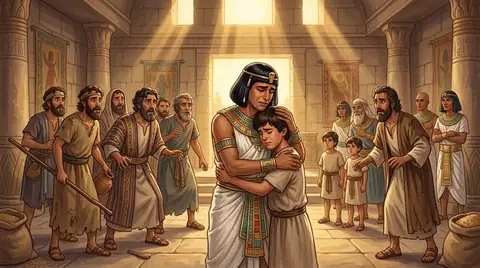 PersonJosephJacob's favourite son, sold by his brothers into Egypt, where he rose from prison to rule the land and saved his family…
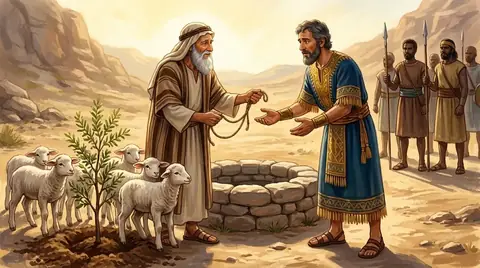 PersonAbimelechThe name of the kings of Gerar who dealt with Abraham and Isaac over their wives, and of Gideon's ruthless son who…
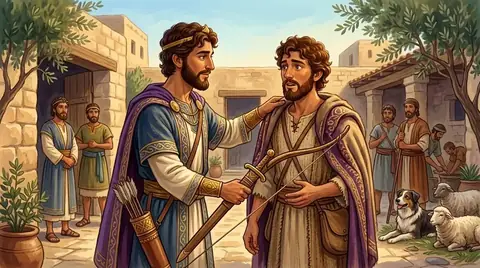 PersonJonathanSaul's eldest son and David's closest friend. A brave soldier who climbed a cliff to rout the Philistines, he gave up…
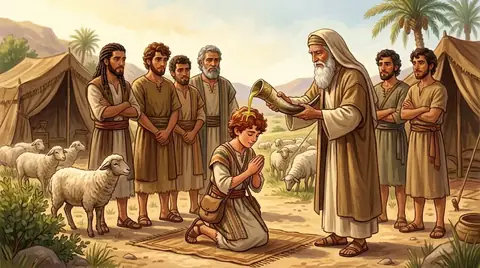 Person · KingDavidThe shepherd boy who killed Goliath and became Israel's greatest king, "a man after God's own heart". He wrote many…
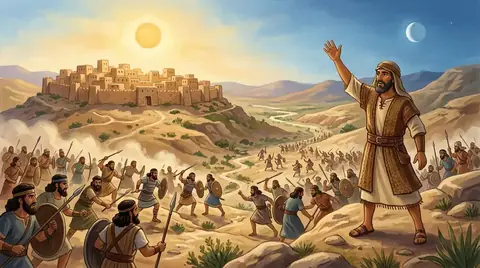 Place · CityGibeonThe Hivite city whose people fooled Joshua into a treaty, and where the sun stood still over the battle that followed.…
Written for this app in its own words, from the Bible, with the facts checked against Bible dictionaries and encyclopedias: Easton's, Smith's, Fausset's, ISBE, Holman, the New Bible Dictionary, Vine's and the Thompson Chain topics.
