
Book
Nehemiah (book)
nee-he-MY-aOld Testament · History · written by Nehemiah, about 430 BC
The story of Nehemiah, cupbearer to the king of Persia, who went to Jerusalem, led the people to rebuild its broken walls in fifty-two days, and worked with Ezra to renew the people's covenant with God.
- Author
- Nehemiah (with Ezra, according to Jewish tradition)
- Written
- About 430 BC; events 445–432 BC
- Chapters
- 13
- Key verse
- "The joy of the LORD is your strength" (Nehemiah 8:10)
What it's about
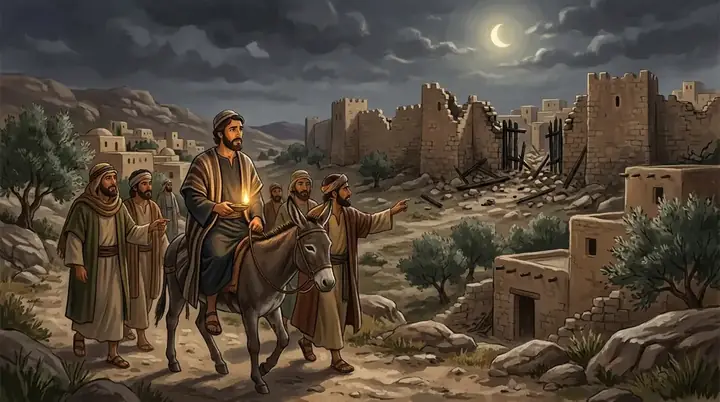
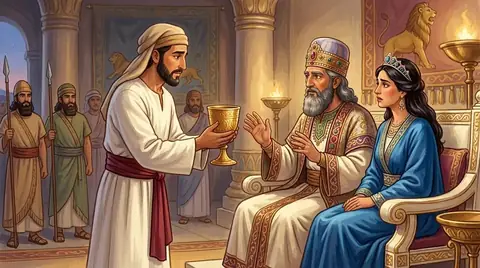
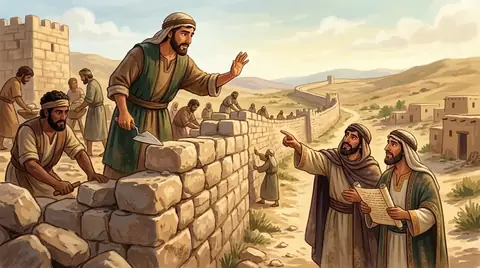
In the Persian palace at Shushan, Nehemiah heard that Jerusalem's walls were still in ruins. He wept, fasted and prayed, then asked King Artaxerxes for leave to go and rebuild them (Nehemiah 1–2). In Jerusalem he inspected the walls by night and rallied the people. Each family repaired a section.
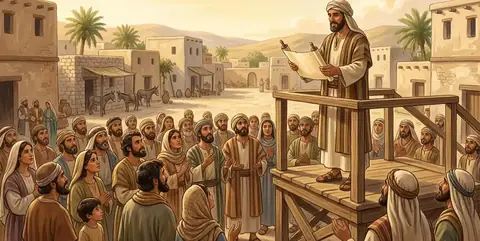
Enemies such as Sanballat and Tobiah mocked, threatened and plotted, so the builders worked with a tool in one hand and a weapon in the other. The wall was finished in fifty-two days (Nehemiah 6:15). Then Ezra read the law aloud to the whole people, who wept, celebrated the feast of tabernacles and signed a covenant to obey God. Later Nehemiah came back and dealt firmly with broken promises.
Its message
Nehemiah shows prayer and hard work going together. He prayed before he spoke to the king and kept praying as he worked. God's people are strengthened by hearing his word explained (Nehemiah 8:8) and by finding their joy in him.
Points to Christ
Nehemiah left a king's palace to rebuild a broken city and stood in the gap for his people. Jesus left far greater glory to build a city and a people of God that will never be torn down.
Key verses
- Nehemiah 1:11
O Lord, I beseech thee, let now thine ear be attentive to the prayer of thy servant, and to the prayer of thy servants, who desire to fear thy name: and prosper, I pray thee, thy servant this day, and grant him mercy in the sight of this man. For I was the king’s cupbearer.
- Nehemiah 2:20
Then answered I them, and said unto them, The God of heaven, he will prosper us; therefore we his servants will arise and build: but ye have no portion, nor right, nor memorial, in Jerusalem.
- Nehemiah 4:14
And I looked, and rose up, and said unto the nobles, and to the rulers, and to the rest of the people, Be not ye afraid of them: remember the Lord, which is great and terrible, and fight for your brethren, your sons, and your daughters, your wives, and your houses.
- Nehemiah 6:15–16
So the wall was finished in the twenty and fifth day of the month Elul, in fifty and two days. And it came to pass, that when all our enemies heard thereof, and all the heathen that were about us saw these things, they were much cast down in their own eyes: for they perceived that this work was wrought of our God.
- Nehemiah 8:8–10
So they read in the book in the law of God distinctly, and gave the sense, and caused them to understand the reading. And Nehemiah, which is the Tirshatha, and Ezra the priest the scribe, and the Levites that taught the people, said unto all the people, This day is holy unto the Lord your God; mourn not, nor weep. For all the people wept, when they heard the words of the law. Then he said unto them, Go your way, eat the fat, and drink the sweet, and send portions unto them for whom nothing is prepared: for this day is holy unto our Lord: neither be ye sorry; for the joy of the Lord is your strength.
On the map
Read next
 PersonNehemiahThe king of Persia's cupbearer who got leave to go to Jerusalem and rebuilt its broken walls in fifty-two days, despite…
 PersonEzraA priest and scribe who led a second group of exiles back from Babylon, taught the people God's law and read it to them…
 Place · CitySusaThe winter capital of the Persian kings, east of Babylon. The story of Esther is set in its palace, Nehemiah served the…
 PersonArtaxerxesThe Persian king who sent Ezra to Jerusalem with the law in his seventh year and let his cupbearer Nehemiah go and…
 PersonSanballatA powerful leader in Samaria who did all he could to stop Nehemiah rebuilding the walls of Jerusalem: mockery, threats…
Written for this app in its own words, from the Bible, with the facts checked against Bible dictionaries and encyclopedias: Easton's, Smith's, Fausset's, ISBE, Holman, the New Bible Dictionary, Vine's and the Thompson Chain topics.
