
Custom · Worship
Music
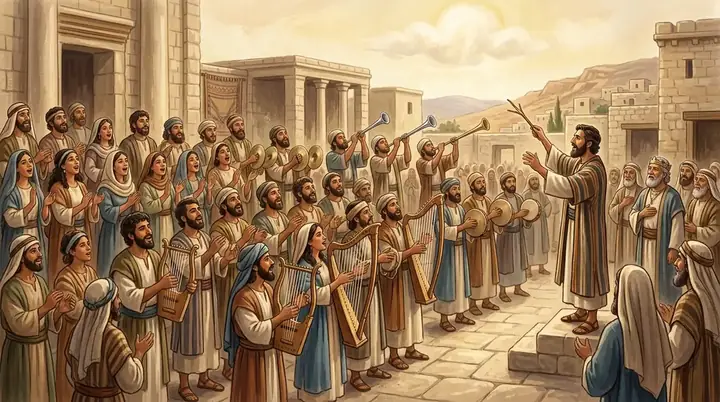
Israel sang and played at weddings, harvests, victories and above all in worship. David organised the temple singers and players, and the Psalms are their hymn book.
- Invented
- By Jubal, "the father of all such as handle the harp and organ" (Genesis 4:21)
- Instruments
- Strings: harp, psaltery, viol. Wind: pipe, flute, trumpet, horn, organ. Rhythm: timbrel, cymbals
- Temple choir
- 4,000 Levites with instruments; 288 trained singers in 24 courses (1 Chronicles 23:5; 1 Chronicles 25:7)
- Psalm headings
- Maschil, Michtam, Neginoth, Nehiloth, Sheminith, Gittith, Al-taschith: tunes, instruments or kinds of song, mostly uncertain now
In daily life
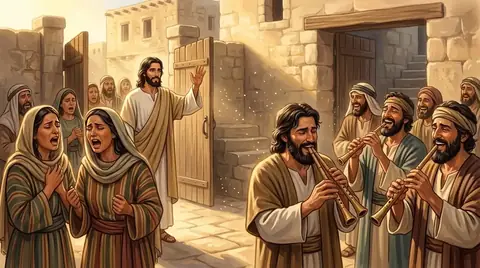
Music was everywhere in Israel. Laban complained that Jacob had slipped away without songs and tabrets (Genesis 31:27). Women met returning soldiers with timbrels and dancing (Exodus 15:20; 1 Samuel 18:6). There were songs for treading grapes (Isaiah 16:10), for weddings, for feasts (Isaiah 5:12) and for funerals (Matthew 9:23). A boy shepherd like David played the harp (1 Samuel 16:18), and his playing calmed King Saul's troubled mind (1 Samuel 16:23). The prophets' schools used music, and Elisha called for a minstrel before he prophesied (2 Kings 3:15).
In worship
Israel's first great song was sung on the far shore of the Red Sea (Exodus 15). Centuries later David brought the ark of the covenant to Jerusalem with singers, harps, psalteries, timbrels, cymbals and trumpets (1 Chronicles 15:16–28). He set the Levite families of Asaph, Heman and Jeduthun over the music, and in Solomon's temple the choir sang "for his mercy endureth for ever" as the glory filled the house (2 Chronicles 5:12–14). Sacrifices were offered to singing (2 Chronicles 29:27–28). The book of Psalms is the collection they sang; its headings name tunes and instruments whose meaning is now mostly lost, and "Selah" probably marks a pause or an interlude.
In the New Testament
Jesus and his disciples sang a hymn after the Last Supper (Matthew 26:30). Paul and Silas sang in prison at midnight (Acts 16:25), and Paul told the churches to sing "psalms and hymns and spiritual songs" with grace in their hearts (Colossians 3:16). The Bible ends with music: harps, a new song, and a great multitude singing "Alleluia" (Revelation 5:8–9; Revelation 19:6).
Key verses
- Genesis 4:21
And his brother’s name was Jubal: he was the father of all such as handle the harp and organ.
- Exodus 15:20
And Miriam the prophetess, the sister of Aaron, took a timbrel in her hand; and all the women went out after her with timbrels and with dances.
- 1 Chronicles 15:16
And David spake to the chief of the Levites to appoint their brethren to be the singers with instruments of musick, psalteries and harps and cymbals, sounding, by lifting up the voice with joy.
- 2 Chronicles 5:13
It came even to pass, as the trumpeters and singers were as one, to make one sound to be heard in praising and thanking the Lord; and when they lifted up their voice with the trumpets and cymbals and instruments of musick, and praised the Lord, saying, For he is good; for his mercy endureth for ever: that then the house was filled with a cloud, even the house of the Lord;
- Colossians 3:16
Let the word of Christ dwell in you richly in all wisdom; teaching and admonishing one another in psalms and hymns and spiritual songs, singing with grace in your hearts to the Lord.
- Revelation 5:9
And they sung a new song, saying, Thou art worthy to take the book, and to open the seals thereof: for thou wast slain, and hast redeemed us to God by thy blood out of every kindred, and tongue, and people, and nation;
Read next
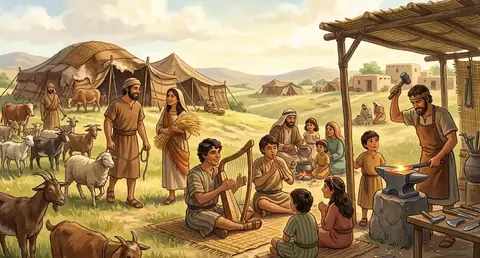 Thing · MusicHarpIsrael's best-loved stringed instrument, a small lyre carried in the arms and plucked with the fingers. David played it…
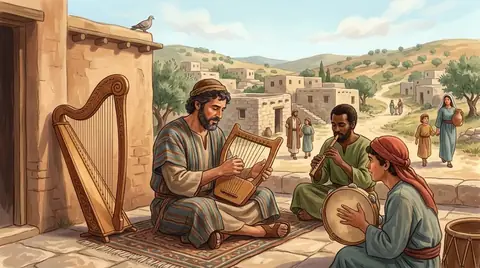 Thing · MusicPsalteryA stringed instrument of the harp family, plucked with the fingers, used with the harp in temple worship and in the…
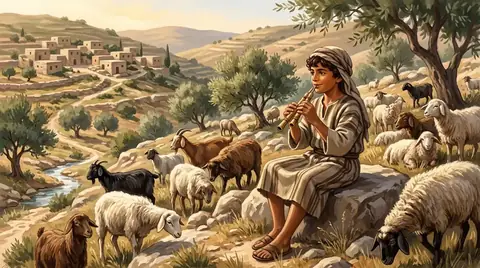 Thing · MusicPipeThe flute or reed pipe, the simplest wind instrument of Bible times, played at feasts, funerals, weddings and in…
 Thing · MusicFluteA wind instrument made of reed, wood or bone, played at feasts and at funerals. Flutes sounded in Nebuchadnezzar's band…
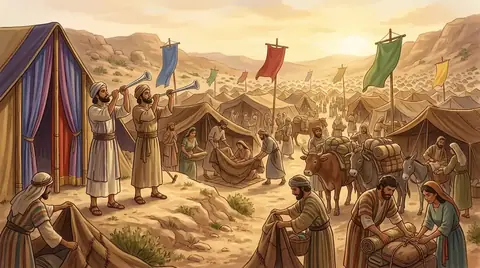 Thing · SymbolThe trumpetIsrael's trumpets, a ram's horn and silver tubes, called the people together, warned of danger, sounded for battle and…Thing · MusicTimbrelA small hand-drum, like a tambourine, beaten by hand. Miriam and the women played timbrels and danced after the Red Sea…
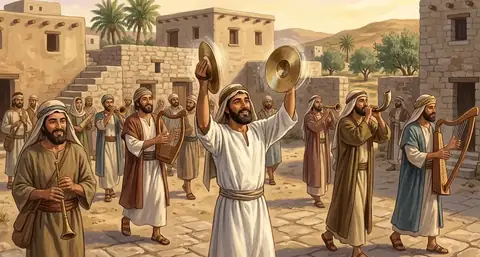 Thing · MusicCymbalTwo round plates of bronze clashed together, played by the Levites to lead loud praise at the tabernacle and temple.…
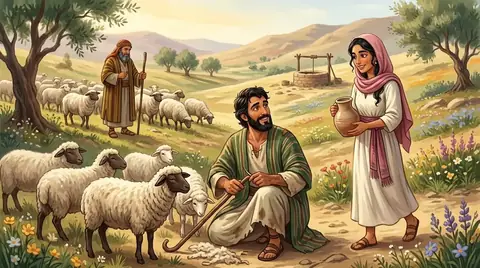 PersonLabanRebekah's brother in Haran, the father of Leah and Rachel. He took Jacob in, tricked him into marrying both daughters…
Written for this app in its own words, from the Bible, with the facts checked against Bible dictionaries and encyclopedias: Easton's, Smith's, Fausset's, ISBE, Holman, the New Bible Dictionary, Vine's and the Thompson Chain topics.
