
Measure
Mile
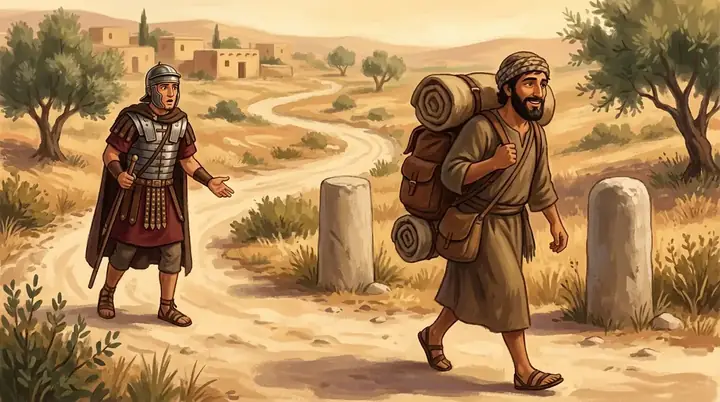
The Roman mile of a thousand double paces, about 1,618 yards (1.48 km), a little shorter than ours. Jesus told his hearers that if a soldier forced them to go a mile, they should go two.
- Length
- 1,000 Roman paces of 5 feet: about 1,618 yards (1,480 m)
- Found in
- Matthew 5:41 only
- Latin
- Mille passus, "a thousand paces"
What it was
The Romans measured their roads in miles, each a thousand paces of a marching soldier, and marked them with milestones. Their mile was about 142 yards (130 m) shorter than the English mile. It is the only time the word appears in the Bible; the Jews measured shorter distances in furlongs and a Sabbath day's journey.
In the Bible
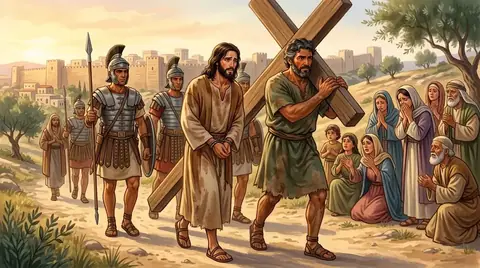
Roman law allowed a soldier or official to compel any passer-by to carry his baggage for a mile. It was hated, as a daily reminder of foreign rule; the same word is used when the soldiers "compelled" Simon of Cyrene to carry the cross (Matthew 27:32). Jesus said, "whosoever shall compel thee to go a mile, go with him twain" (Matthew 5:41).
What it means
The first mile is forced; the second is a free gift. Jesus' followers are not to resent those who impose on them but to answer with surprising generosity, the same spirit as turning the other cheek. "Going the second mile" has passed into everyday speech from this verse.
Key verses
- Matthew 5:41
And whosoever shall compel thee to go a mile, go with him twain.
- Matthew 27:32
And as they came out, they found a man of Cyrene, Simon by name: him they compelled to bear his cross.
Read next
Written for this app in its own words, from the Bible, with the facts checked against Bible dictionaries and encyclopedias: Easton's, Smith's, Fausset's, ISBE, Holman, the New Bible Dictionary, Vine's and the Thompson Chain topics.
