
Custom · Daily life
Meal
also: meals
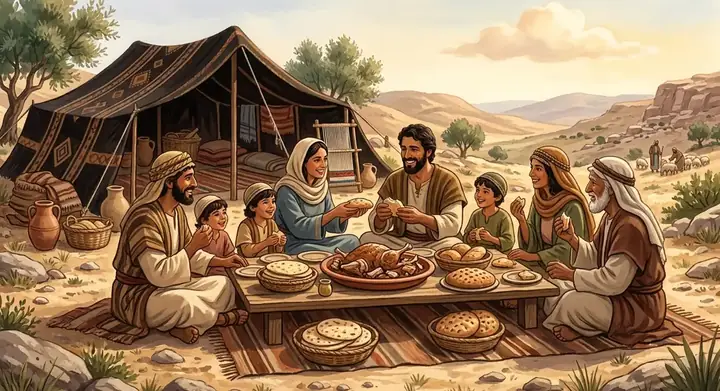
Ordinary people ate two meals a day, a light one in the morning and the main one at evening, sitting round a shared dish. To eat together was a sign of friendship and peace.
- When
- A light meal in the morning or at noon; the main meal after work (Ruth 2:14; Luke 14:16)
- How
- Sitting or, at a feast, reclining on couches round a low table; food eaten with the hand from a common dish
- Also
- A washing of hands before, and thanks to God (Mark 7:3; Matthew 14:19)
Everyday meals
Most families ate simply: bread, with olives, lentils or vegetables, cheese or curds, and fruit. Meat was for feasts and guests. Ruth ate parched grain and dipped her bread in vinegar with the reapers at noon (Ruth 2:14). The main meal came at the end of the day's work. People sat on the ground or on mats, and everyone broke off bread and dipped it into the one dish in the middle. There were no forks; hands were washed first, which the Pharisees made into a strict rule (Mark 7:3).
Feasts
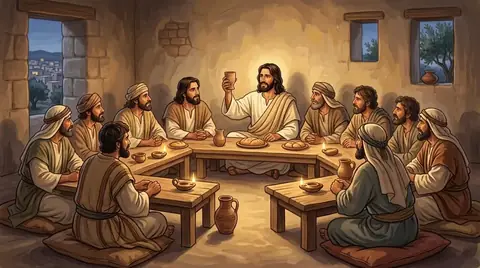
At a banquet in New Testament times guests lay on couches set round three sides of a low table, leaning on the left elbow, feet stretched away from the food. This is why a woman could stand behind Jesus and wash his feet while he ate (Luke 7:38), and how John could lean back against Jesus at the Last Supper (John 13:23). The places nearest the host were the places of honour, and Jesus told his hearers not to grab them (Luke 14:7–10).
What it meant
To share a meal was to share friendship and peace; to betray a man who had eaten your bread was the worst treachery (Psalms 41:9). So it shocked people that Jesus ate with tax collectors and sinners (Luke 5:30). He gave thanks before he broke bread (Matthew 14:19), and he chose a meal, the Passover supper, to leave his disciples the Lord's Supper. The Bible's last picture of heaven is a feast, "the marriage supper of the Lamb" (Revelation 19:9).
Key verses
- Ruth 2:14
And Boaz said unto her, At mealtime come thou hither, and eat of the bread, and dip thy morsel in the vinegar. And she sat beside the reapers: and he reached her parched corn, and she did eat, and was sufficed, and left.
- Luke 7:36–38
And one of the Pharisees desired him that he would eat with him. And he went into the Pharisee’s house, and sat down to meat. And, behold, a woman in the city, which was a sinner, when she knew that Jesus sat at meat in the Pharisee’s house, brought an alabaster box of ointment, And stood at his feet behind him weeping, and began to wash his feet with tears, and did wipe them with the hairs of her head, and kissed his feet, and anointed them with the ointment.
- Luke 14:7–10
And he put forth a parable to those which were bidden, when he marked how they chose out the chief rooms; saying unto them, When thou art bidden of any man to a wedding, sit not down in the highest room; lest a more honourable man than thou be bidden of him; And he that bade thee and him come and say to thee, Give this man place; and thou begin with shame to take the lowest room. …
- John 13:23
Now there was leaning on Jesus’ bosom one of his disciples, whom Jesus loved.
- Revelation 19:9
And he saith unto me, Write, Blessed are they which are called unto the marriage supper of the Lamb. And he saith unto me, These are the true sayings of God.
Read next
 PersonRuthA young widow from Moab who left her own land to stay with her mother-in-law Naomi and trust Israel's God. She married…
 GroupPhariseesThe most exacting of the Jewish religious parties in Jesus' day, devoted to keeping the Law and the traditions added to…
 PersonJohnThe fisherman who became "the disciple whom Jesus loved". Youngest of the twelve, he stood at the cross, ran to the…
 Custom · WorshipLord's SupperThe meal of bread and wine that Jesus gave his disciples on the night before he died, to be eaten in remembrance of him…
 FeastPassoverThe yearly feast remembering the night God rescued Israel from Egypt, when death passed over every house marked with a…
Written for this app in its own words, from the Bible, with the facts checked against Bible dictionaries and encyclopedias: Easton's, Smith's, Fausset's, ISBE, Holman, the New Bible Dictionary, Vine's and the Thompson Chain topics.
