
Group
Magistrate
Old Testament and New Testament · a public official
A public official with power to rule, judge or keep order. The Bible tells believers to obey such authorities, and shows Paul standing up to magistrates who broke the law.
- Known for
- The magistrates of Philippi, who had Paul and Silas beaten
- Teaching
- Be subject to rulers (Titus 3:1)
What a magistrate was
In the King James Version a magistrate is any person with public authority: a judge, a ruler, or a city official. Ezra was told to appoint magistrates and judges to teach and apply God's law (Ezra 7:25). In Luke, Jesus warns that his followers would be brought before magistrates for his sake, and tells them not to worry about what they would say (Luke 12:11–12).
At Philippi
In the Roman colony of Philippi, two chief officials ruled the town. When Paul and Silas cast an evil spirit out of a slave girl, her owners dragged them before these magistrates, who had them stripped, beaten and thrown into prison without a trial (Acts 16:19–24). The next day Paul told them he was a Roman citizen. The magistrates were afraid, came in person and begged them to leave the city (Acts 16:35–39).
For us
Paul tells Christians "to be subject to principalities and powers, to obey magistrates" and to be ready for every good work (Titus 3:1). Rulers are God's servants for good order (Romans 13:1–4). Yet Paul's example shows it is right to ask them to keep their own laws.
Key verses
- Ezra 7:25
And thou, Ezra, after the wisdom of thy God, that is in thine hand, set magistrates and judges, which may judge all the people that are beyond the river, all such as know the laws of thy God; and teach ye them that know them not.
- Acts 16:20–22
And brought them to the magistrates, saying, These men, being Jews, do exceedingly trouble our city, And teach customs, which are not lawful for us to receive, neither to observe, being Romans. And the multitude rose up together against them: and the magistrates rent off their clothes, and commanded to beat them.
- Acts 16:37–39
But Paul said unto them, They have beaten us openly uncondemned, being Romans, and have cast us into prison; and now do they thrust us out privily? nay verily; but let them come themselves and fetch us out. And the serjeants told these words unto the magistrates: and they feared, when they heard that they were Romans. And they came and besought them, and brought them out, and desired them to depart out of the city.
- Titus 3:1
Put them in mind to be subject to principalities and powers, to obey magistrates, to be ready to every good work,
Read next
 PlacePhilippiA Roman colony in Macedonia, in northern Greece, where Paul founded the first church in Europe. Lydia and a jailer were…
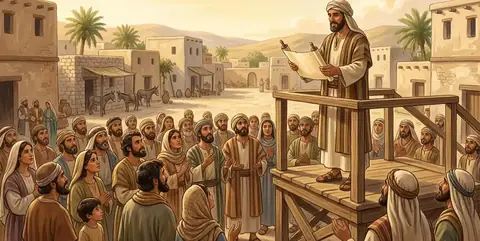 PersonEzraA priest and scribe who led a second group of exiles back from Babylon, taught the people God's law and read it to them…
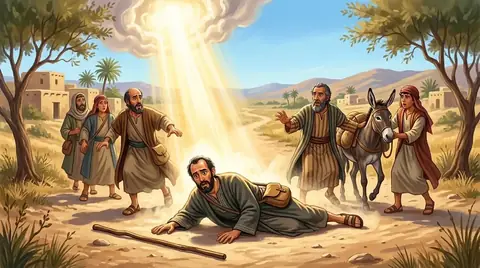 PersonPaulA Pharisee who hated the church until the risen Jesus met him on the road to Damascus. He became the apostle to the…
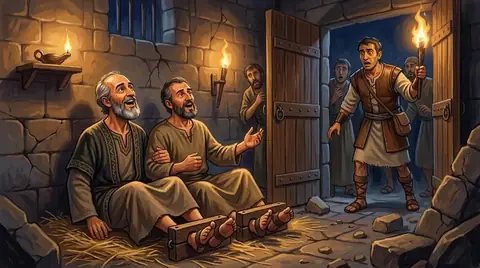 PersonSilasA leader of the Jerusalem church who became Paul's companion on his second missionary journey. He was beaten and jailed…
Written for this app in its own words, from the Bible, with the facts checked against Bible dictionaries and encyclopedias: Easton's, Smith's, Fausset's, ISBE, Holman, the New Bible Dictionary, Vine's and the Thompson Chain topics.
