
Teaching
Loyalty
Faithfulness to those we owe it to, such as a king, a friend or a leader. The Bible honours loyal men like Ittai, Hushai and Uriah, tells believers to respect rulers, and shows David refusing to harm King Saul.
- Examples
- David to Saul, Ittai and Hushai to David, Uriah, Mordecai
- Taught
- "My son, fear thou the LORD and the king" (Proverbs 24:21)
In the Bible
David twice had King Saul at his mercy and would not touch him: "the LORD forbid that I should... stretch forth mine hand against him, seeing he is the anointed of the LORD" (1 Samuel 24:6). When Absalom rebelled, the foreigner Ittai said to David, "in what place my lord the king shall be, whether in death or life, even there also will thy servant be" (2 Samuel 15:21). Hushai stayed in Jerusalem at risk to defeat Absalom's counsel (2 Samuel 17:15–16). Uriah would not go home to his wife while the army camped in the field (2 Samuel 11:11). Mordecai reported a plot against the Persian king (Esther 2:21–23).
For us
The law said, "Thou shalt not... curse the ruler of thy people" (Exodus 22:28). Believers are to be subject to the governing authorities, which are from God (Romans 13:1; Titus 3:1), and to pray for those in authority (1 Timothy 2:1–2). Yet the highest loyalty is to God: when told to stop preaching, the apostles said, "We ought to obey God rather than men" (Acts 5:29).
Key verses
- 1 Samuel 24:6
And he said unto his men, The Lord forbid that I should do this thing unto my master, the Lord’s anointed, to stretch forth mine hand against him, seeing he is the anointed of the Lord.
- 2 Samuel 15:21
And Ittai answered the king, and said, As the Lord liveth, and as my lord the king liveth, surely in what place my lord the king shall be, whether in death or life, even there also will thy servant be.
- Proverbs 24:21
My son, fear thou the Lord and the king: and meddle not with them that are given to change:
- Romans 13:1
Let every soul be subject unto the higher powers. For there is no power but of God: the powers that be are ordained of God.
- Acts 5:29
Then Peter and the other apostles answered and said, We ought to obey God rather than men.
Read next
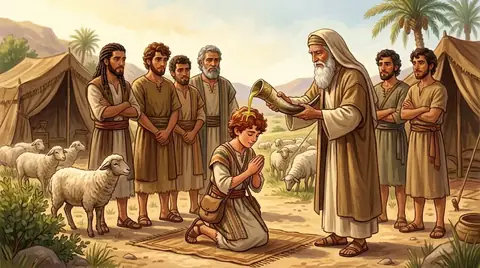 Person · KingDavidThe shepherd boy who killed Goliath and became Israel's greatest king, "a man after God's own heart". He wrote many…
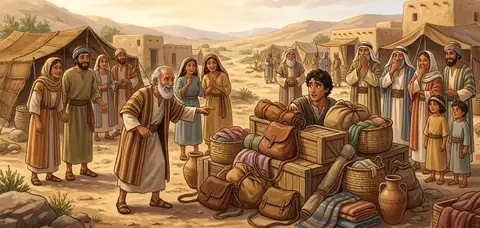 Person · KingSaulIsrael's first king, a tall Benjamite chosen when the people demanded a king like the nations. He began humbly and won…
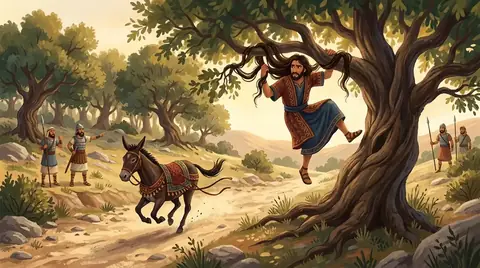 PersonAbsalomDavid's handsome third son, who murdered his brother Amnon, won the hearts of Israel and rose in rebellion against his…PersonIttaiA soldier from the Philistine city of Gath who stayed loyal to David when Absalom rebelled, and was made one of the…PersonHushaiDavid's friend who went back into Jerusalem during Absalom's revolt, pretended to serve the usurper, and talked him out…PersonUriahA Hittite soldier in David's army and husband of Bathsheba. David took his wife, then had him killed in battle to hide…
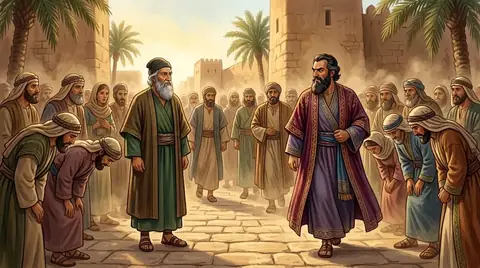 PersonMordecaiThe Jew who raised his cousin Esther, refused to bow to Haman, and with Esther saved the Jews of Persia from being…
Written for this app in its own words, from the Bible, with the facts checked against Bible dictionaries and encyclopedias: Easton's, Smith's, Fausset's, ISBE, Holman, the New Bible Dictionary, Vine's and the Thompson Chain topics.
