
Word
Lewdness
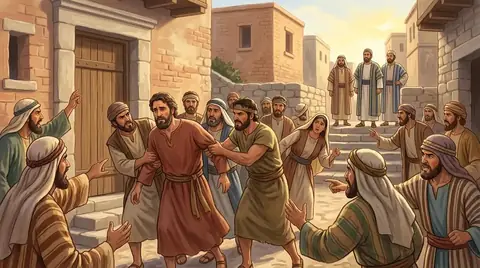
In the KJV "lewd" and "lewdness" often keep their old English sense of base, worthless or wicked, not only the sexual sense they have today. The "lewd fellows" of Thessalonica were rough loafers from the market-place.
- Old sense
- Low, vicious, villainous (Acts 17:5; Acts 18:14)
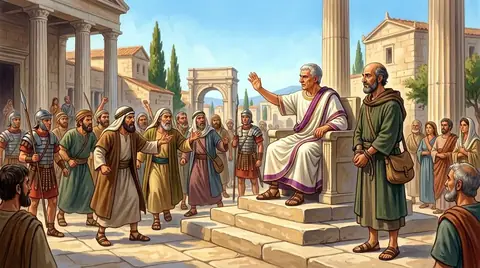
The old English word "lewd" first meant unlearned, then common and low, then wicked. In the Old Testament the KJV uses "lewdness" for gross sin, often sexual, as of the crime at Gibeah or Israel's unfaithfulness to God (Judges 20:6; Ezekiel 16:27). But in the New Testament it keeps the older sense. The Jews at Thessalonica gathered "certain lewd fellows of the baser sort", idlers from the market, to start a riot against Paul (Acts 17:5). At Corinth the governor Gallio said that if the charge had been "a matter of wrong or wicked lewdness", a real crime, he would have heard it (Acts 18:14). For the sexual sense, see Lasciviousness.
Key verses
- Acts 17:5
But the Jews which believed not, moved with envy, took unto them certain lewd fellows of the baser sort, and gathered a company, and set all the city on an uproar, and assaulted the house of Jason, and sought to bring them out to the people.
- Acts 18:14
And when Paul was now about to open his mouth, Gallio said unto the Jews, If it were a matter of wrong or wicked lewdness, O ye Jews, reason would that I should bear with you:
- Ezekiel 16:27
Behold, therefore I have stretched out my hand over thee, and have diminished thine ordinary food, and delivered thee unto the will of them that hate thee, the daughters of the Philistines, which are ashamed of thy lewd way.
Read next
 PlaceThessalonicaA busy port and the chief city of Macedonia. Paul founded a church there on his second journey and later wrote it two…
 Place · CityCorinthA rich, busy port city on the narrow neck of land joining southern Greece to the mainland. Paul founded a church there…
 Person · Roman governorGallioThe Roman governor of Achaia when Paul was at Corinth. When the Jews brought Paul to court, Gallio refused to hear a…TeachingLasciviousnessShameless, unbridled sexual desire and behaviour, with no restraint and no shame. The Bible lists it among the works of…
Written for this app in its own words, from the Bible, with the facts checked against Bible dictionaries and encyclopedias: Easton's, Smith's, Fausset's, ISBE, Holman, the New Bible Dictionary, Vine's and the Thompson Chain topics.
