
Animal · Bird
Hawk
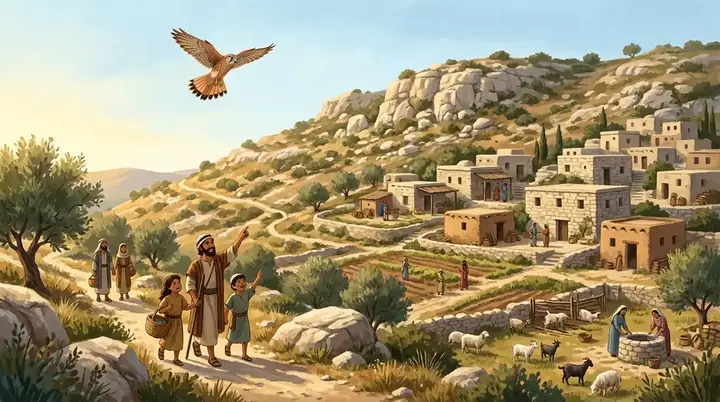
A swift bird of prey, listed among the unclean birds not to be eaten. God asks Job whether the hawk flies south by his wisdom: its instinct to migrate is God's gift, not man's.
- Hebrew
- Netz, from a word for darting flight
- Unclean
- Leviticus 11:16; Deuteronomy 14:15
- Kinds
- The kestrel, which stays all year; falcons and other hawks that pass through in migration
What it was
The Hebrew name covers the smaller falcons and hawks: the kestrel, which hovers over the fields all the year round in the land of Israel, and a dozen or so kinds that come and go with the seasons. Like the eagle, kite, owl and vulture, they were unclean, because they eat flesh and carrion (Leviticus 11:13–19; Deuteronomy 14:15). See Clean and unclean. The night hawk of the same list is a different bird.
In Job
Out of the whirlwind God asks, "Doth the hawk fly by thy wisdom, and stretch her wings toward the south?" (Job 39:26). Each autumn the hawks stream southward over the land to Africa, and no man taught them the way. The bird's instinct is one more sign that the world runs on a wisdom far beyond ours.
Key verses
- Leviticus 11:16
And the owl, and the night hawk, and the cuckow, and the hawk after his kind,
- Deuteronomy 14:15
And the owl, and the night hawk, and the cuckow, and the hawk after his kind,
- Job 39:26
Doth the hawk fly by thy wisdom, and stretch her wings toward the south?
Read next
 Symbol · BirdThe eagleThe great bird of prey of Israel's hills, swift, strong and nesting on the heights. God says he carried Israel out of…
 Animal · BirdKiteA sharp-eyed bird of prey with a forked tail, common over Palestine. It was on the list of unclean birds Israel might…BirdOwlNight birds of the ruins and the desert, named several times among the unclean birds and in pictures of lonely…
 Custom · The LawClean and uncleanIn the Law of Moses, "unclean" meant unfit for a time to come near God's holy place, through things like a dead body, a…Animal · BirdNight-hawkOne of the unclean birds Israel was not to eat. The Hebrew word appears only in the two lists, and which bird it names…
Written for this app in its own words, from the Bible, with the facts checked against Bible dictionaries and encyclopedias: Easton's, Smith's, Fausset's, ISBE, Holman, the New Bible Dictionary, Vine's and the Thompson Chain topics.
