
Custom · The Law
Clean and unclean
In the Law of Moses, "unclean" meant unfit for a time to come near God's holy place, through things like a dead body, a skin disease or forbidden food. It taught that a holy God needs a set-apart people.
- Where
- Leviticus 11–15; Numbers 19; Deuteronomy 14
- Made unclean by
- Forbidden animals, childbirth, leprosy, bodily discharges, touching the dead
- Made clean by
- Washing, waiting till evening or seven days, and an offering
- In Jesus
- What defiles comes from the heart; all foods declared clean (Mark 7:15–19)
What it was
Being unclean was not the same as being guilty. A woman who had a baby, a man who buried his father, or a person who touched a dead mouse had done nothing wrong, yet each was unclean. It was a state, not a sin, and it meant one thing: you could not go to the tabernacle until it was dealt with. Uncleanness also spread by touch, to people, clothes and pots, while holiness did not (Haggai 2:11–13).
How one became unclean
Leviticus sets it out. Some animals could be eaten and others not; eating or touching the carcass of a forbidden one made a person unclean (Leviticus 11). Childbirth did (Leviticus 12), and so did leprosy and other skin diseases, which shut a person out of the camp altogether until a priest declared them healed (Leviticus 13–14). Bodily discharges did (Leviticus 15). Worst of all was a dead body: anyone who touched one, or was even in the same tent, was unclean for seven days (Numbers 19:11–16).
How one was made clean
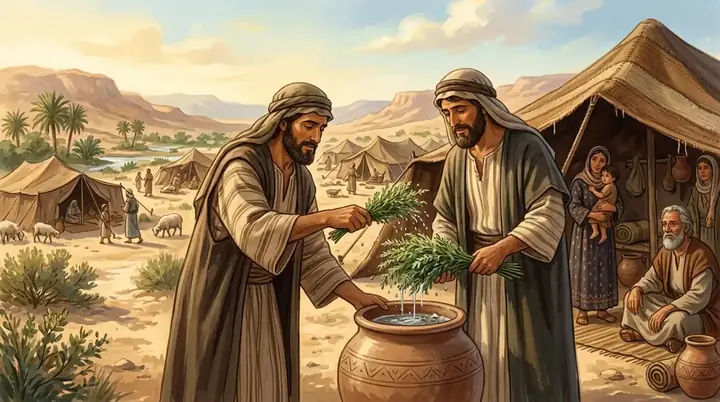
For small things, a wash and a wait until evening was enough. For the greater ones there were seven days, a washing of clothes and body, and an offering at the end. The one who had touched the dead was sprinkled with the water of cleansing, water mixed with the ashes of the red heifer (Numbers 19:17–19). A healed leper went through an eight-day ceremony with two birds, washing, shaving and sacrifices (Leviticus 14). Nothing was left to the person's own feelings; God said what made clean.
What it meant
Every rule said the same thing: God is holy, death and decay cannot come near him, and his people must be different from the nations round about (Leviticus 11:44–45). When Isaiah saw the LORD he cried that he was a man of unclean lips, and a coal from the altar had to touch his mouth (Isaiah 6:5–7). The outward rules were a daily lesson about the inward need.
In Jesus
Jesus touched lepers and dead bodies, and instead of catching their uncleanness he made them clean (Mark 1:41; Mark 5:41). He taught that nothing going into a man from outside can defile him; it is what comes out of the heart that does (Mark 7:14–23), and in saying so, Mark notes, he made all foods clean. Peter was shown a sheet of unclean animals and told, "What God hath cleansed, that call not thou common", and he understood that it meant the Gentiles too (Acts 10:9–28). The blood of Christ now does what the ashes of a heifer only pictured: it cleanses the conscience itself (Hebrews 9:13–14).
Key verses
- Leviticus 11:44–45
For I am the Lord your God: ye shall therefore sanctify yourselves, and ye shall be holy; for I am holy: neither shall ye defile yourselves with any manner of creeping thing that creepeth upon the earth. For I am the Lord that bringeth you up out of the land of Egypt, to be your God: ye shall therefore be holy, for I am holy.
- Numbers 19:11
He that toucheth the dead body of any man shall be unclean seven days.
- Isaiah 6:5
Then said I, Woe is me! for I am undone; because I am a man of unclean lips, and I dwell in the midst of a people of unclean lips: for mine eyes have seen the King, the Lord of hosts.
- Mark 7:15
There is nothing from without a man, that entering into him can defile him: but the things which come out of him, those are they that defile the man.
- Acts 10:15
And the voice spake unto him again the second time, What God hath cleansed, that call not thou common.
- Hebrews 9:13–14
For if the blood of bulls and of goats, and the ashes of an heifer sprinkling the unclean, sanctifieth to the purifying of the flesh: How much more shall the blood of Christ, who through the eternal Spirit offered himself without spot to God, purge your conscience from dead works to serve the living God?
Read next
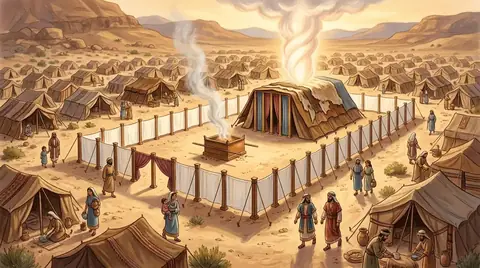 Thing · WorshipThe tabernacleThe holy tent Israel built in the wilderness, by God's own pattern, so that he could dwell in the middle of his people.…Thing · DiseaseLeprosyA group of skin diseases that made a person unclean and cut them off from home, worship and company. The priests judged…
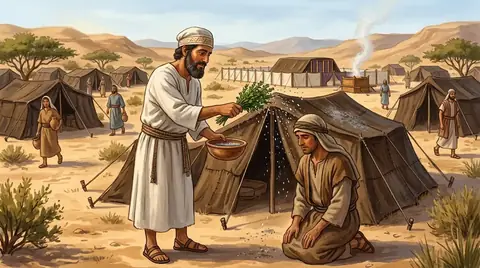 Custom · WorshipThe red heiferA red cow without defect, burned whole outside the camp. Its ashes, mixed with running water, made the "water of…
Written for this app in its own words, from the Bible, with the facts checked against Bible dictionaries and encyclopedias: Easton's, Smith's, Fausset's, ISBE, Holman, the New Bible Dictionary, Vine's and the Thompson Chain topics.
